You pull onto the conveyor, shift into neutral, take your foot off the brake, and hand control over to the tunnel.
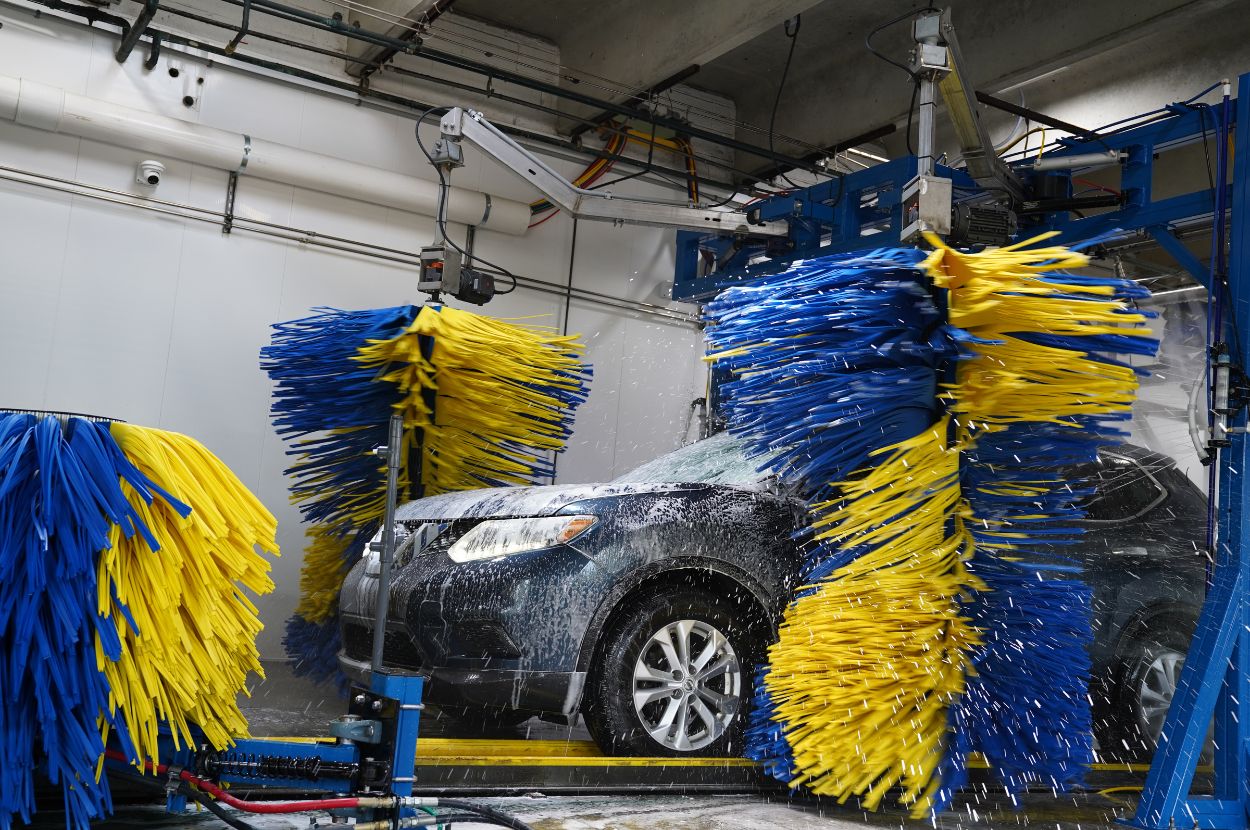
Then comes the usual experience: soap on the windshield, water spraying from every direction, giant pieces of equipment moving around your vehicle, and maybe that brief moment where you wonder if your side mirror is closer to the machinery than it actually is.
A couple of minutes later, you’re back on Woodward Avenue with a clean car.
Most of us don’t think much beyond that. We know the car went in dirty and came out looking better. Everything in between tends to blur together.
But every stage inside a modern automatic car wash has a purpose. It isn’t just a bunch of soap and spinning equipment doing random things. The order matters, and once you understand what’s happening, it’s easier to see why a professional wash is designed the way it is.
First Stage in an Automatic Car Wash: the Pre-Soak
A lot of people assume the cleaning starts when the brushes show up.
Actually, it starts before anything touches the vehicle.
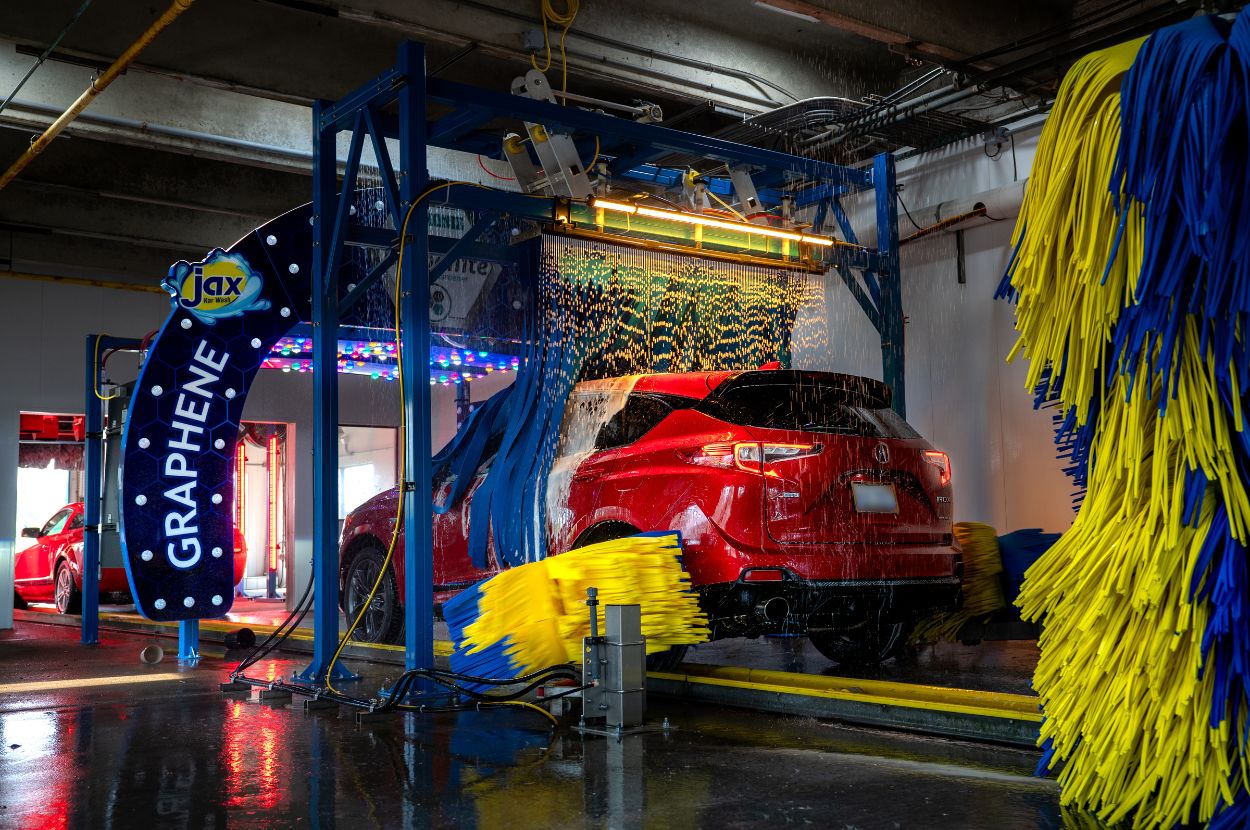
The first thing your car encounters is usually a pre-soak detergent. It doesn’t look particularly exciting compared to the foam and moving equipment farther down the tunnel, but it’s arguably doing some of the heaviest lifting.
Think about everything that sticks to a vehicle during a normal week. Dust. Road film. Pollen. Bug residue. In Michigan, add salt, brine, and that gray winter grime that somehow manages to coat every inch of the lower half of your car.
That contamination doesn’t always rinse away easily.
The pre-soak starts breaking down the bond between that buildup and the vehicle’s surface. In other words, it’s helping the grime let go before the actual cleaning stage begins. That’s important because dirt can be abrasive. The less of it that’s stuck to the paint when cleaning materials arrive, the better.
By the time your vehicle moves farther into the wash, some of the work is already done.
That Thick Foam Is Doing Real Work
The foam tends to get all the attention.
Kids love it. Plenty of adults do too, even if they won’t admit it.
And sure, it looks cool covering the windshield in bright colors and thick bubbles. But it isn’t there purely for show.
The foam creates a slick layer over the vehicle that helps lift dirt away from the surface while adding lubrication to the cleaning process. That’s a fancy way of saying it helps contaminants slide off more easily instead of hanging on.
If you’ve ever looked at your car after a week of commuting and wondered where that dull layer of grime came from, that’s exactly the kind of buildup this stage is helping tackle.
Road film has a way of sneaking up on you. One day the paint looks great. A few rainy commutes later, everything looks a little tired. The foam helps prepare the surface for a deeper clean.
How the Brushes Gently Clean in an Automatic Car Wash
This is usually the point where people start paying attention.
For some drivers, the concern goes back years. Maybe they heard a story from a friend. Maybe they remember older car washes that had a reputation for being rough on vehicles.
Modern systems are very different from those older setups.
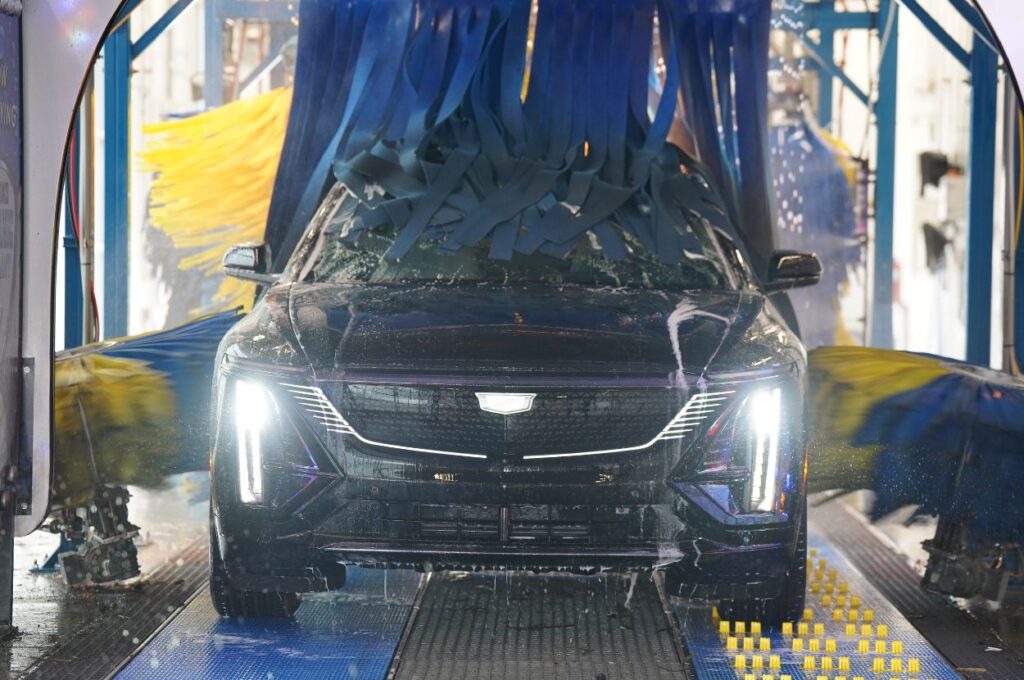
Most automatic washes today use soft foam or cloth materials designed specifically for vehicle finishes. They’re also working alongside a constant flow of water and detergent, so they’re cleaning a lubricated surface rather than rubbing against dry paint.
That’s an important distinction.
The goal isn’t aggressive scrubbing. It’s gentle contact that removes the grime the earlier stages have already loosened.
And honestly, this is where a lot of the visible cleaning happens. The lower doors, bumpers, rear hatch, and other areas that collect road grime day after day often need more than water alone to get truly clean.
Of course, some drivers prefer no contact at all. That’s where touchless washes come in. Instead of soft cleaning materials, they rely on water pressure and detergent to do the work.
Both approaches can be effective. It really comes down to what you’re comfortable with and what kind of buildup you’re trying to remove.
Why the Rinse Leaves No Spots
Once the cleaning stages are finished, the wash moves into rinse mode.
At first, it’s exactly what you’d expect: fresh water flushing away soap and carrying the loosened dirt with it.
Then comes the final rinse.
Most people don’t notice much difference while they’re sitting in the tunnel, but this stage plays a bigger role than you might think.
Many professional washes use treated water during the final pass. The reason is pretty simple. Regular tap water contains minerals, and when those minerals dry on the surface of a vehicle, they leave behind spots.
You’ve probably seen it happen at home.
You wash the car in the driveway, stand back feeling pretty good about the result, and then an hour later there are little spots all over the hood and windows.
The final rinse helps reduce that problem by leaving behind fewer minerals in the first place.
Dryers Wrap Everything Up
By the time your vehicle reaches the dryers, the actual cleaning is done.
Now it’s all about getting rid of as much remaining water as possible before you head out.
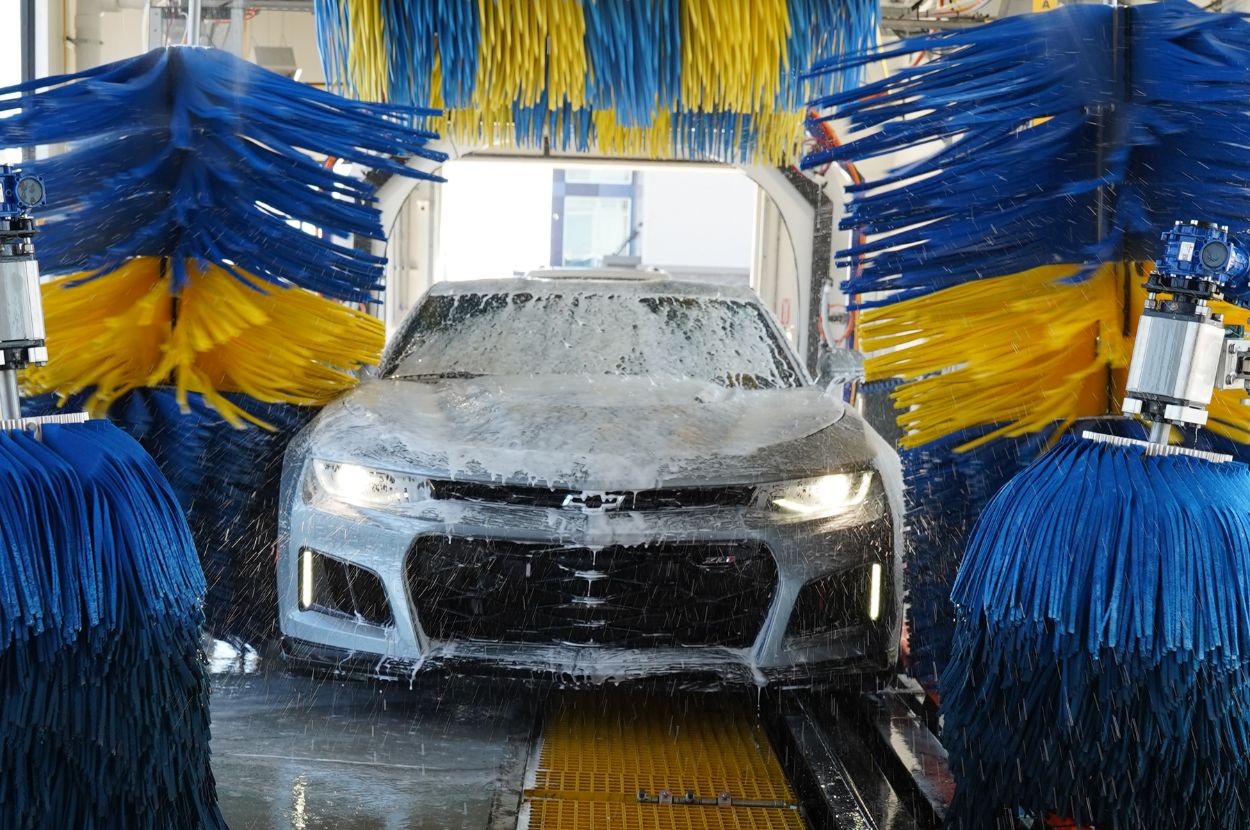
The giant blowers push water off the glass, roof, mirrors, and body panels. Some droplets will always find a hiding place somewhere — there’s probably no technology on earth capable of preventing that — but the dryers do a remarkable amount of work in a short period of time.
When you zoom out and look at the entire process, it actually follows a pretty logical progression.
First the grime gets loosened. Then the surface gets lubricated. The cleaning happens. Everything gets rinsed away. Finally, the remaining water gets blown off before it has much chance to sit there.
Nothing is happening by accident. Each stage is setting up the next one.
Why the Automatic Car Wash Makes Sense for Royal Oak Commuters
A driveway wash at home skips most of this. You get some soap, some water, and a hose — but no pre-soak chemistry formulated to break down road salt, no lubrication staging, no treated final rinse, and no high-volume dryers. The result is a car that looks okay but hasn’t been protected the same way.
For drivers logging miles on Woodward every week, that gap adds up over a Michigan winter. Salt isn’t just cosmetic grime. It’s a corrosive agent working on your paint, trim, and undercarriage every hour it stays on the car.
The sequence inside a professional tunnel is built to handle exactly that. Pre-soak neutralizes and loosens the salt. The cleaning stages lift it away. The rinse flushes the chemistry out. The dryers push the water off before it can sit.
None of that is accidental. The whole thing was engineered to solve exactly the problems Royal Oak drivers deal with every single day of salt season.
Will an automatic car wash scratch my paint?
A modern, properly maintained automatic car wash is designed to clean vehicles safely.
The process starts with detergents that loosen dirt before the cleaning stage begins. Soft-cloth or foam materials then work alongside water and soap to remove contaminants rather than dragging them across the paint.
Most concerns about scratches come from much older wash systems that used different technology than what you’ll find in modern tunnels.
What does the pre-soak actually do?
The pre-soak applies detergent before the vehicle reaches the cleaning materials.
Its job is to start breaking down dirt, road film, bug residue, salt, and other contaminants that have bonded to the surface. That way, the rest of the wash can remove them more effectively.
You can think of it as preparing the vehicle for everything that follows.
Why doesn’t my car have water spots after a tunnel wash?
Many professional car washes use treated water during the final rinse stage.
Because that water contains fewer minerals than ordinary tap water, there’s less residue left behind when it dries. Fewer minerals generally means fewer spots.
That’s one reason professionally washed vehicles often dry cleaner than vehicles washed at home.
Is touchless better than a soft-cloth wash?
Not necessarily.
Touchless washes rely on water pressure and detergents because nothing physically contacts the vehicle. Soft-cloth washes use gentle cleaning materials that can often remove stubborn grime more effectively.
For the average daily driver dealing with bugs, road film, salt, and regular Michigan road conditions, both can be good options when properly maintained.
So no, the automatic car wash isn’t some mystery box where your vehicle disappears for two minutes and comes out clean on the other side.
There’s a system behind it.
Every arch, every spray, every piece of equipment has a specific role, and together they create a process designed to remove dirt and grime while helping protect your vehicle’s finish at the same time.
The next time you’re riding through the tunnel, you might find yourself paying a little more attention to what’s happening around you. Or maybe you’ll just enjoy the light show and let the wash do its thing — either way, you’ll know what’s going on behind the foam. And when your car is due for one, run it through the automatic car wash at our Woodward location in Royal Oak and watch the whole sequence do its job.