
Returning a leased vehicle feels straightforward until the day of inspection arrives and you realize you have no idea what the inspector is actually looking at.
You know the car ran well. You know you took decent care of it. But “decent care” and “no excess wear charges” are not always the same thing. Lease inspectors work off specific standards, and some of the items that generate charges are ones most drivers never think about.
Getting a professional detail at our Southfield location on Telegraph before the turn-in gives you an honest look at where the car stands — and the chance to address issues before they become line items on your bill.
What Counts as Excess Wear on a Lease Return
Every lease has an excess wear and use clause.
Normal wear is expected. But anything beyond that standard gets flagged. The tricky part is that “normal” is defined by the leasing company, not by what feels reasonable to you after three years of daily commuting.
Some lenders define normal wear as surface scratches under a quarter of an inch. Others allow minor paint chips below a certain size but flag anything along door edges or near panels where rust risk is higher. Interior stains, odors, and worn seat surfaces often have separate thresholds.
Reading your specific lease agreement before the inspection — not after — is the only way to know exactly where the line is for your vehicle.

Exterior Items That Generate Lease Return Charges
Inspectors start on the outside.
They walk the entire vehicle looking for dents and dings, paint chips and scratches, cracks or missing pieces on bumpers and trim, and anything that affects the glass. Windshields with chips or cracks almost always get flagged regardless of size, because they’re a safety issue.
Tires are checked for tread depth. Rims are inspected for curb rash. Wheels that have more than minor surface scuffing are common charge generators.
A thorough exterior detail won’t fix dents or cracked glass, but it removes road film and oxidation that can make otherwise acceptable paint look worse than it is. Paint correction during a detail can address surface scratches that haven’t broken through the clear coat.
Interior Items That Come Up in a Lease Return Inspection
The interior inspection tends to catch drivers off guard more than the exterior.
Stains on fabric or carpet. Odors. Tears or burns on upholstery. Missing floor mats — some leases charge specifically for this if the originals aren’t present. Cracked or broken interior trim pieces. Damaged buttons or controls.
Three years of coffee travel mugs, dog rides, and Michigan mud tracked in from the parking lot adds up. Most of it isn’t obvious until someone walks through the car with a proper inspection process.
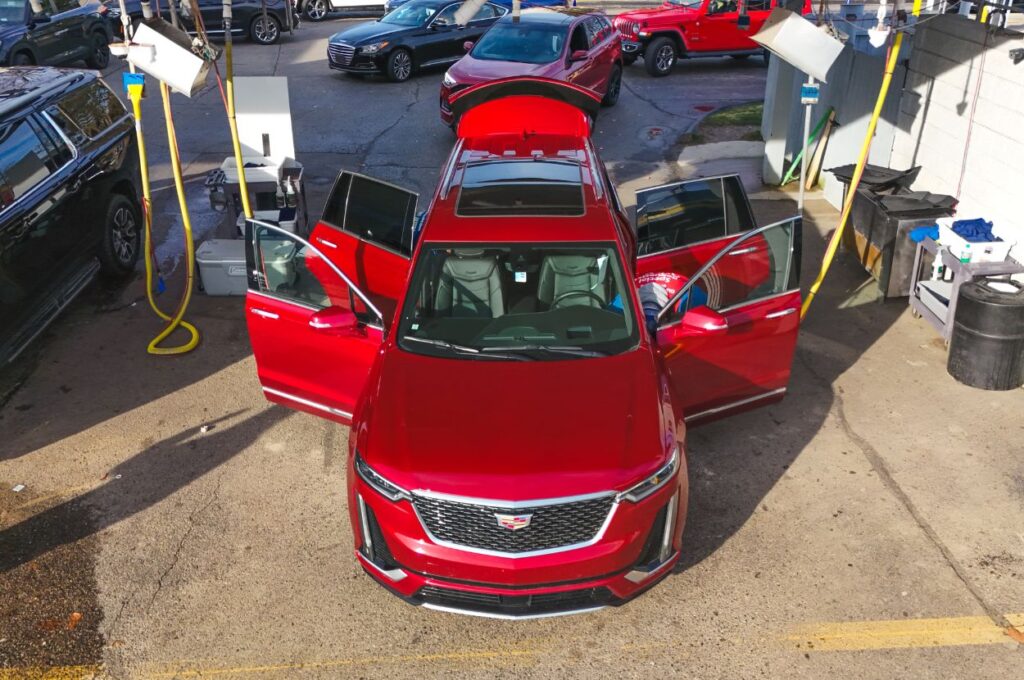
An interior detail — real cleaning, not just a vacuum — removes embedded dirt, treats stains, and eliminates odors that could otherwise factor into the inspection report.
How a Pre-Inspection Detail in Southfield Actually Helps
The value of getting a professional detail before lease return isn’t about hiding damage — you can’t detail your way out of a cracked bumper or a dent.
The value is in addressing the items that actually are fixable. Surface scratches that a paint correction can remove. Interior stains that professional cleaning equipment handles better than what you can do at home. Odors that a basic wipe-down doesn’t touch but a proper interior treatment does.
There’s also a practical visibility benefit. A thorough exterior detail cleans the paint well enough that the inspector can actually see what they’re looking at — without road grime and water spots adding visual noise that might make minor surface marks look worse than they are.
You’re not gaming the system. You’re just presenting the car in its best honest condition.
Timing Your Pre-Lease Inspection Detail Right
Schedule the detail close enough to your turn-in date that the car stays clean, but not so close that you’re rushing.
A week before works well for most people. That gives time to do the detail, see what was and wasn’t addressable, and still get a minor repair or windshield chip fill done if needed.
Don’t leave it for the night before. You won’t have time to respond to anything you find. And “I just detailed it” isn’t a repair — it’s a starting point for a better conversation with the inspector.
If your lease return date is coming up, our car detailing service at Jax Kar Wash on Telegraph Rd in Southfield is a good place to start before you hand over the keys.
Frequently Asked Questions
How long before lease return should I get a detail?
About a week is a reasonable target for most people. It’s close enough that the car stays clean, but leaves enough time to handle any small repairs (chip fills, minor interior fixes) that the detail reveals are still worth addressing before turn-in.
Will detailing remove scratches that could get charged?
Paint correction during a detail can remove light surface scratches that haven’t broken through the clear coat. Deeper scratches that have reached the paint layer won’t buff out. The detail gives you a clear picture of what’s actually there versus what was just surface contamination.
What interior issues should I fix before a lease return inspection?
Focus on stains, odors, and missing floor mats. A professional interior detail handles most stain and odor issues that a home cleaning can’t fully remove. For damaged trim pieces, small buttons, or upholstery tears, an auto interior repair shop can often address those more cost-effectively than the lease company’s assessed charges.