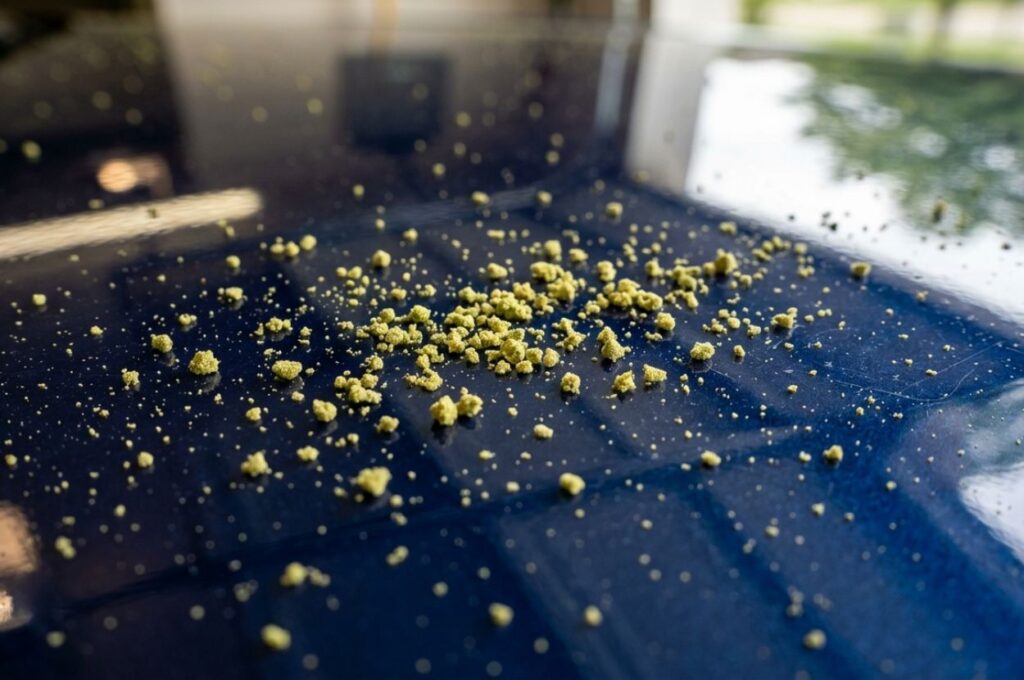
Walk out to your car one morning in May and it’s wearing a coat of yellow-green dust. Annoying, sure. Harmless, though? That’s what most Troy drivers assume, and it’s where they go wrong. Pollen can get to work on your clear coat faster than road salt does — and people leave it sitting there for weeks because, hey, it’s just plant dust. Let me walk you through what’s actually happening up there, and why spring deserves the wariness you save for winter.
Two Exterior Car Wash Threats: Pollen vs. Salt
Salt and pollen both wreck paint, but they don’t fight the same way. Salt’s real target is bare metal — your undercarriage, the frame, a stone chip where the clear coat already gave way. On healthy, cared-for paint, it’s more of a slow surface nag. Pollen’s the one that goes after the finish directly. It’s mildly acidic, and the instant it gets wet — a spring shower, a heavy dew, doesn’t matter which — it turns into an acidic film glued to your clear coat. A few warm days baking it on, and it can start etching. That’s quicker than salt manages on a finish that’s still intact.
And Spring Makes Every Exterior Car Wash More Urgent
The timing’s just cruel. Pollen rolls in right alongside the rain and the rising temperatures — one wakes the acid up, the other bakes it in. Park outside through peak pollen and your car gets dusted, rained on, sun-dried, then dusted again. Day after day. Every loop presses that residue a little deeper. And this isn’t one bug splat you can dab off. The pollen blankets the whole car at once, so any etching that takes hold shows up across the entire finish — a dull haze, everywhere you look.
Whatever You Do, Don’t Dry-Wipe It
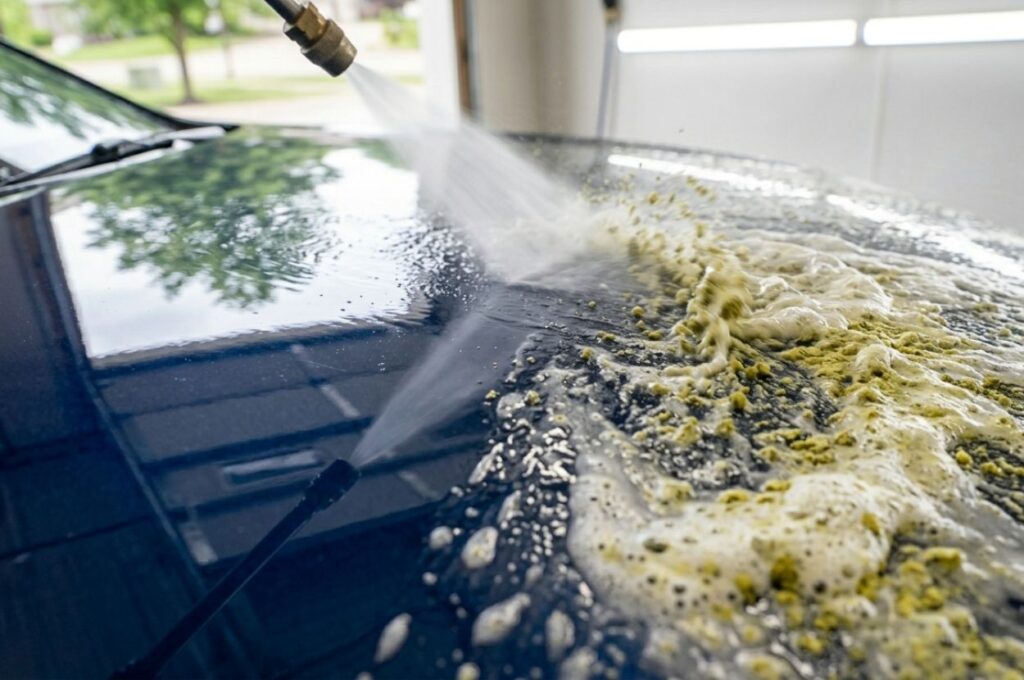
Here’s the trap. Pollen looks like dust, so out comes the dry rag. Big mistake. Those granules are gritty, and dragging them over the paint dry carves swirl marks into the clear coat — same damage you’d do dry-wiping salt. Pollen comes off with water and lubrication. Lots of it. Never a dry cloth. That “I’ll just dust it real quick” reflex? Worst thing you can do.
Getting Through Pollen Season with Regular Exterior Car Washes
None of this is complicated to prevent. Wash more often while the pollen’s heavy, and never let a layer sit and bake. A regular exterior wash rinses the acidic film off before it etches, and a coat of sealant or wax gives the clear coat a sacrificial barrier — pollen lands on the protection instead of the paint. Treat spring like round two of salt season. New enemy, same playbook. Our exterior car wash in Troy clears pollen off safely before it can leave a mark.
When Troy Pollen Season Peaks — and What That Means for Your Wash Schedule
Southeast Michigan’s pollen window is roughly mid-April through the end of May, with tree pollen leading the charge. Oak, birch, and maple are the heavy contributors around Troy — drive down Big Beaver or through any older residential neighborhood and you can watch the air turn yellow on a warm morning after a dry night. When the forecasts start showing high pollen counts, that’s the week to tighten up your wash schedule from every two weeks to every four to five days.
Rain doesn’t help the way most drivers assume. A light rain smears the pollen rather than rinsing it, mixing the granules with water to form that acidic slurry right on your paint. Only a proper wash with the right detergent and a thorough rinse actually lifts it off cleanly. After a rainy spell during peak pollen, your car needs a wash sooner than you’d think.
The real danger window is any stretch of three or more dry, warm days following a heavy pollen drop. That’s when it bakes fastest. If you can catch it within 48 hours of a fresh coat landing, you’re well ahead of the problem. Leave it through a full long weekend and you’re already testing the clear coat’s patience.
The practical takeaway for Troy: follow the pollen count the same way you follow the weather before a winter storm. High counts mean extra washes. The season is only six or seven weeks long. A little extra frequency during that window keeps your finish looking the same in June as it did in March.
Frequently Asked Questions
Can pollen actually damage car paint?
It can. Pollen is mildly acidic, and once it gets wet from rain or dew it forms an acidic film on the clear coat. Baked on by spring sun, it can start etching within days — sometimes faster than salt etches healthy paint.
Why is pollen worse than road salt for my paint’s surface?
Salt does its worst damage to the bare metal underneath; on intact paint it’s a slow surface threat. Pollen’s acidity sits right on the clear coat across the whole car, and with spring’s rain-and-sun cycle it can etch the finish faster.
Should I wipe pollen off my car with a dry cloth?
Don’t. Pollen granules are gritty, and dry-wiping drags them across the paint and scratches it — just like dry salt. Rinse and wash pollen off with plenty of water and lubrication instead.
How do I protect my car during pollen season?
Wash more often through the heavy weeks so the acidic film never sits and bakes, and keep a coat of wax or sealant on the paint as a barrier. Same discipline you’d give winter salt.
Protect Your Finish with an Exterior Car Wash at Jax in Troy
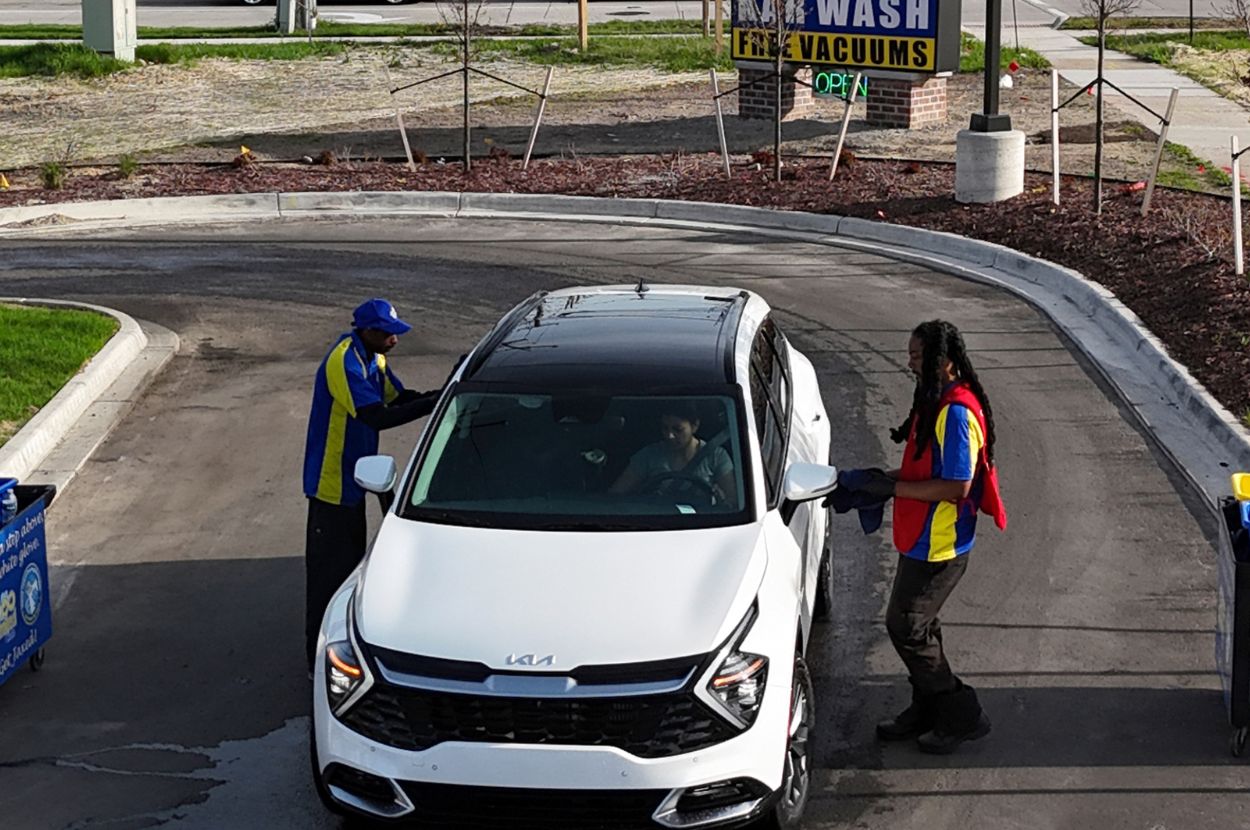
During pollen season, don’t let a fresh coat sit and bake — come in and knock it off safely. Jax Kar Wash is at 2835 W. Maple Rd in Troy, and our exterior car wash rinses pollen off with the water, lubrication, and spot-free rinse your clear coat needs. Stop by when the counts spike and stay ahead of the finish damage before it becomes permanent.