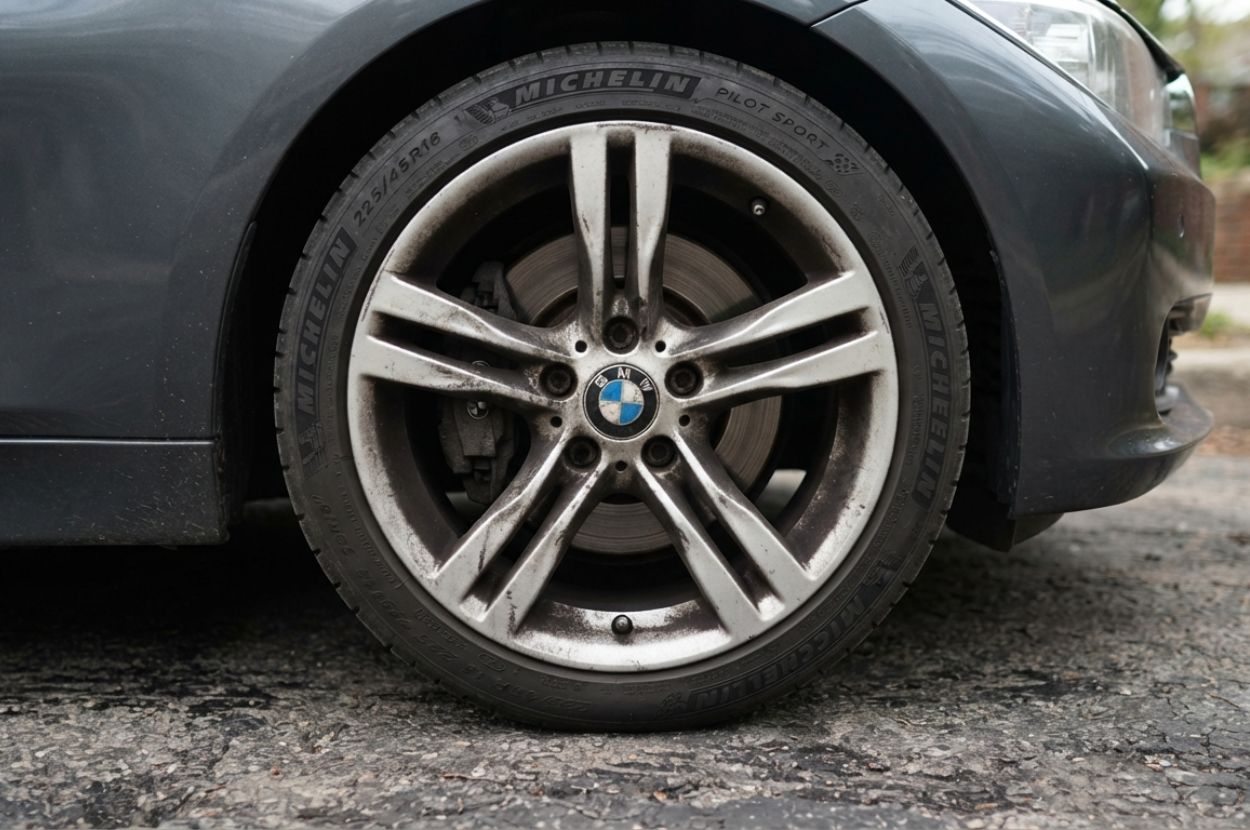
You wash the car, the wheels look great, and two days later they’re covered in a fine gray-black grime again.
That’s brake dust. And it’s not just ugly. It’s actively working against your wheels.
Most people treat it as a cosmetic nuisance, something to wipe off when they get around to it. The reality is a little more urgent. Brake dust is mildly corrosive, and the longer it sits, the more damage it does. Here’s what’s happening, and why regular washing is the cheap fix.
Why Your Wheels Look Dirty a Day After an Exterior Car Wash
Wheels get dirty faster than any other part of the car, and there’s a reason for it.
Every time you brake, the pads press against the rotors and shed a fine dust, a mix of metal particles and material worn off the brake components. That dust flies off and lands on the nearest surface, which happens to be your wheels, inches away.
So even right after a good exterior car wash, the wheels start collecting it again immediately. Drive I-75 with all its stop-and-go, and you’re generating brake dust the whole way. Same story, crawling through the Great Lakes Crossing traffic on a Saturday. It’s not that the wash failed. It’s that the source never stops.
The front wheels usually look worse than the rears, and that’s normal. Most cars do the majority of their braking up front, so the front pads shed more dust. If you’ve ever wondered why your front rims go gray while the back ones stay cleaner, that’s why. Some brake pad types shed more dust than others, but the front-heavy pattern holds no matter what you drive.
What Brake Dust Actually Is (and Why It’s Corrosive)
Brake dust isn’t just “dirt.” It’s a specific, nastier thing.
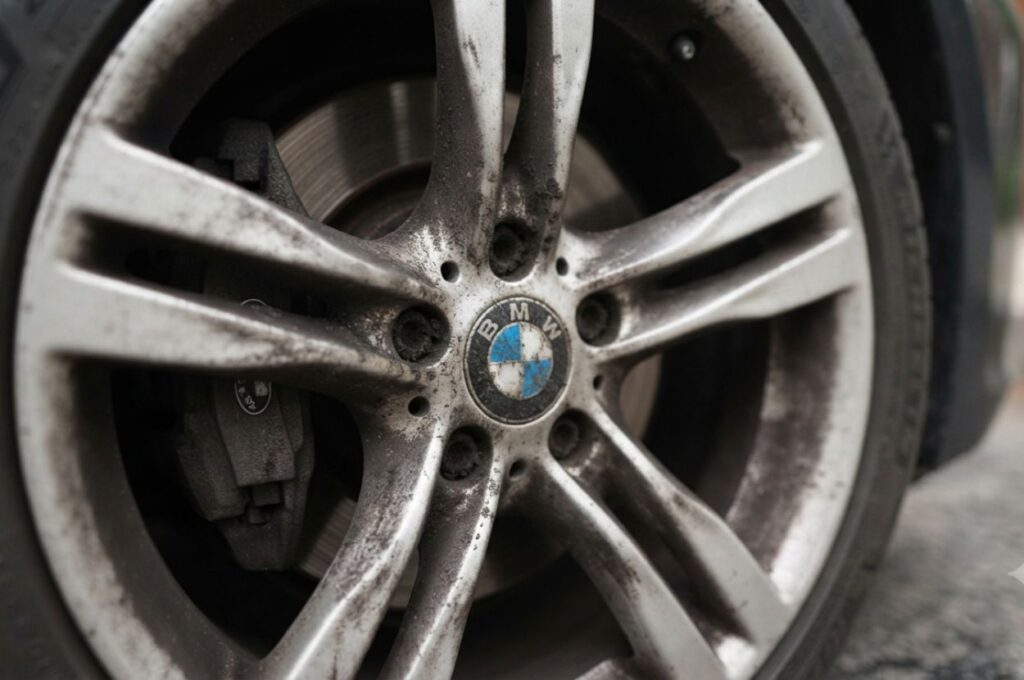
It’s made largely of tiny iron particles worn off the brake rotors, mixed with carbon fibers and bits of pad material. Those iron particles are the problem. When they land on your wheels and get hit with moisture and heat (a summer rainstorm, a hot day, Michigan humidity), they can begin to corrode.
And here’s the mean part. The heat coming off your brakes can actually help the dust bond to the wheel surface. The hotter things get, the more they want to stick. Leave it long enough, and it stops being a wipe-off job and becomes a scrub-and-hope job.
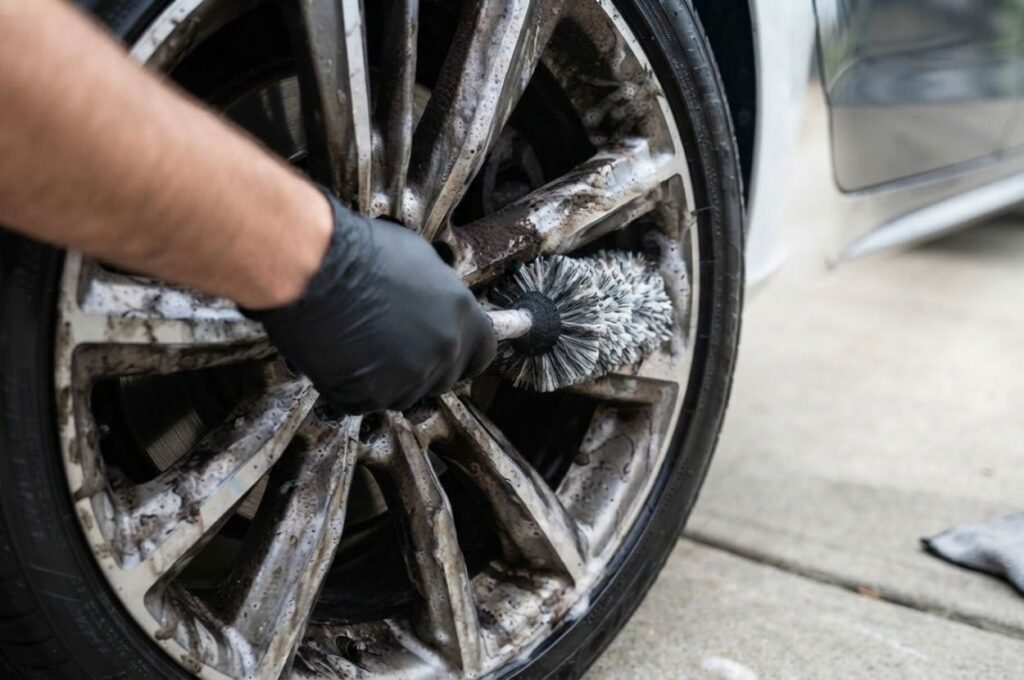
You can even feel the difference. Run a finger over a wheel that’s been dirty for a while, and it’s rough, almost gritty, instead of smooth. Those are the iron particles that have started to bite into the finish. Fresh dust wipes clean. Bonded dust doesn’t, and that’s the whole problem in one sensation.
How It Damages Wheels Over Time
Left alone, brake dust does real, lasting harm.
Those corrosive iron particles slowly etch into the wheel’s clear coat or finish. On alloy wheels, which are on most cars now, this shows up as pitting, dull spots, and discoloration that no amount of later cleaning can bring back. Once the finish is pitted, you’re looking at refinishing or replacement, and a single alloy wheel isn’t cheap.
It’s the same pattern as sap on paint or salt on the undercarriage. A contaminant that’s harmless for a day becomes permanent damage over weeks. By the time the wheels look “stained” rather than dirty, the finish is already compromised, and no product on the shelf reverses that.
How Regular Exterior Car Washes Protect Wheels from Brake Dust
The good news is that this is one of the easiest problems to prevent.
A regular exterior car wash rinses brake dust off before it can bond or corrode. The pressure and detergents lift the iron particles off the finish while they’re still loose, which is exactly what you want, since fresh brake dust comes off easily and baked-on brake dust doesn’t.
Frequency is the whole game. Wash the car every week or two, and the dust never gets the chance to sit, heat-cycle, and etch in. Skip washing for a month of summer commuting, and you’re handing it every opportunity to do damage.
It’s the same logic that makes undercarriage rinsing worth it even in summer. Get the corrosive stuff off before it settles in.
Protecting Your Wheels in Auburn Hills
If your commute involves any real stop-and-go, and around Auburn Hills, between I-75, M-59, and the business-park traffic, most do, your wheels are collecting brake dust constantly. The more red lights and merge-and-brake stretches you sit through, the faster it piles on.
The fix isn’t special wheel products or hours of scrubbing. It’s just washing often enough that the dust never settles in. Make the wheels part of your regular wash routine, and they’ll still look good years from now, long after your neighbor’s have gone dull and pitted.
If you tend to skip the wheels because they’re the annoying part, that’s the exact habit to break. They’re the hardest-working surface on the car and the one most worth keeping ahead of. Two or three minutes of attention on a regular schedule beats an afternoon of scrubbing pitted rims later, and it beats buying replacements even more.
Keep the brake dust from winning. A regular exterior car wash rinses it off before it can etch your wheels. Cheap insurance for an expensive set of rims.
Frequently Asked Questions
Is brake dust actually bad for my wheels?
Yes. Brake dust contains iron particles that can corrode when exposed to moisture and heat, etching into a wheel’s clear coat or finish. Left on, it causes permanent pitting and discoloration on alloy wheels. When rinsed off regularly, it does no harm.
Why do my wheels get dirty so fast after washing?
Because braking constantly produces new dust. Every stop sheds metal particles that land right on the wheels, inches away. Stop-and-go driving generates it continuously, so wheels re-soil faster than any other part of the car.
Does a regular car wash remove brake dust?
Yes, when it’s fresh. A regular exterior wash lifts loose brake dust off the finish before it bonds. Once it’s heat-cycled and baked on, it’s much harder to remove, which is why frequent washing beats occasional deep-scrubbing.
How often should I wash to protect my wheels?
Every week or two for most drivers, more if you do a lot of stop-and-go commuting. The goal is to never let brake dust sit long enough to heat-cycle and etch into the finish.
Visit Jax Kar Wash in Auburn Hills
Make the wheels part of every wash and keep brake dust from ever getting a foothold. It’s cheap insurance for an expensive set of rims.