Michigan drivers often overlook road salt in summer, but it lingers in your car’s undercarriage long after winter has passed.
But here’s the thing about salt. It doesn’t politely leave when the snow melts. It works its way into the undercarriage, into the seams, the crevices, and the tucked-away metal, and a lot of it is still there long after the plows have parked for the season.
Which is why the undercarriage rinse isn’t just a winter thing. Running it through summer is one of the quietest, smartest things a salt-belt driver can do.
Exterior Car Washes Handle Undercarriage Care Better Than Home Rinses
When you think about an exterior car wash, you picture the paint. Foam, brushes, rinse, and shine.
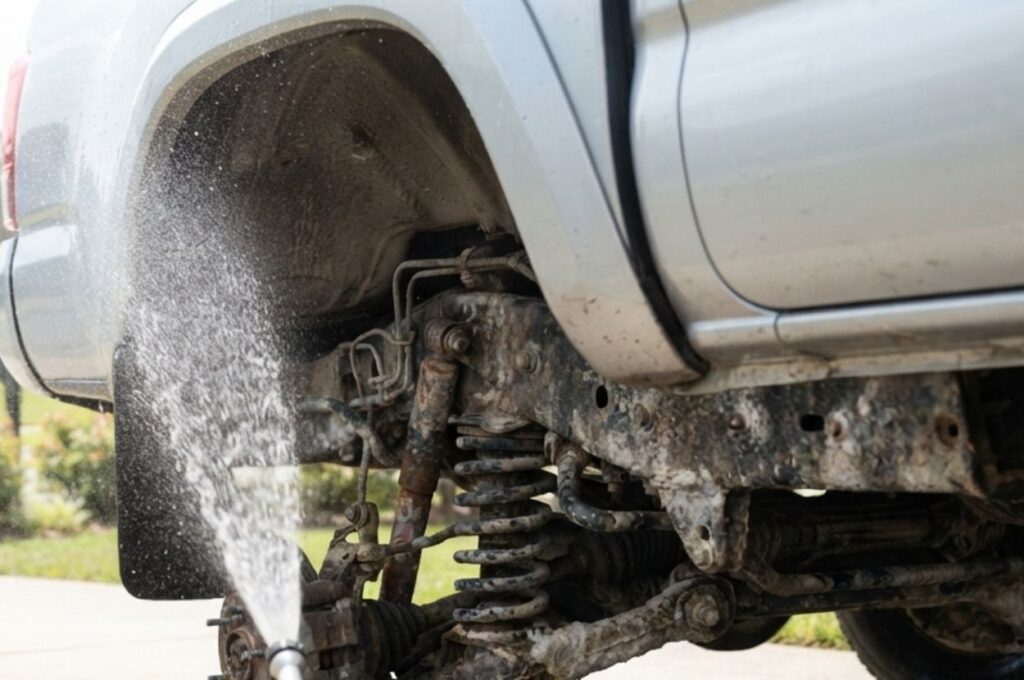
The undercarriage is the part you never look at, which is exactly why it gets neglected. Out of sight, out of mind, and yet it’s where the most expensive corrosion damage actually starts. By the time you notice it, you’re usually under the car for a different reason and staring at rust you didn’t know was there.
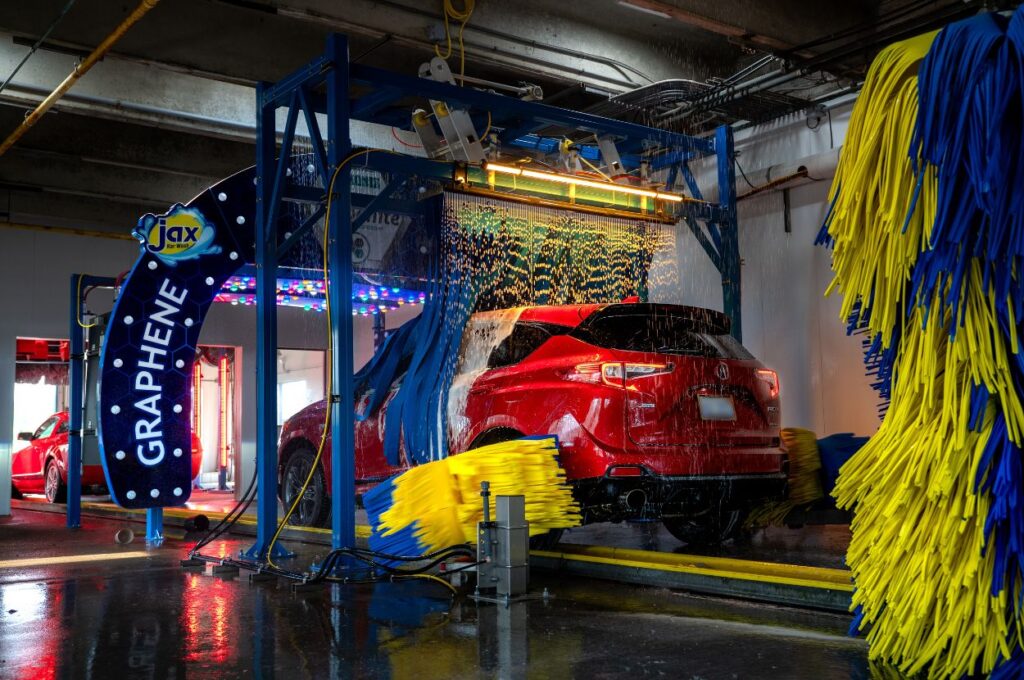
Many washes include or offer an undercarriage rinse: a set of jets that blast the underside of the car as you enter or drive through. It’s aimed straight at the frame, floor pan, and suspension, the stuff salt loves, and you can’t reach with a hose at home.
That’s the key part. A driveway rinse cleans the paint and maybe the wheels, but you can’t get water up into the frame rails and pinch welds lying on your back with a garden hose. The wash jets are aimed and pressurized to hit exactly those hidden surfaces, which is why a real undercarriage rinse does something a home wash simply can’t.
Why Salt Is Still There in July
You’d think a summer of dry roads would wash the salt away on its own. It doesn’t.
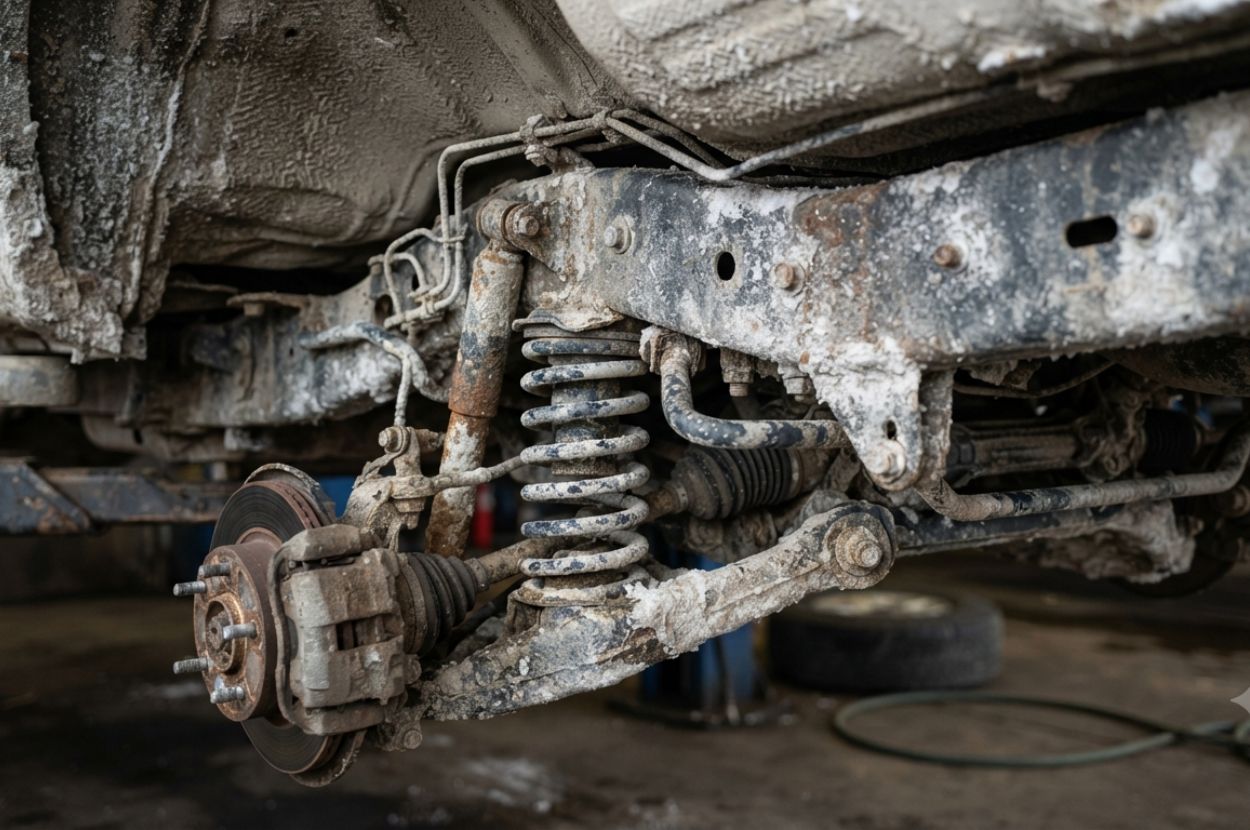
Salt gets packed into places that don’t see rain or spray, up inside the frame rails, behind splash guards, in the nooks around the suspension. A rainstorm rinses the paint. It doesn’t reach the trapped salt underneath.
So a salt-belt car carries residual salt for months after winter. Every humid summer day gives that leftover salt a little moisture to keep corroding. The damage doesn’t stop just because the calendar says July, and Michigan summers bring plenty of humidity to feed it.
It’s worth remembering that Michigan roads get more than rock salt these days. Liquid brine and calcium chloride cling even better and stay damp longer, which is great for melting ice and terrible for your frame. That’s the residue still hiding under there in August.
What Salt Does Underneath
Salt is corrosive, and the undercarriage is where it does its most expensive work.
It accelerates rust on the frame, floor pan, brake and fuel lines, and suspension components. These aren’t cosmetic parts. They’re structural and safety-critical, and they’re costly to repair once corrosion sets in.
That’s what makes underside salt worse than the grime on your paint. A dirty hood is a look. A rusted brake line is a problem, and in Michigan, it’s a common reason older cars fail inspection or get sent to the scrapyard while the body still looks fine. The undercarriage rinse targets the stuff that actually threatens the car’s bones.
Ask any Michigan mechanic, and they’ll tell you the same thing: plenty of cars here die from the bottom up, rusted frames and seized brake lines, long before the engine gives out. The paint can look showroom-fresh while the structure underneath is quietly failing. That’s the whole reason the underside deserves attention.
How an Undercarriage Rinse Helps
The rinse does one job well. It flushes loose salt and debris off the underside before it can keep corroding.
High-pressure jets reach areas you’d never reach yourself, knocking salt and road film off the frame and components. It’s not a miracle. Water rinses loose salt, and deeply bonded salt may need more. But regularly flushing the underside dramatically cuts how long salt sits and works.
Consistency beats intensity here. One deep clean in April does less good than a quick rinse every couple of weeks because the total time salt sits on bare metal drives corrosion. Keep flushing it, and you never give it a long enough run to do real harm.
Doing it through the summer, not just winter, keeps clearing out the residual salt that’s still hiding under there from the last salt season.
It’s the same “get the corrosive stuff off before it settles” logic behind why brake dust eats at your wheels. Prevention beats repair every time.
Adding the Undercarriage Rinse to Your Exterior Car Wash in Auburn Hills
For salt-belt drivers around Auburn Hills, the undercarriage rinse is cheap insurance on the most expensive-to-fix part of the car.
Make it part of your regular exterior car wash year-round. A few extra seconds of jets on the underside, done consistently, is what keeps a Michigan car from rusting out from the bottom up while the paint still looks fine.
Next time you wash, add the undercarriage rinse to your exterior car wash, summer included. Your frame and brake lines will last a lot longer for it.
Frequently Asked Questions
Do I still need an undercarriage wash in summer?
Yes. Road salt packs into hidden areas of the undercarriage and lingers for months after winter, quietly corroding in summer humidity. Rinsing the underside year-round keeps residual salt from causing further damage.
What does road salt do to a car’s undercarriage?
It accelerates rust on structural and safety-critical parts, the frame, floor pan, brake and fuel lines, and suspension. These are expensive to repair, which is why underside corrosion is more serious than surface grime on the paint.
Does an undercarriage rinse actually remove salt?
It removes loose salt and road film effectively, flushing areas you can’t reach at home. Deeply bonded salt may need a dedicated neutralizer, but regularly rinsing the underside greatly reduces how long salt sits and corrodes.
How often should I get an undercarriage rinse?
Frequently in winter and after slushy drives, and periodically through the rest of the year. Adding it to your regular exterior wash keeps residual salt from lingering in hidden spots long after the season ends.
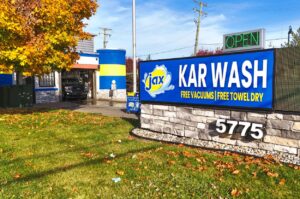
Visit Jax Kar Wash in Auburn Hills
Add the undercarriage rinse to your regular exterior wash and keep residual salt from ever getting a foothold underneath. It takes a few extra seconds, and it’s the cheapest insurance your frame and brake lines will get.