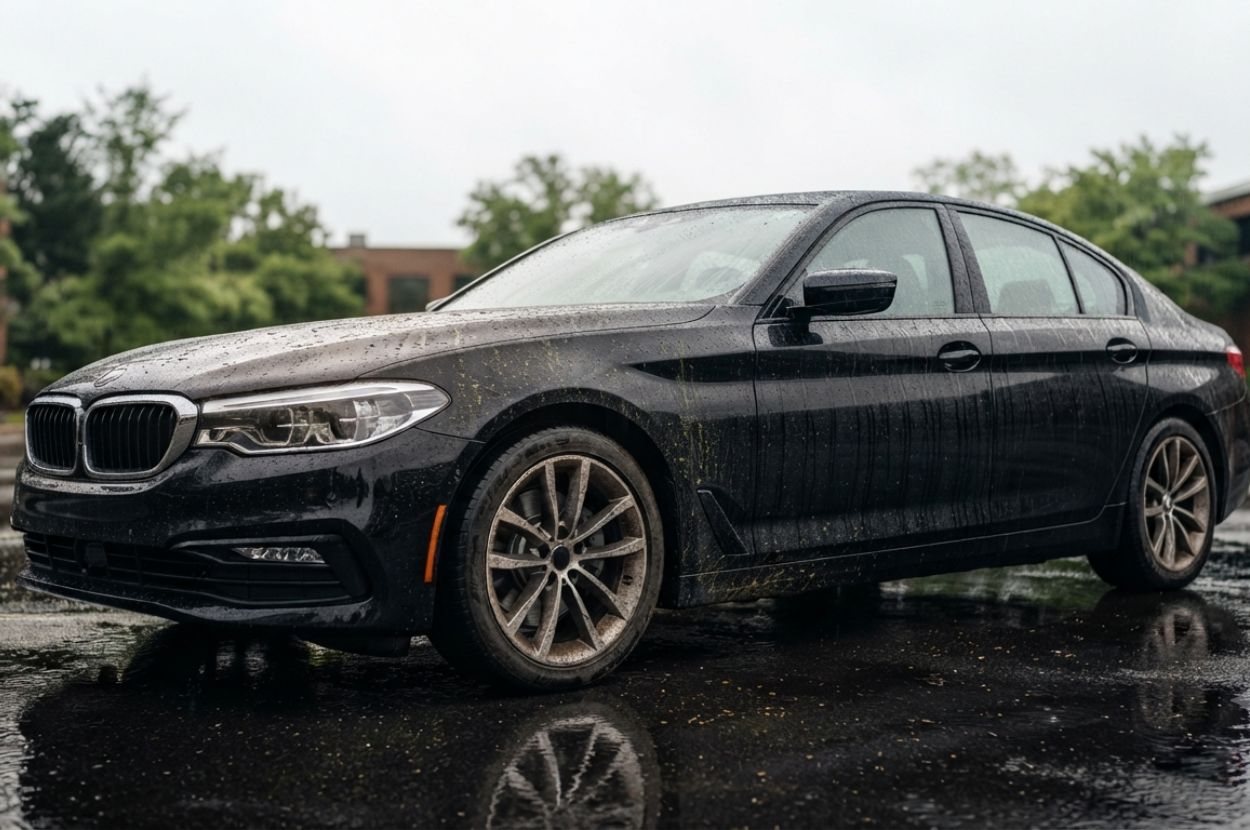
You hear thunder rolling in off Lake St. Clair, and some small optimistic part of your brain thinks: good, free car wash. Twenty minutes later, the storm passes, the sun comes back out, and your car looks worse than it did before the rain started. Streaky windshield, cloudy hood, weird spotting across the roof.
That’s not bad luck. That’s just what Metro Detroit rain actually does to a parked car, especially in July when pollen, construction dust, and highway grime are all stacked up on every hood and windshield in Eastpointe.
So does rain clean your car? Short answer: no, not really, and here’s why.
Does Rain Clean Your Car in Eastpointe? Here’s the Direct Answer
No. Rain does not clean your car, and in most cases, it leaves your paint dirtier than before the storm rolled through. Rainwater picks up dust, pollen, and airborne pollutants on its way down, then deposits that mix right onto your hood and windows.
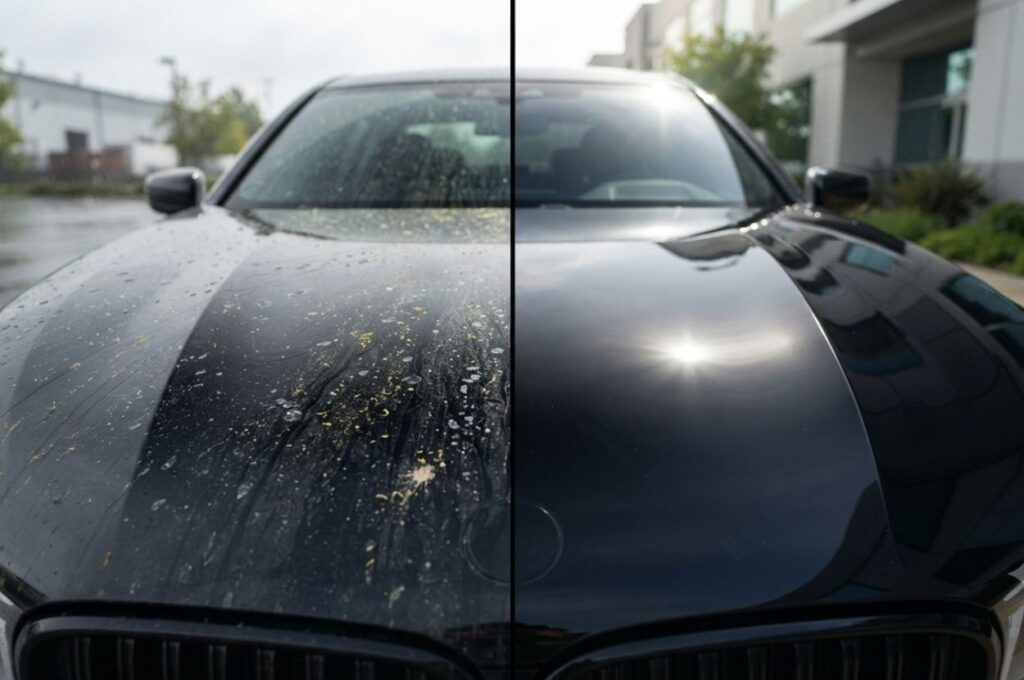
As the water evaporates unevenly, it leaves behind mineral deposits and grime in blotchy spots instead of rinsing anything away. A quick summer downpour might knock loose a little surface dust, but it can’t touch bug splatter, tree sap, or the film of road residue that builds up on any car driven around Eastpointe’s stretch of Gratiot or the I-94 service drive.
Why Eastpointe Storms Add Grime Instead of Removing It
Metro Detroit thunderstorms are short, intense, and full of wind. That wind is the problem. It kicks up dust from construction sites, dry lawns, and roadside gravel, then blows it sideways into the rain as it falls.
Your car isn’t getting rinsed with clean water. It’s getting sprayed with a dirty slurry that dries into a thin, uneven film once the sun comes back out. Add in the pollen still hanging around from late spring trees and the sap dropping from anything overhanging your driveway, and one storm can leave more residue on your hood than a dry, dusty week would.
Water Spots: The Real Damage Eastpointe Drivers Notice
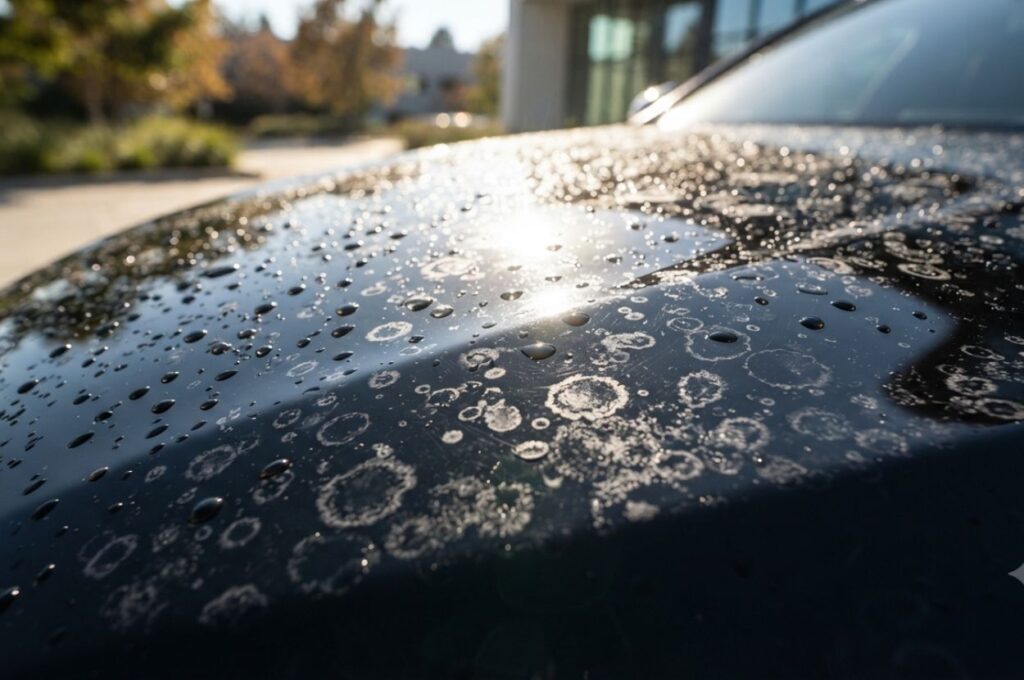
The spotting you see after a storm comes from hard water minerals and dissolved pollutants left behind as raindrops evaporate. Michigan rain isn’t pure water; it carries calcium, dust particles, and whatever it picked up passing through the air over Detroit and the eastern suburbs.
When a raindrop sits on a hot hood and slowly evaporates, it concentrates those minerals into a small ring. Multiply that by hundreds of drops, and you get the cloudy, etched-looking finish that’s genuinely hard to buff out once it bakes into the clearcoat over a few sunny days.
Eastpointe’s Summer Combo: Storms, Pollen, and Construction Dust
Eastpointe sits in a part of Metro Detroit where summer road work is nearly constant, from Nine Mile to Kelly Rd, and that means airborne dust is a near-daily fact of life from May through August. Pair that with pollen drifting off the maples and oaks lining residential streets, and your car is collecting a fine layer of grit even on days it never leaves the driveway.
A thunderstorm doesn’t wash that layer away; it just wets it down and redistributes it, which is exactly how you end up with streaky, blotchy panels instead of a clean shine.
Storms may leave your car streaked, but summer insects add another layer of risk. Eastpointe drivers can see how fast splatter etches paint by reading about removing love bug damage before it sets in.
What Actually Removes Storm Residue From Your Car
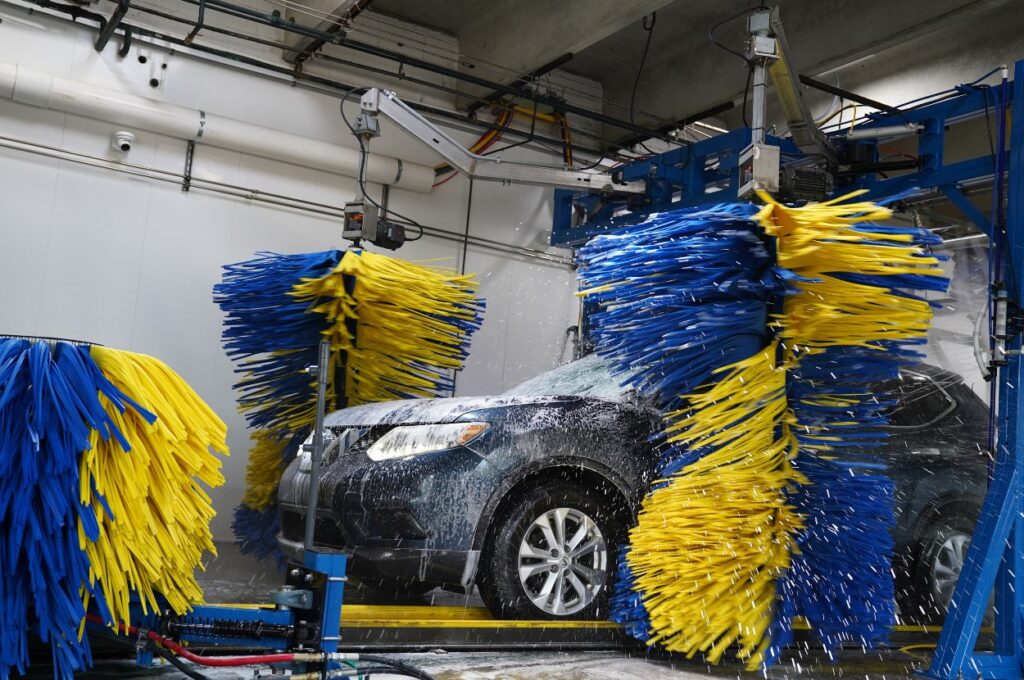
Getting your car genuinely clean after a round of summer storms takes actual soap, agitation, and a proper rinse, not another pass of falling rain. A trip through an exterior car wash uses pressurized, treated water and cleaning agents designed to break down mineral deposits, pollen film, and road grime in one pass, then rinses it all away instead of letting it dry into spots.
That’s the difference between a wash that actually removes contaminants and a storm that just relocates them across your hood.
Protecting Your Paint Between Eastpointe Storms
If storms keep rolling through and you can’t get to a wash every time, a few habits help in the meantime. Park undercover when you can, since direct sun speeds up how fast water spots bake into the finish.
Keep a microfiber towel in the car for a quick wipe-down of the windshield and mirrors after a light rain, especially on the hood and roof where evaporation happens fastest. And don’t wait too long between washes during peak storm season.
The longer pollen, sap, and grime sit under repeated wet-dry cycles, the harder that film is to fully lift off later, since UV exposure and heat basically bake each layer onto the one before it.
How Often Eastpointe Drivers Should Wash During Storm Season
Most Eastpointe drivers can get away with washing every couple of weeks in a normal month. Summer storm season isn’t a normal month. Between June and August, a car parked outside or driven daily on Gratiot, Nine Mile, or I-94 is picking up a fresh layer of pollen, dust, and grime almost every day, and every storm just presses that layer deeper into the clearcoat instead of removing it.
A weekly wash during the heaviest stretch of storm season keeps mineral deposits from ever getting the chance to set. It also makes each wash faster and cheaper in the long run, since you’re never dealing with weeks of baked-on residue at once.
Why a Quick Rinse at Home Doesn’t Solve the Problem
A garden hose feels like it should help, but it runs into the same issue as rainfall. Without soap and real pressure, a hose rinse just moves dust and pollen around the surface rather than lifting it off.
Hard well water or municipal water with heavy mineral content can leave its own spotting behind as it dries, on top of whatever the storm already deposited. It’s a reasonable stopgap between real washes, but it’s not a substitute for one, especially after a week of on-and-off summer thunderstorms.
Frequently Asked Questions
Does rain clean your car?
No. Rain adds mineral deposits, dust, and pollen residue to your car instead of removing them. It can knock loose light surface dust, but it leaves water spots and a dirty film behind as it dries, especially after windy Michigan storms.
Why does my car look worse after it rains?
Wind mixes dust, pollen, and road grime into the falling rain, so your car ends up rinsed with dirty water instead of clean water. As that water evaporates unevenly, it leaves streaks and spots concentrated in small areas across the hood and windows.
How do I get rid of water spots after a storm?
A proper wash with soap and pressurized water is the most reliable way to lift mineral deposits before they set. The longer spots sit in the sun, the more they bake into the clearcoat, so washing within a day or two of a storm makes the biggest difference.
How often should I wash my car during Michigan storm season?
Weekly is a good target from June through August. Frequent storms combined with pollen and construction dust mean grime builds up fast, and washing regularly keeps it from setting into the paint.
Visit Jax Kar Wash in Eastpointe Today
Skip the guesswork and let a real wash handle what the storms leave behind. Jax Kar Wash in Eastpointe is right on Kelly Rd., just off the routes most drivers already take through town, making it easy to stop in after a storm rolls through instead of driving around with spots and film on your paint.
Stop by after the next round of storms and drive away with a finish that’s actually clean, not just wet.