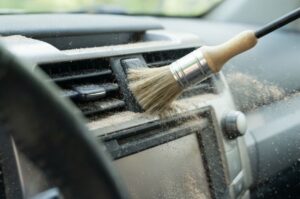
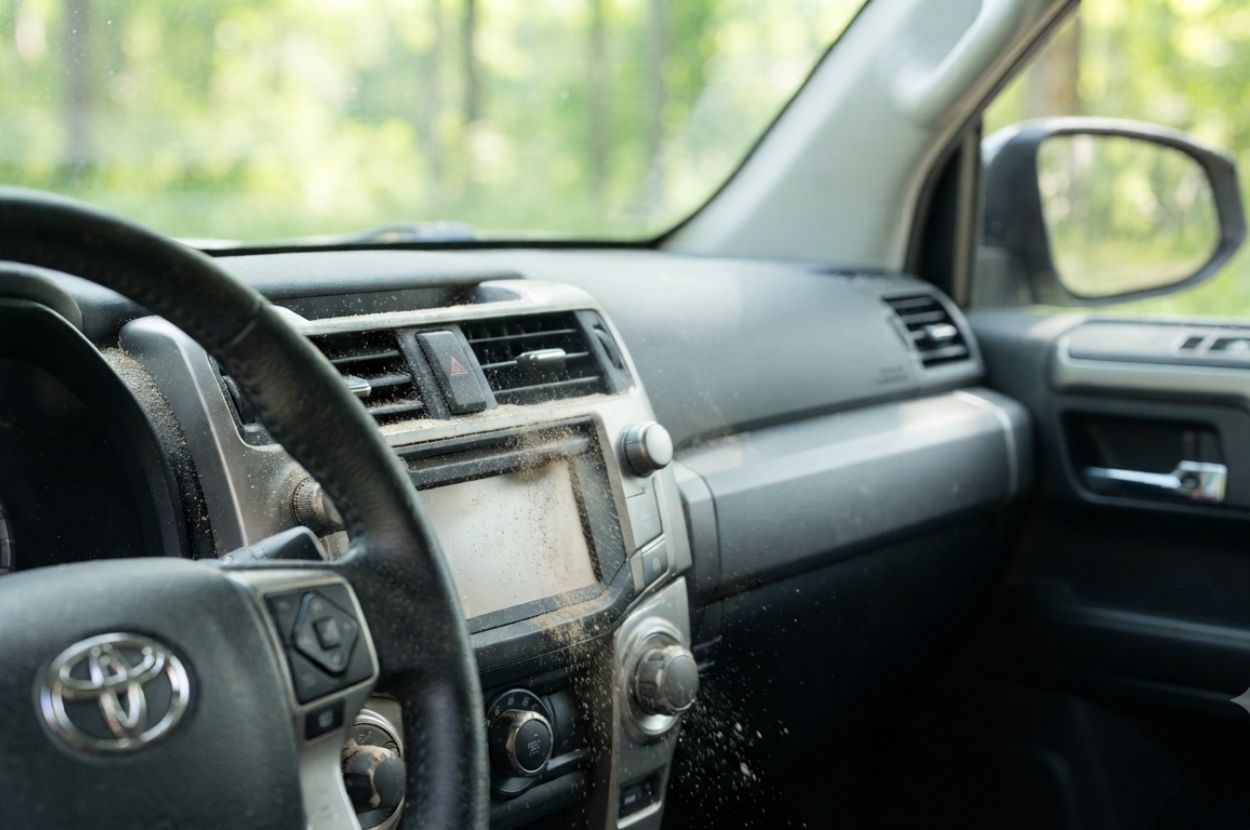
A day at Kensington’s beach or the sandy stretch at Island Lake State Recreation Area is exactly what summer in Brighton is for. By the time you’re driving home with damp towels, sandy feet, and kids reapplying sunscreen in the back seat, your dashboard has turned into a mess of grit, greasy fingerprints, and hazy film.
Dashboards are trickier to clean than they look because sand works into vents and seams where a regular wipe‑down can’t reach. Sunscreen residue also reacts badly with many cleaning products, leaving streaks or a cloudy film that looks worse than the original mess.
Get the order of operations right, though, and the cleanup becomes a fifteen‑minute job instead of an afternoon project. Here’s the direct answer, followed by details on why beach trips create such a specific kind of dashboard mess.
How to Clean a Car Dashboard After a Brighton Beach Day
Start by vacuuming loose sand and debris before wiping anything, since wiping first just grinds grit into the plastic and creates fine scratches. Follow with a microfiber cloth lightly dampened with a mix of mild soap and water, or a dedicated interior cleaner made for automotive plastic and vinyl, wiping in one direction rather than in circles to avoid pushing sand around.
For sunscreen residue specifically, a cleaner with a mild degreasing agent works better than plain water, since sunscreen is oil-based and water alone just spreads it. Finish with a dry microfiber towel to prevent streaking, and avoid anything with silicone or heavy gloss additives, which look good for a day but attract dust fast under the Michigan sun coming through the windshield.
Why Sand and Sunscreen Are Extra Tough on Brighton Dashboards
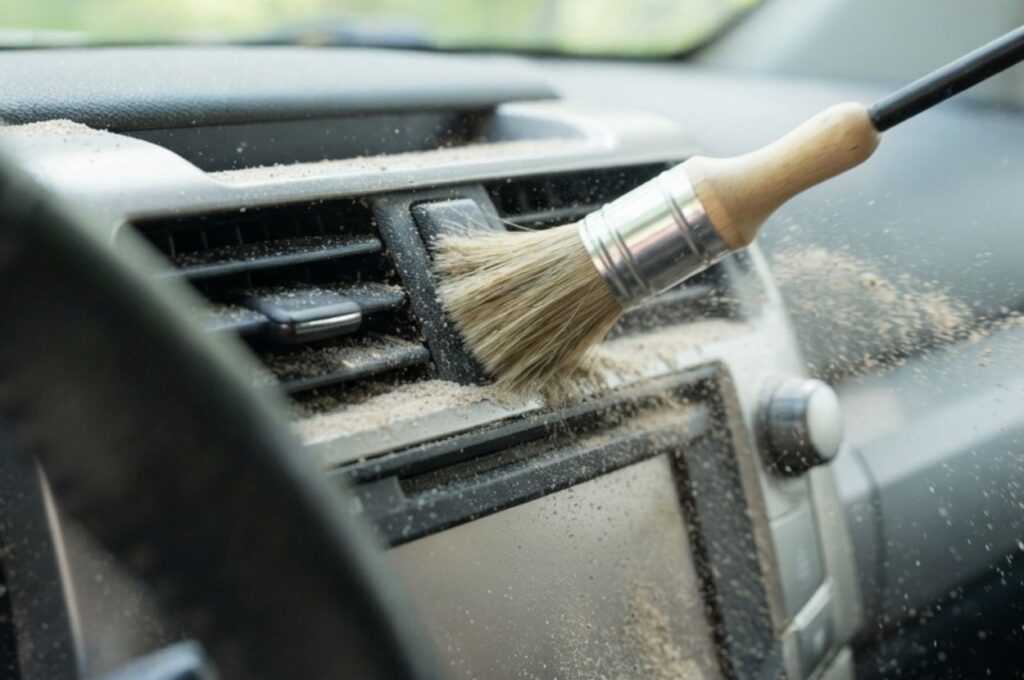
Sand from Kensington or Island Lake isn’t like household dust. It’s abrasive and irregular, and it settles into every seam around vents, the gauge cluster, and cupholders, where it sits until the next hard brake or turn sends it sliding across the dash. Sunscreen adds its own complication.
Most sunscreens contain oils and UV filters that, once they dry, form a slightly tacky film that grabs more dust and sand out of the air over the following days. Combine both from the same beach trip, and you get a dashboard that looks dusty within a day or two of what seemed like a thorough cleaning, simply because the sunscreen film underneath keeps pulling new grit onto the surface.
The Right Tools for Cleaning a Dashboard Without Scratching It
Skip paper towels and anything abrasive. Dashboards are usually textured plastic or soft-touch vinyl, both of which scratch or dull surprisingly easily under rough materials.
A soft microfiber cloth, a soft-bristled detail brush for vents and seams, and a cleaner formulated for interior plastic are really all you need. Compressed air works well for blowing sand out of tight gaps before you even reach for a cloth, and it’s worth doing that step first every time, since it saves you from having to dig sand out with a brush later.
Getting Sand Out of Vents and Crevices in Brighton
This is the part most people skip, and it’s the part that matters most after a real beach trip. Sand collects in AC vents, along the seam where the dash meets the windshield, and in the crevices around buttons and the gear selector.
A soft brush loosens it, but you need suction to actually pull it out instead of just relocating it somewhere else in the car. This is exactly what the free vacuums at Jax Kar Wash are built for: strong enough suction to pull sand out of vents and seams, plus attachments that fit into tight spots a shop vac at home usually can’t reach.
Doing this right after a beach day, rather than waiting, keeps sand from working its way deeper into the dash over repeated trips.
Protecting Your Dashboard From the Michigan Sun After a Lake Trip
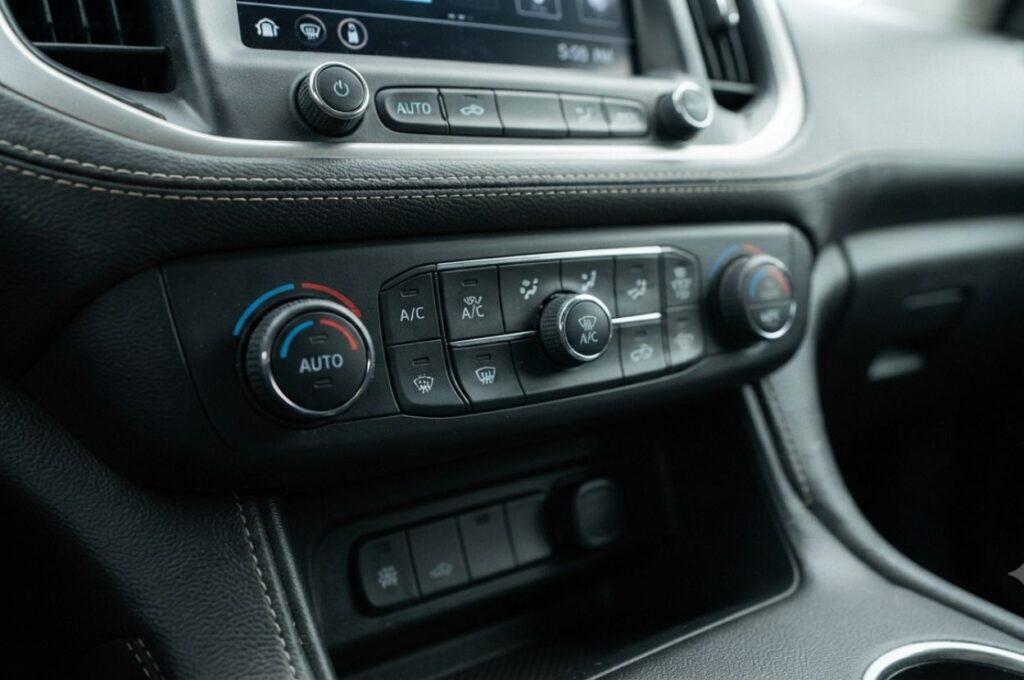
Once the dash is clean, protect it before your next Brighton beach day undoes the work. UV exposure through the windshield fades and cracks dashboard plastic over time, and that damage accelerates on days when a sandy, sunscreen-covered dash sits baking in a parked car at the lake.
A UV-protectant specifically made for interiors, applied sparingly and buffed to a matte finish rather than a heavy gloss, helps slow that fading without creating the slick, dust-attracting shine that cheaper products leave behind. A sunshade for the windshield during long beach days helps too, cutting down both heat buildup and the UV dose your dashboard takes on while you’re out on the water.
It’s worth building this into your routine rather than treating it as a one-off after a particularly messy trip. If your family is hitting the lake most weekends through the summer, a quick vacuum and wipe-down after each trip takes a few minutes and keeps sand from ever getting the chance to grind in or sunscreen film from building up in layers.
Waiting until the dash looks visibly dirty usually means you’re dealing with weeks of accumulated grit and residue instead of a single day’s mess, and that takes a lot longer to fully clean out.
Frequently Asked Questions
How do you clean a car dashboard the right way?
Vacuum loose sand and debris first, then wipe with a microfiber cloth and a cleaner made for automotive plastic or vinyl, working in one direction rather than in circles. Finish with a dry towel to prevent streaking, and skip anything with heavy silicone or gloss additives that attract dust.
What’s the best way to get sand out of dashboard vents?
Compressed air loosens sand in tight gaps, and a soft-bristled detail brush helps free grit from seams around buttons and the gauge cluster. For actually removing it rather than just relocating it, strong suction, like a shop vacuum or a car wash’s free vacuums, works better than a brush alone.
Does sunscreen actually damage a car’s dashboard?
It can contribute to fading and a sticky film that attracts more dust and dirt over time if it’s left to bake in the sun repeatedly. It’s not usually a one-trip problem, but regular exposure without cleaning speeds up wear on dashboard plastic and vinyl.
How often should you clean your dashboard in the summer?
If you’re making regular trips to the lake or beach, a quick vacuum and wipe-down after each outing keep sand and sunscreen from building up. For typical summer driving without heavy sand exposure, once every couple of weeks is usually enough.
Visit Jax Kar Wash in Brighton Today
After your next trip to Kensington or Island Lake, swing by Jax Kar Wash in Brighton and use the free vacuums to pull sand out of every vent and seam before it has a chance to settle in. Your dashboard and your next passenger’s bare feet will thank you.