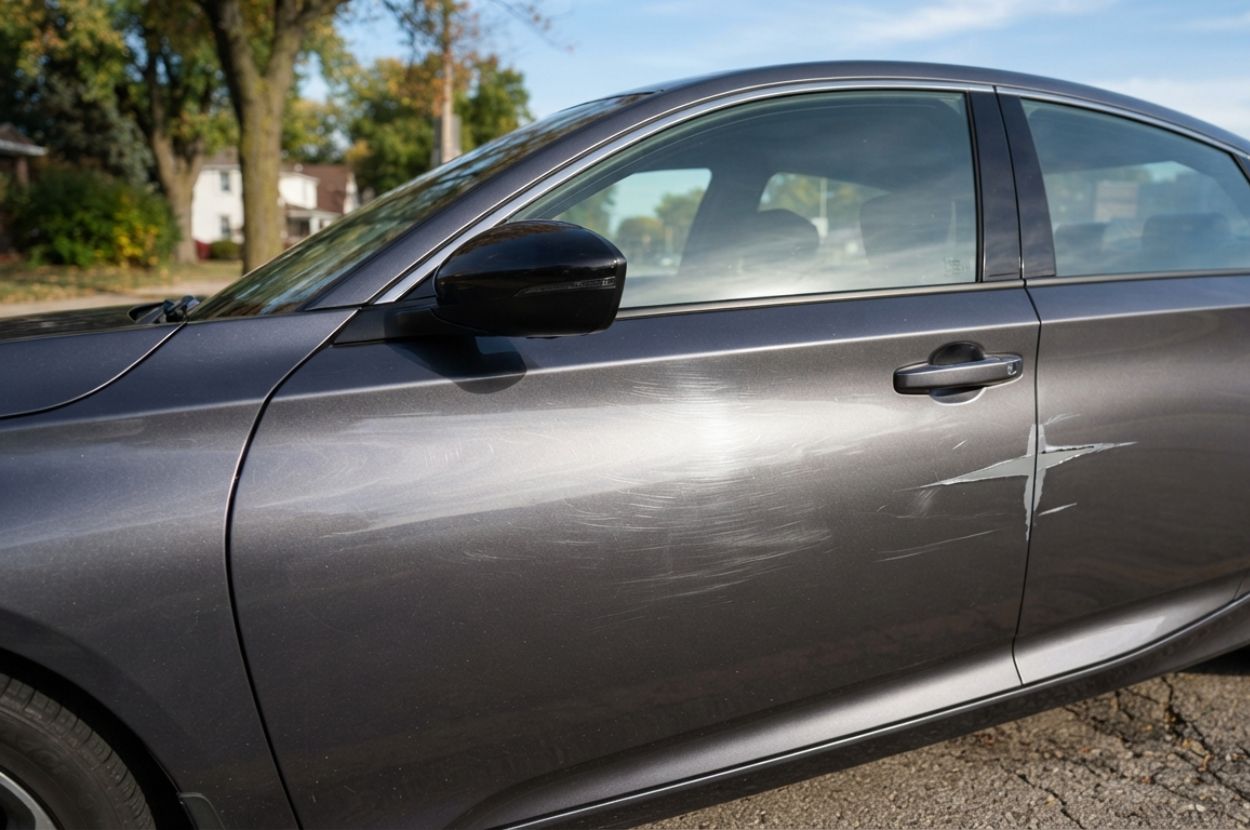
You spot a new scratch on the door, and your stomach drops a little. Before you panic or book a body shop appointment, it helps to know something most drivers in Madison Heights never learn: not all scratches are the same problem. Some disappear with a good polish, while others need paint.
The difference comes down to depth, specifically which layer of your car’s paint the scratch actually reached. A scratch that only scuffed the clearcoat behaves completely differently from one that cut into the color coat or bare metal underneath.
So how do you tell which one you are looking at? Here is the direct way to diagnose it, plus what each type of damage actually needs to get fixed.
How to Get Scratches Out of a Madison Heights Car: Light vs. Deep
The fastest way to diagnose a scratch is the fingernail test. Run your fingernail across the mark. If your nail glides over it smoothly without catching, the scratch is shallow and confined to the clearcoat, which means it will very likely buff out with polishing compound and some elbow grease, or with a quick professional polish.
If your fingernail catches or snags in the groove, the scratch has gone deeper, into the color coat or possibly the primer and metal, and buffing alone will not fix it. That kind of damage needs touch-up paint or a body shop, not a bottle of polish.
This one test filters out most of the guesswork. Most scratches people worry about, from shopping cart dings to branch scrapes, are actually clearcoat-only and fixable at home or with a light detail.
Understanding Your Car’s Paint Layers Before You Try to Fix a Scratch
Every modern vehicle has three layers of paint stacked on top of bare metal: primer, base color coat, and clearcoat on top. The clearcoat is the thickest layer by design, since its whole job is to protect the color coat and give the paint its shine and depth.
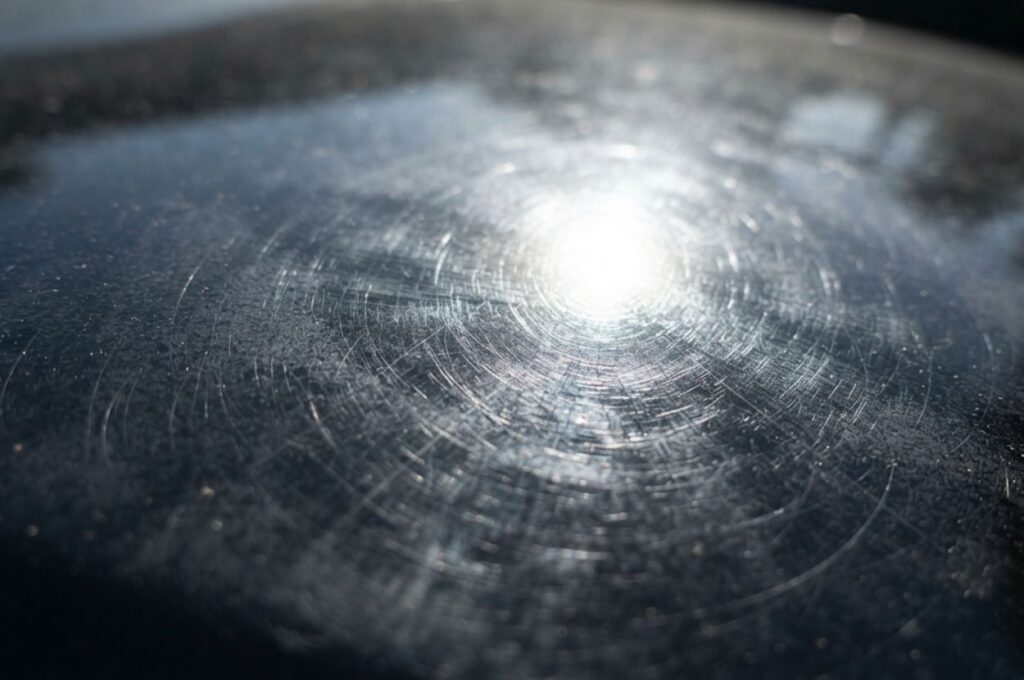
Most everyday scratches, the ones from car washes done wrong, keys brushing a panel, or a kid’s bike leaning against the fender, only reach this outer clearcoat layer.
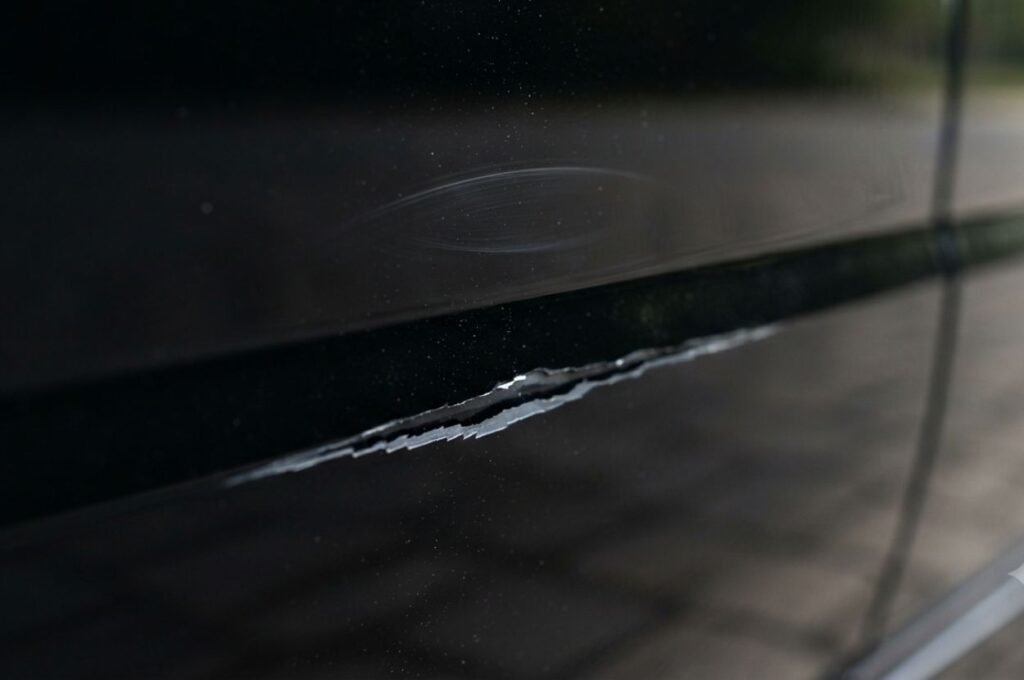
A scratch that reaches the color coat looks different. You will actually see a change in color inside the scratch line, not just a dull, scuffed look. And a scratch deep enough to hit primer or bare metal often shows gray or silvery metal at the bottom, which is a clear sign this is a paint shop job, not a weekend project.
Light Scratches: What Actually Buffs Out on a Madison Heights Car
Light, clearcoat-only scratches are genuinely fixable without paint. A rubbing compound or scratch-removal polish, worked in with a microfiber cloth or a dual-action polisher, levels the surrounding clearcoat down to match the depth of the scratch, which makes it optically disappear even though a tiny amount of clearcoat thickness is removed in the process.
This works well for the kind of light marring Madison Heights drivers pick up constantly: fine swirls from an automatic car wash years ago, faint scuffs from parking too close to a cart corral at the grocery store, or light scratching from winter ice scrapers used a little too aggressively. None of that requires paint. It requires patience and the right compound.
One caveat worth knowing: clearcoat has a finite thickness, and it thins slightly every time it gets buffed. A car that has already had several rounds of aggressive polishing has less margin left, so lighter, targeted correction is smarter than a full-panel buff for scratches that do not need it.
Deep Scratches: When Madison Heights Drivers Need a Body Shop Instead
Deep scratches are a different category entirely. If the scratch shows a visible color change, catches your fingernail, or reveals gray primer or bare metal at the bottom, buffing will not remove it because there is nothing to level. The material is actually gone, not just scuffed.
At that point, the real question becomes rust prevention as much as appearance. Exposed metal on a Michigan car, especially one that sees winter brine on I-75 and the surrounding surface streets, can start to show surface rust in a matter of days if it is left untreated.
A dab of touch-up paint matched to your factory color code buys time and seals the metal until a body shop can do a proper repair. For anything deeper than a surface scuff, get it assessed and treated quickly rather than letting road salt sit on exposed steel over a Michigan winter.
Preventing New Scratches Between Wash Visits in Madison Heights
Diagnosing what you already have only solves half the problem. The other half is reducing how many new scratches show up in the first place.
Regular washing is actually part of prevention, not a cause of scratching, because dirt and grit sitting on paint for weeks is what grinds in fine marks when it finally gets touched, wiped, or rained on. Visiting a an exterior car wash ensures borderline cases are handled correctly, with professional care that helps prevent scratches before they worsen.
Beyond washing on a schedule, a few habits go a long way: park a car length away from cart corrals when you can, keep a soft brush handy for winter ice instead of a hard scraper edge on painted trim, and wipe road salt off as soon as reasonably possible during brine season.
None of that is glamorous, but it is the difference between a car that only ever needs the occasional light buff and one that is booking body shop visits every year.
Frequently Asked Questions
How do you get scratches out of a car?
Run the fingernail test first. If your nail glides smoothly over the mark, it is a clearcoat-only scratch that will usually buff out with a rubbing compound or professional polish. If it catches, the scratch is deeper and needs touch-up paint or body shop repair instead.
Will toothpaste really remove a scratch?
Toothpaste is a very mild abrasive, so it can sometimes soften the appearance of extremely light hairline scratches in a pinch. It is nowhere near as effective as an actual rubbing compound made for paint, and it will not touch anything deeper than the surface of the clearcoat.
Can a deep scratch be fixed without repainting the whole panel?
Often, yes. Small, deep scratches can usually be spot-treated with matched touch-up paint and clear coat rather than repainting the entire panel. Larger or more visible deep scratches may need a body shop to blend the repair so it is not noticeable.
How much does professional scratch removal typically cost?
Light clearcoat polishing is generally inexpensive, often bundled into a detail service. Deeper scratches that need touch-up paint or body work cost more and vary widely depending on the size of the damage and whether blending into surrounding panels is needed.
Visit Jax Kar Wash in Madison Heights Today
Not sure which category your scratch falls into? Bring it by Jax Kar Wash in Madison Heights, and our team can take a look before you spend money guessing.
We offer scratch assessment and removal for the light, clearcoat-level marks that make up most of what drivers deal with day to day, plus honest guidance on when a scratch is deep enough to need a body shop instead. Stop in and let us help you figure out the fastest, most affordable fix.