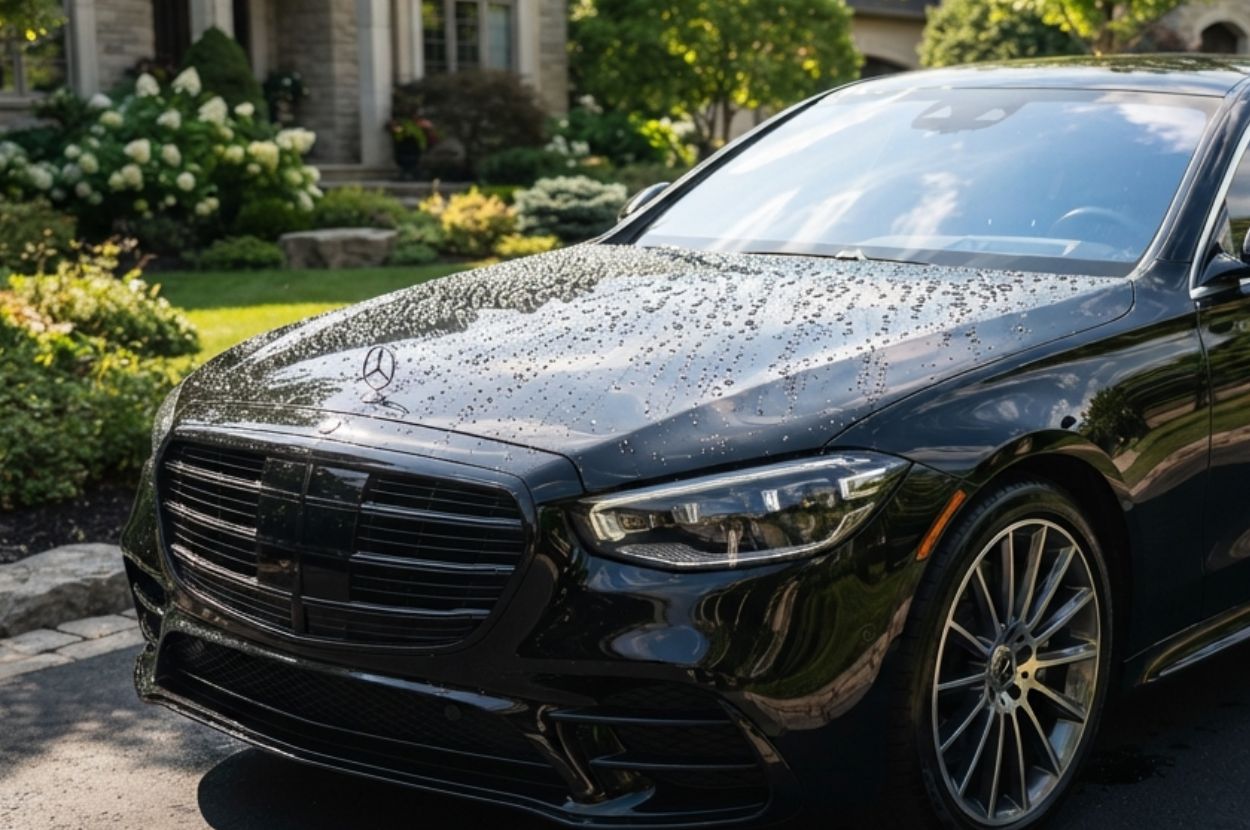
You just paid for a wax job, and three weeks later, water is not beading on the hood anymore. In a Michigan summer, that is not your imagination. Heat, UV rays, and the kind of daily driving commuters put in along Birmingham all break down wax a lot faster than the label on the bottle suggests.
Knowing roughly how long wax actually holds up helps you plan reapplication before your paint is left unprotected, especially heading into the rougher months later in the year. It also helps you decide whether a traditional wax is even the right product for how you use your car.
Here is the direct answer on wax longevity; then we will get into why Birmingham’s summer conditions specifically shorten that window.
How Long Does Car Wax Last in Summer Heat?
Traditional carnauba car wax typically lasts 4 to 6 weeks in normal conditions, but summer heat cuts that down to roughly 3 to 4 weeks. Synthetic paint sealants last longer, usually 2 to 3 months, and ceramic coatings can protect paint for 1 to 5 years, depending on the product.
Heat is the main culprit. Wax is essentially a soft, natural or synthetic film sitting on top of the clear coat, and high temperatures cause it to soften, thin out, and gradually wash or wear away faster than it would in cooler weather.
Direct sun exposure adds UV degradation on top of the heat problem. UV rays break down the molecular structure of wax over time, which is part of why a car parked outside all summer needs wax touch-ups more often than one that spends most of its time in a garage or covered spot.
Why Birmingham’s Parking and Traffic Speed Up Wax Breakdown
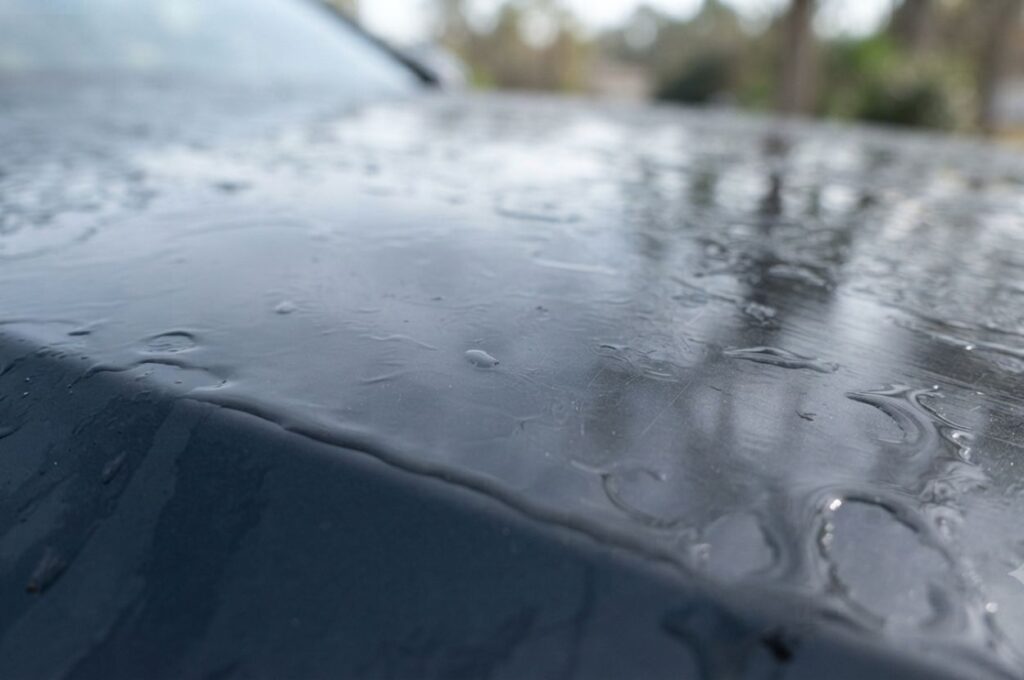
Birmingham does not have a lot of covered street parking outside of downtown garages near the Somerset Collection, so most vehicles are sitting in direct sun for a big chunk of the day, whether that is a driveway in Birmingham or a surface lot downtown. Asphalt and concrete radiate additional heat back up into the undercarriage and lower panels, which speeds up wax breakdown on top of what the sun alone would cause.
Frequent washing plays a role too. Birmingham’s higher concentration of newer, leased, and luxury vehicles means more owners washing their cars weekly to keep them looking sharp, and every wash strips away a little more wax, even with a wax-safe soap.
That is a reasonable trade-off for a clean-looking car, but it does mean the wax reapplication clock runs faster than it would for someone who washes less often.
Pollen and Sap: Birmingham’s Other Summer Wax Killer
Pollen and tree sap season compounds the problem in June and July. Birmingham’s leafy, tree-lined neighborhoods drop a steady coating of sap and pollen on parked cars, and both are acidic enough to eat through a thin wax layer months before it would naturally wear off on its own.
If wax is wearing off every 3 to 4 weeks and that feels like too much upkeep, a synthetic sealant or ceramic coating solves the reapplication problem without changing your washing habits. Sealants bond to the clear coat rather than sitting loosely on top, which makes them more heat-resistant and better suited to Michigan’s swing from scorching summers to salty, freezing winters.
A professional car waxing and polishing service can apply either option correctly, with the surface prepped and clayed first so the product bonds properly instead of trapping dirt underneath.
How to Test Whether Your Wax Has Worn Off
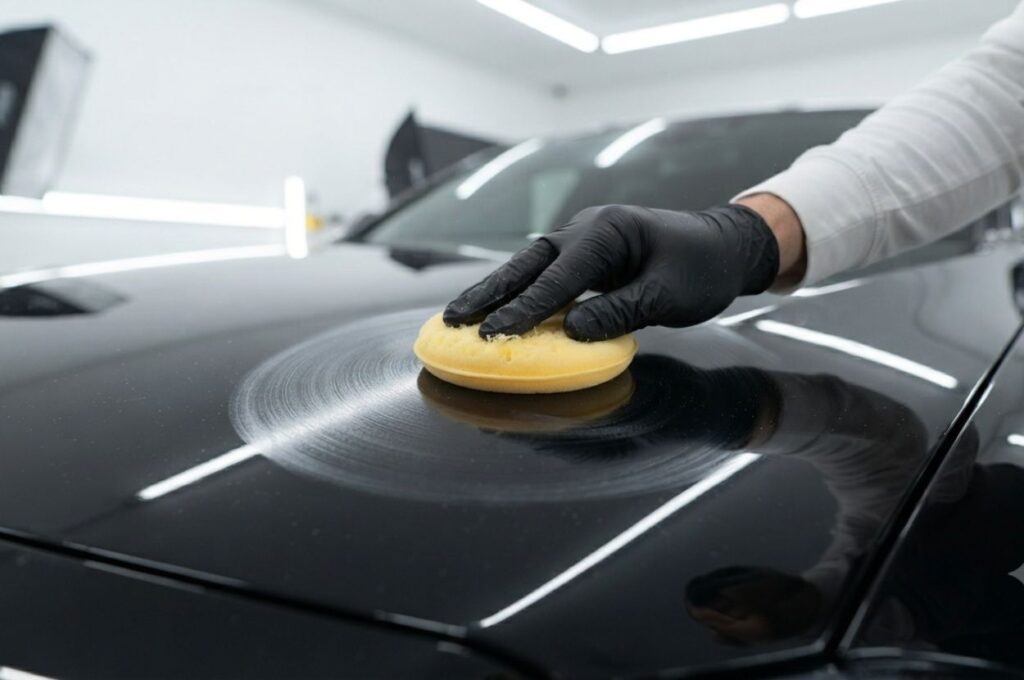
A simple water test tells you where your wax stands without guesswork. Run the hose over the hood: if water beads up tightly and rolls off, protection is still active. If it sheets flat across the paint instead of beading, the wax has broken down, and it is time to reapply.
Checking this every couple of weeks through peak summer takes less time than an actual reapplication and keeps you from driving around with unprotected paint during the season that is hardest on it.
Reapplying wax yourself between professional services is fine as long as the paint is properly washed and clayed first, since sealing in dirt or residue under a wax layer just traps contaminants against the clear coat. A quick spray wax after each wash can extend a base coat’s life by a couple of weeks, but it is not a substitute for a full wax application every month or so through the hottest stretch of the year.
Why Dark-Colored Cars in Birmingham Lose Wax Faster
Color plays a bigger role than most owners expect. Dark paint, which is common on the German sedans and SUVs that make up a good share of Birmingham’s leased fleet, absorbs more heat than lighter colors and can run 20 to 30 degrees hotter on the surface during a sunny afternoon.
That extra heat means dark-colored cars often see wax breakdown on the faster end of the range, closer to 3 weeks than 6, especially on horizontal panels like the hood and trunk that take the most direct sun.
Timing matters too. Waxing right before a stretch of 90-degree days is not the most efficient use of the product, since the wax is fighting peak heat from day one. Early morning or evening application, after the car has cooled down and the paint is not radiating heat back into the fresh wax, gives the product a better chance to cure and bond properly.
A lot of Birmingham drivers get better mileage out of their wax simply by scheduling the service for a cooler part of the day rather than mid-afternoon.
Frequently Asked Questions
How long does car wax actually last in summer heat?
Traditional carnauba wax typically lasts 3 to 4 weeks in summer heat, down from 4 to 6 weeks in milder conditions. Synthetic sealants last 2 to 3 months, and ceramic coatings can last 1 to 5 years depending on the product.
Why does wax wear off faster in Birmingham than in other areas?
Limited covered parking, frequent washing among Birmingham’s leased and luxury vehicle owners, and heavy pollen and tree sap season all speed up wax breakdown compared to a garage-kept vehicle in a less tree-lined area.
How do I know when my car needs to be rewaxed?
Run water over the hood. If it beads up tightly and rolls off, the wax is still protecting the paint. If water sheets flat instead of beading, the wax has broken down, and it’s time to reapply.
Should I switch from wax to a ceramic coating?
If reapplying wax every 3 to 4 weeks feels like too much upkeep, a ceramic coating or synthetic sealant is worth considering. Both bond to the clear coat rather than sitting on top, making them far more resistant to Michigan’s heat and salt.
Visit Jax Kar Wash in Birmingham Today
Not sure whether your wax has worn off or if it’s time to upgrade to a longer-lasting sealant? Stop by Jax Kar Wash in Birmingham, and our team will check your paint’s protection level and recommend the right option for how you drive and where you park.