Perforated leather looks great on paper. Those small ventilation holes keep seats cooler in summer and let heated seats work better in winter. But the first time you try to clean them, you realize those same holes are also a direct path for dirt, crumbs, and cleaning product to get trapped where you cannot easily reach.
A lot of Birmingham drivers in leased luxury cars have perforated seating, and a surprising number end up with clogged or discolored holes simply because they used the wrong cleaning method. The holes do not forgive shortcuts the way solid leather does.
Here is the direct answer on how to do it right; then we will get into why perforated leather needs a different approach than the rest of your interior.
How to Clean Perforated Leather Seats Without Clogging the Holes
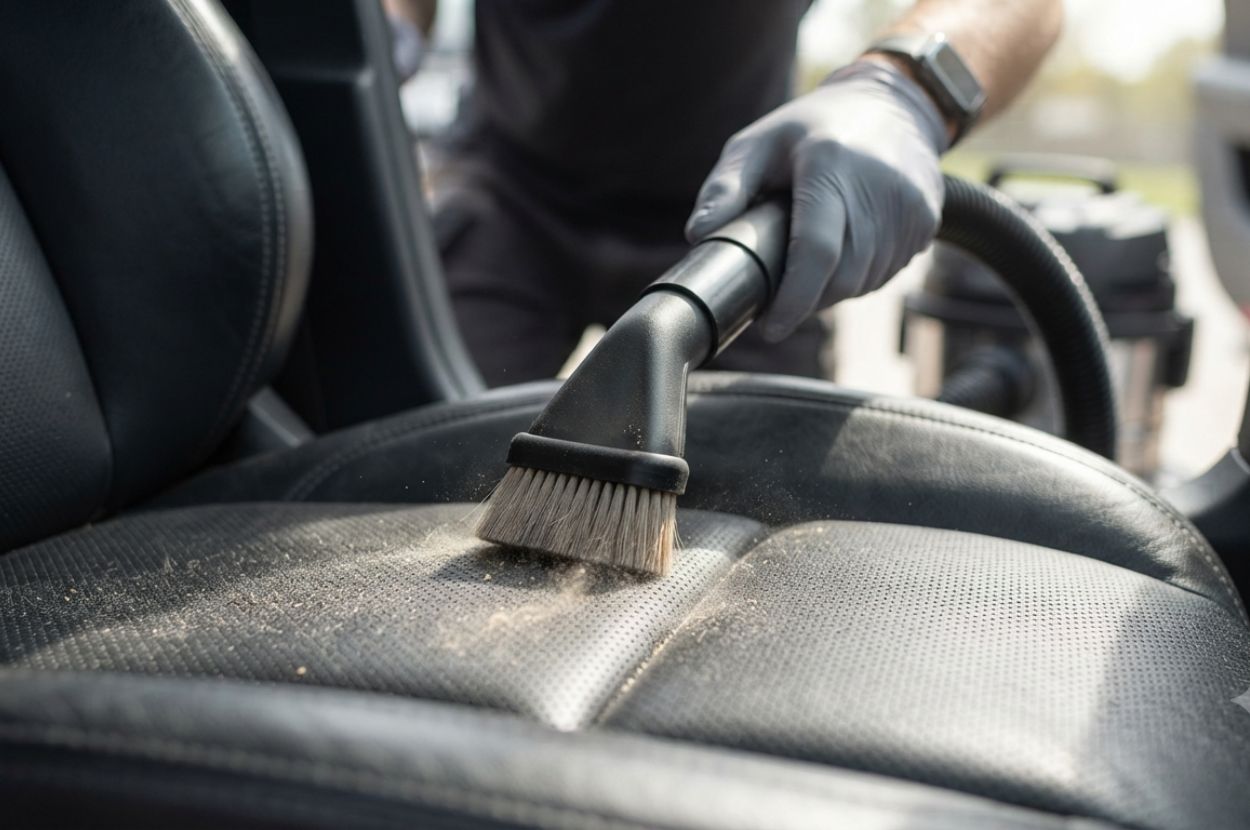
To clean perforated leather seats without clogging the holes, vacuum first using a soft brush attachment held at a slight angle to pull debris up and out of the perforations rather than pushing it deeper in.
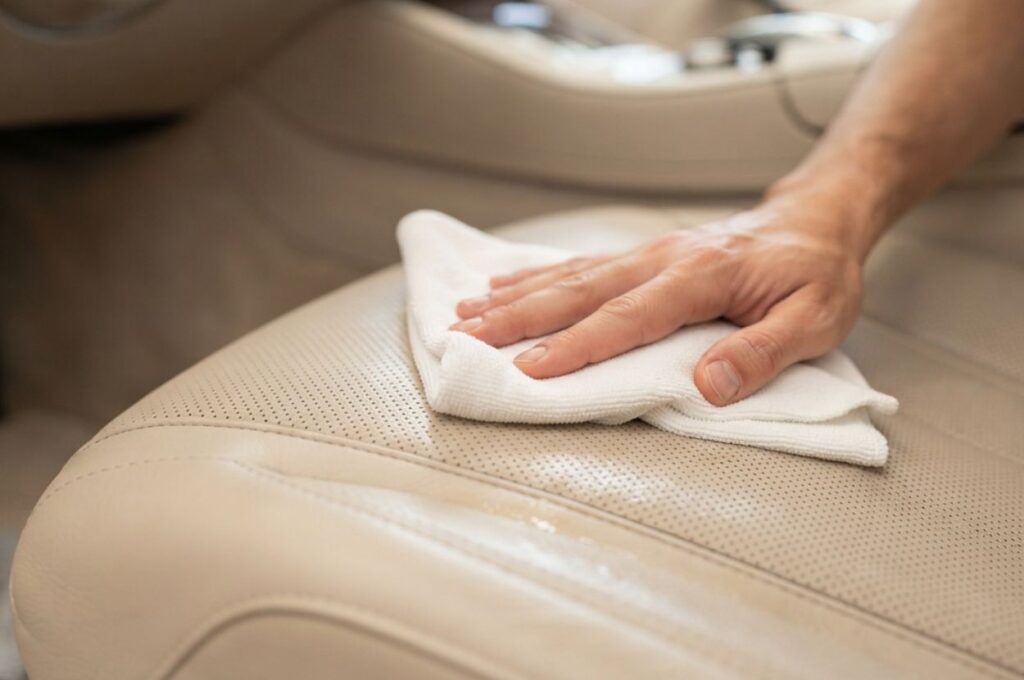
Apply a pH-balanced leather cleaner to a soft microfiber cloth, not directly to the seat, and wipe in the direction of the perforation pattern using light pressure. Avoid soaking the surface, since excess liquid seeps into the holes and can reach the foam padding underneath, leading to mildew or a lingering odor that is difficult to fix.
Skip anything with silicone, heavy oils, or strong solvents. Those products can seep into the perforations and either clog them permanently or degrade the foam backing under the leather over time, which is a much bigger repair than a surface cleaning issue.
Why Perforated Leather Is Especially Vulnerable in Birmingham
Perforated leather takes a different kind of hit during Michigan summers. Sunscreen, sweat, and body oils transfer through clothing and settle directly into those tiny holes, where they are far harder to lift out than off a flat leather surface.
Combine that with Birmingham’s high share of leased luxury vehicles, many with light-colored perforated leather, and staining shows up faster and more visibly than it would on darker or non-perforated seats.
Winter brings its own version of the problem. Road salt and de-icing brine tracked in on boots and pant legs work their way into the perforations, and if it is not cleaned out promptly, it can leave white mineral deposits ringing each hole.
Those deposits are stubborn once they set, which is why a quick vacuum and wipe-down after salty commutes go a long way toward avoiding the problem entirely.
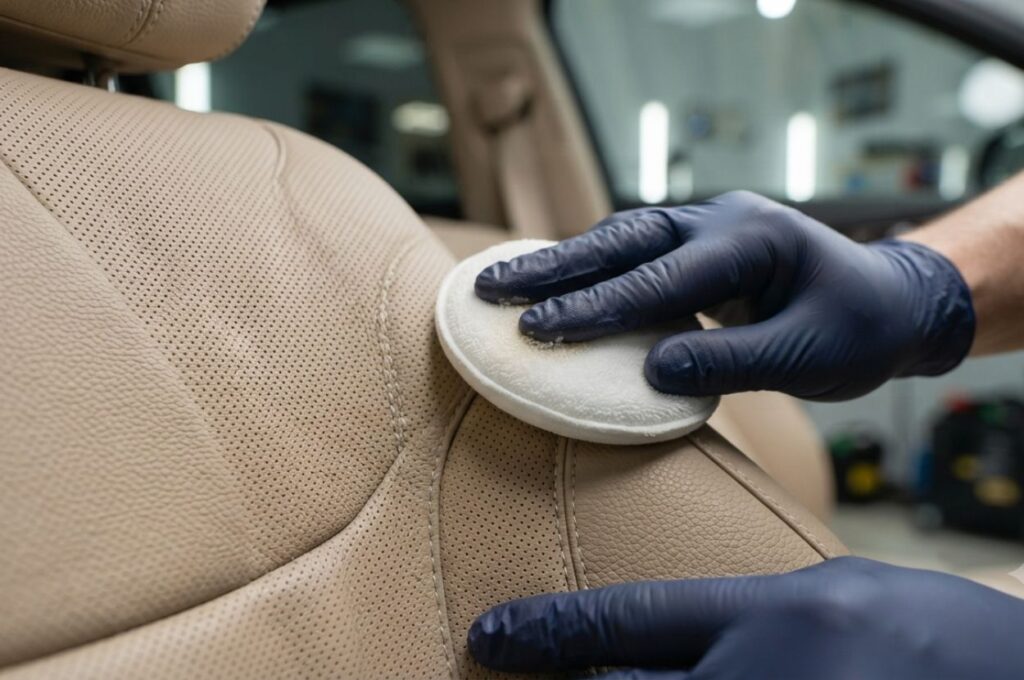
The Right Tools to Clear Debris From Perforated Seats in Birmingham
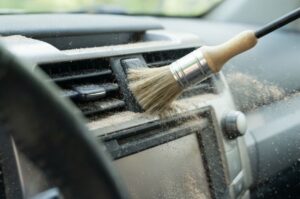
Because the holes trap debris that a regular vacuum cannot always reach, a compressed air blower or a soft detailing brush works better than suction alone for the first pass, pushing loosened dirt to the surface where it can be wiped away rather than driven deeper into the seat. This step alone prevents the majority of long‑term clogging that owners deal with.
For deeper cleaning, a professional interior car cleaning service uses specialized brushes and low‑moisture extraction tools built specifically for perforated surfaces, pulling embedded dirt out of the holes without oversaturating the leather underneath. That is a meaningful difference from a home cleaning attempt with a spray bottle and a rag, which tends to push moisture into the perforations rather than out of them.
Conditioning and Maintenance for Long-Term Protection
Conditioning matters just as much as cleaning for perforated leather, maybe more, since the increased surface area from all those holes means more exposed edges where the leather can dry out and crack. Apply conditioner sparingly and buff off any excess promptly so it does not sit in the perforations and attract more dust than it prevents.
For most Birmingham vehicles with perforated seating, a full cleaning and conditioning every 60 days through the warmer months and immediately after any salty winter commute keeps the holes clear and the leather supple. Waiting until seats look visibly dirty usually means debris has already worked its way past the surface, which takes longer and costs more to properly extract.
Different Perforation Patterns Need Different Approaches
Not all perforation patterns behave the same way. Seats with larger, widely spaced holes tend to trap crumbs and larger debris, while the tighter, denser perforation patterns found in some luxury trims are more prone to fine dust and staining from liquids.
Knowing which type of perforation your seats have helps you choose the right first move: a soft brush and gentle vacuum for the coarser pattern, or a careful blot-and-lift approach for the finer one, since aggressive scrubbing on tightly perforated leather can distort the holes or leave visible wear marks along the seams.
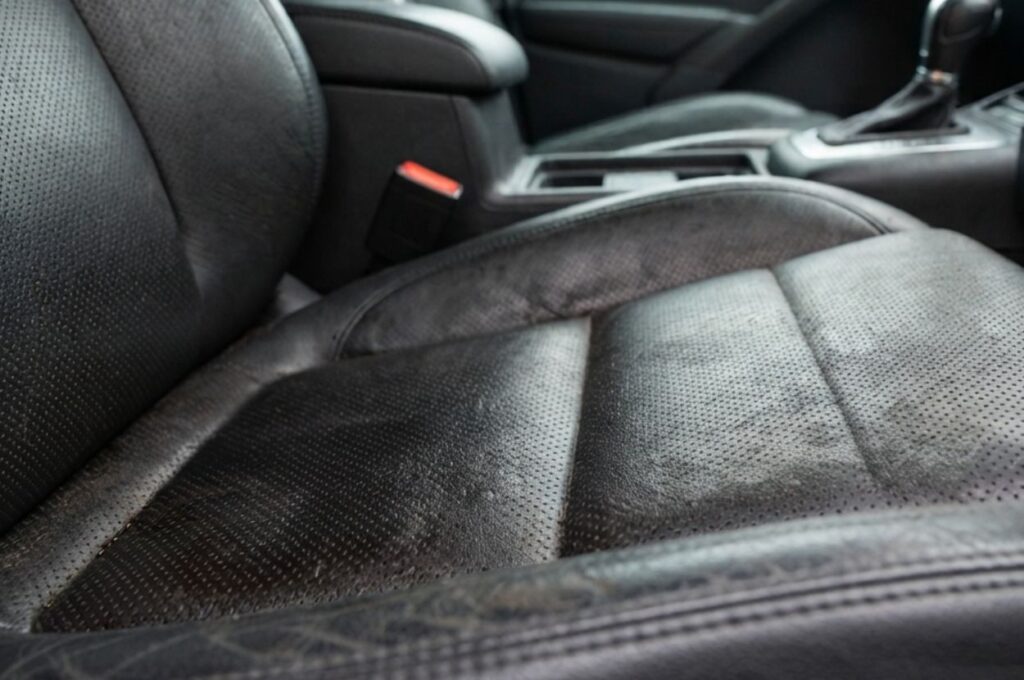
Handling Spills on Perforated Leather in Birmingham
Spills need immediate attention on perforated leather in a way they do not on solid upholstery. Coffee, soda, or juice can seep straight through the holes to the foam padding within seconds, and once that happens, an odor or stain can linger long after the visible leather looks clean again.
Blot, do not rub, using a dry microfiber cloth immediately after any spill, then follow up with a proper leather cleaner once the area is dry. Waiting even a few hours to address a spill on perforated seats significantly increases the odds that it reaches the padding underneath.
Regular maintenance also protects resale and lease-return value. Turn-in inspections often flag discoloration or odor around perforated seating specifically, since it is one of the first places an inspector checks for neglect.
A consistent 60-day cleaning cadence through the year, paired with prompt spill response, keeps that part of the inspection a non-issue.
Frequently Asked Questions
How do you clean perforated leather seats without clogging the holes?
Vacuum with a soft brush attachment at a slight angle to lift debris out of the holes, then wipe with a pH-balanced leather cleaner on a microfiber cloth. Avoid soaking the surface, since excess liquid can seep into the holes and reach the foam padding underneath.
Can I use compressed air on perforated leather seats?
Yes. A compressed air blower is one of the most effective tools for pushing debris out of tight perforations before wiping the surface clean, and it is gentler on the leather than aggressive scrubbing.
Why do perforated seats get dirty faster than regular leather?
The holes give dirt, sweat, sunscreen, and body oils a direct path into the seat, and in winter, road salt and brine can work into the perforations too. That trapped debris is harder to remove than surface grime on solid leather.
How often should perforated leather seats be cleaned?
Every 60 days through the warmer months, plus a prompt cleaning after any salty winter commute or a spill. Waiting until the seats look visibly dirty usually means debris has already worked past the surface.
Visit Jax Kar Wash in Birmingham Today
If your perforated seats are showing dirt in the holes, discoloration, or a lingering odor, don’t try to fix them with a spray bottle and a rag. Bring your car to Jax Kar Wash in Birmingham for a proper deep clean built for perforated surfaces.