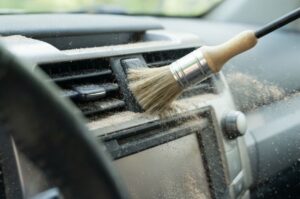
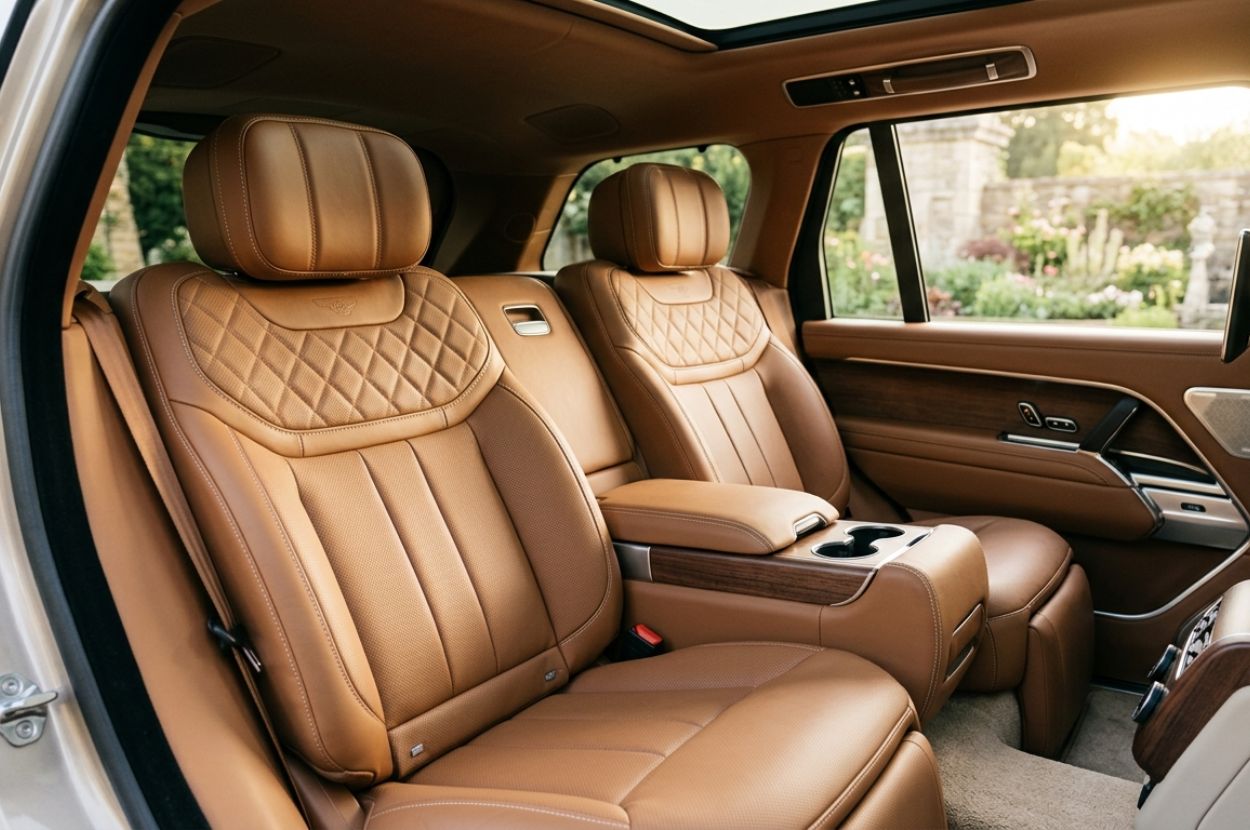
Picture the moment. You’re in the store, you want to do right by your car’s leather, and you’ve got two bottles in your hand. One says conditioner. The other says sealant. They sound like twins, so most folks just grab whichever and call it handled. Except they’re not twins at all. These two chase opposite problems, and knowing which your seats actually need — or whether you’ve got to run both — is the whole difference between leather that stays soft and clean and leather that’s either drying out or staying grubby.
What Conditioner Does for Car Leather Treatment
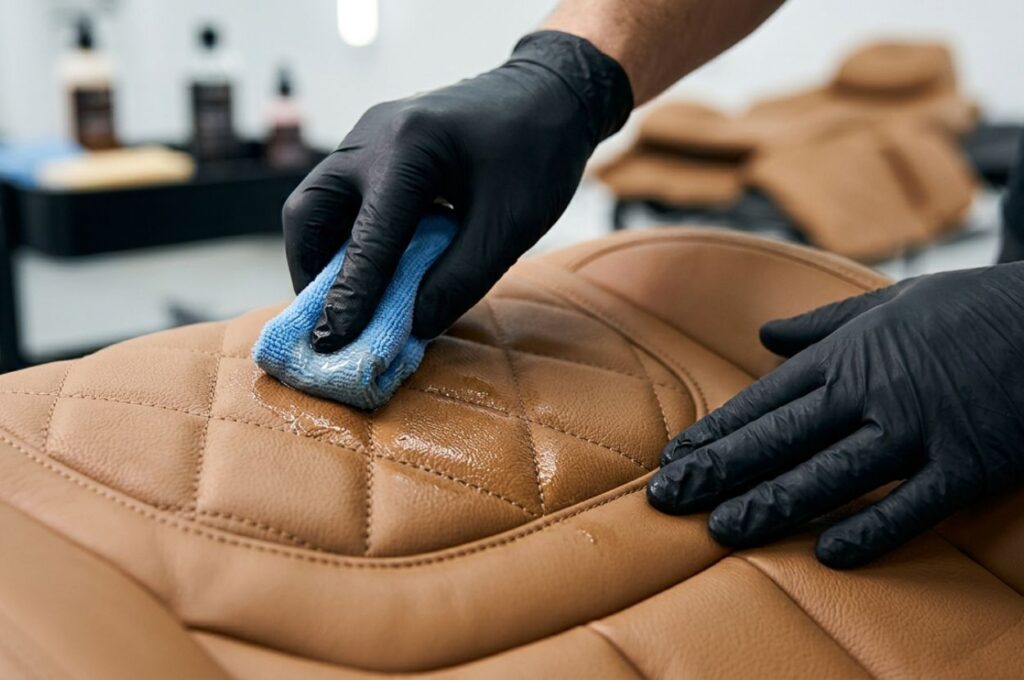
Think of conditioner as food for the leather. Its whole job is putting back the natural oils that heat and time keep cooking out, because those oils are what keep the stuff soft to begin with. Leather acts a lot like skin. Let it dry and it stiffens, and a stiff seat eventually cracks. Conditioner sinks in, hands the give back, and that’s your shield against the cracking a Michigan summer and a dry, heated winter cabin would otherwise hand you. What it won’t do? Spills and stains. Conditioner repels nothing. Fighting dryness is the gig. Messes belong to somebody else.
Where Sealant Fits Into Car Leather Treatment
That somebody else is sealant, working in reverse. It doesn’t feed the leather — it lays a thin shield across the top. And that shield bounces off spills, body oils, the dye bleeding out of your jeans onto pale seats, and UV. Clean leather, protected finish. Moisturize what’s underneath? Nope, not its thing. Sealant is the bouncer at the door, not the meal. Which makes it a godsend for families, and for anybody stuck with light seats that flash every smudge.
Okay — So Which Do You Buy?
Real talk, probably both. In the right order. But if somebody forced you to pick one, go by your worst headache. Older leather gone stiff, or a car roasting in dry winter heat for months? Grab conditioner. Cracking’s the thing that’ll burn you. Newer seats, light colored, a back row of kids and crushed snacks? Sealant earns its keep against stains and dye transfer. The gold-standard routine, though, is clean, then condition to nourish, then seal to protect. Feed it first. Shield it after.
Car Leather Treatment Order: Condition First, Seal After
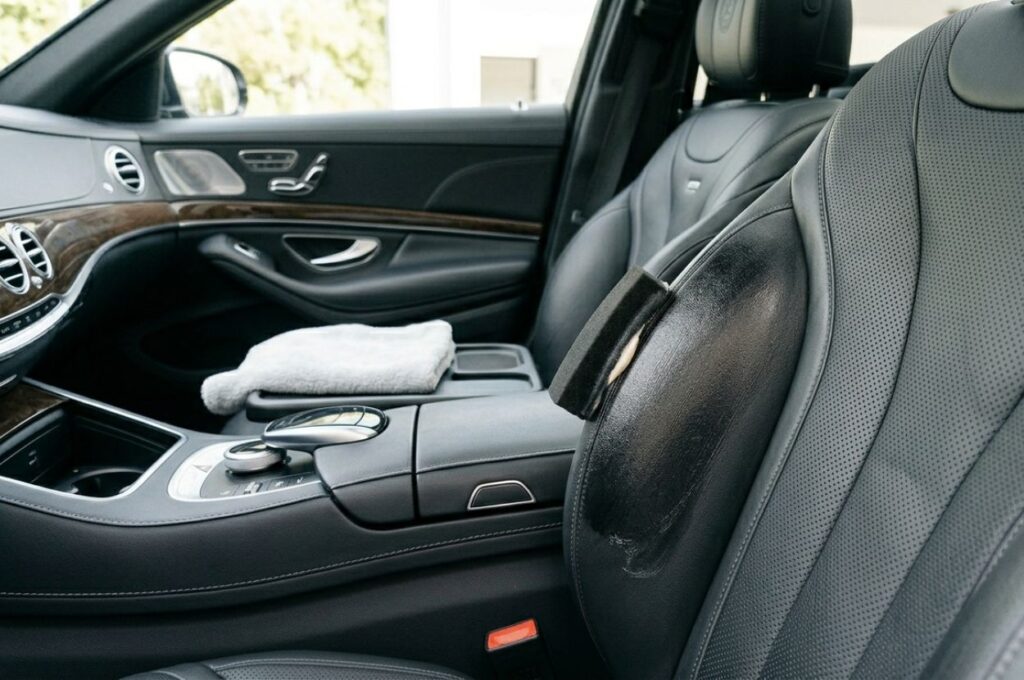
The order is not a suggestion. Seal before you condition and congratulations — you’ve thrown a barrier over dry leather and locked out the very conditioner that needed in. So here’s the sequence. Clean first to clear the grime and skin oils. Condition while the surface can still drink it up. Let it set. Then seal, locking everything down and adding that protective skin on top. Get it right and the leather lands soft and clean, not one at the expense of the other. A professional leather treatment in West Bloomfield runs the full clean-condition-protect sequence in one sitting.
How Michigan’s Climate Speeds Up Leather Wear
Michigan puts leather through a genuinely punishing cycle. Summer means heat-soaked interiors — a car sitting in the sun with the windows up can reach temperatures that pull the moisture right out of the leather in hours. Then fall comes, and you flip the heat on. Forced air dries the cabin air down close to desert levels for months straight. Back to back, hot and baked vs. cold and parched, leather loses its oils faster here than in a more moderate climate.
That’s why conditioner matters more for a West Bloomfield car than for the same leather in, say, a coastal climate that stays mild. The season swings accelerate the drying process, and cracked leather is the result of skipping conditioning too many times. The good news: conditioning twice a year — once before summer, once before winter — is usually enough to stay ahead of it. Pair that with a sealant and you’ve got both problems covered.
Frequently Asked Questions
What’s the difference between leather conditioner and sealant?
Short version: conditioner feeds the leather from the inside, sealant guards it from the outside. Conditioner soaks in and replaces the natural oils so it doesn’t dry and crack. Sealant lays a barrier on top that throws off spills, body oils, dye, and UV.
Do I need both conditioner and sealant?
Ideally, yeah — clean, condition, then seal. Can only swing one? Go conditioner if your leather’s older or stiffening, since cracking’s the real threat. Go sealant if your seats are newer, light, or living with kids and spills.
Which order do I apply them in?
Clean, condition, seal — that order. Flip it and the sealant blocks the conditioner from ever getting in, so all that nourishment goes nowhere. Feed first. Shield second.
Why is dye transfer a problem on light seats?
Denim’s the usual culprit. Its dye rubs off onto light leather and stains it. A sealant’s surface barrier shrugs that off, which is exactly why it’s worth running on tan or cream interiors.
Conditioner and sealant were never fighting over the same job. One keeps your leather soft, the other keeps it clean, and the smartest routine runs both, in order. Match your priority to your seats and the leather stays supple and protected for years. Let the Jax Kar Wash leather treatment in West Bloomfield handle the whole thing.
Car Leather Treatment for Lake-Country Vehicles in West Bloomfield
Michigan’s season swings are hard on leather, and a car that spends summers near the water needs the full routine done right. Jax Kar Wash at 6620 Orchard Lake Rd offers professional car leather treatment that runs the complete clean-condition-seal sequence in a single visit. Come in before the heat sets in or before winter dries everything out — your seats will thank you either way.