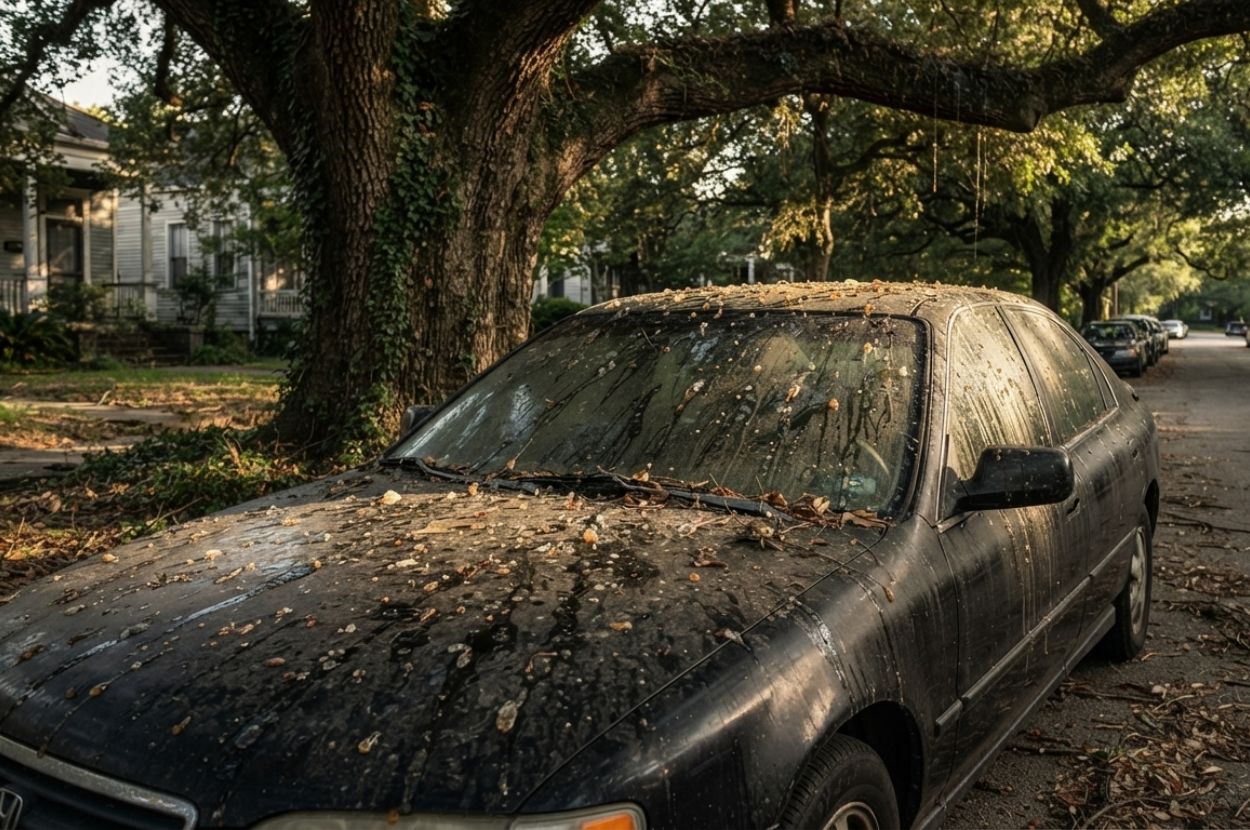
You parked in the shade to be nice to your car. Smart move for the interior. Not always for the paint.
Because that shade usually comes from a tree, and in summer, a lot of Michigan trees are dripping. Sometimes it’s sap. More often, it’s something people mistake for sap: honeydew.
Either way, you come back to little sticky spots on the hood and roof. Annoying, sure. But here’s the part that matters. That film isn’t just cosmetic. Left alone in the summer heat, it can etch your clearcoat, and it works faster than most people realize.
Tree Sap, Honeydew, and Why a Car Wash Can’t Wait
The instinct is to leave it and deal with it later.
That’s the mistake. Both sap and honeydew are reactive, and summer sun makes them worse. The longer a sticky droplet bakes onto hot paint, the deeper it works into the clearcoat, and the harder it gets to remove without leaving a mark.
A prompt car wash is the whole defense here. Get it off while it’s fresh, and there’s no damage. Let it sit through a week of hot Macomb County afternoons, and you may be looking at etched spots that need polishing to fix.
What the Sticky Stuff Actually Is
Two different problems that look the same on your paint.
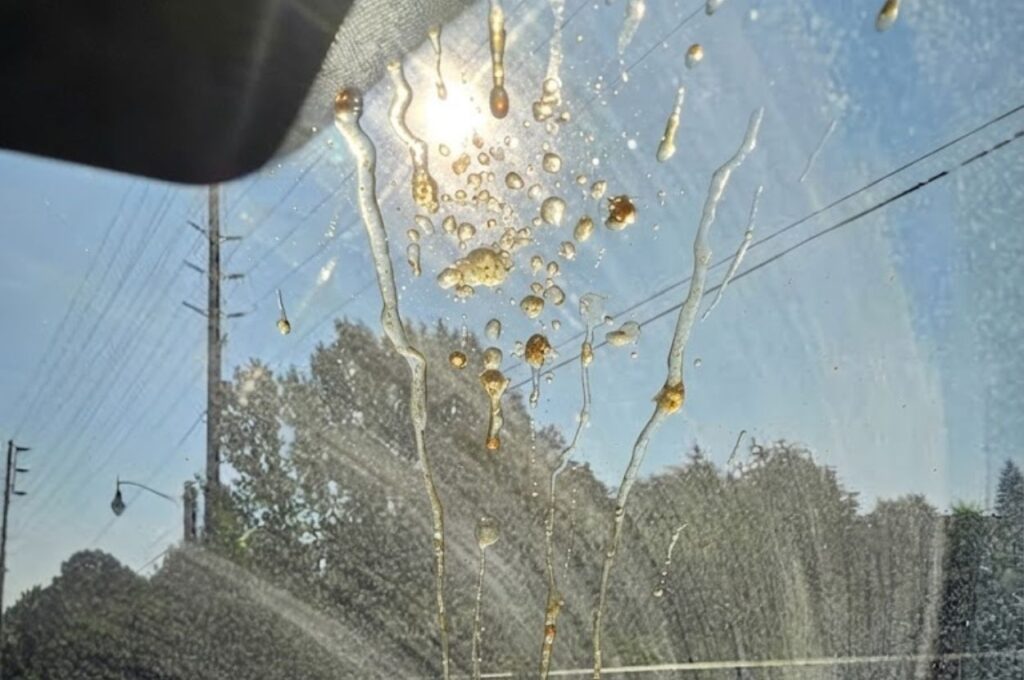
Tree sap is the real thing, the resin that oozes from the tree itself. It’s often slightly acidic, and once it hardens, it bonds to the surface.
Honeydew is the sneaky one. It doesn’t come from the tree directly. It’s excreted by aphids feeding on the leaves above your car. They take in more sugar than they can use and drip the excess, a fine, sticky, sugary mist that settles over everything parked underneath.
If your whole car has a faint tacky film rather than a few distinct drops, that’s usually honeydew, not sap. Maple and linden trees are common culprits around here, which is bad news given how many line the older streets in the township. Locust and black walnut add to the mix too, dropping their own sticky residue through midsummer.
Park near the older, tree-lined blocks off Groesbeck or Cass, and you’re sitting under exactly the kind of canopy that produces the most honeydew. The shadier the spot, the better it usually is for the interior and the worse it can be for the hood.
How Fast Does It Etch Your Clearcoat
Clearcoat is the thin protective layer over your paint’s color. It’s tough, but it’s not immune.
When acidic sap or sugary honeydew sits on hot paint, it starts a slow chemical reaction with that clearcoat. In direct summer sun, the surface temperature climbs, the reaction speeds up, and what started as a wipe-off-able droplet begins to etch in.
Think days, not weeks. A sticky spot you ignore in July can leave a dull, ringed mark that a simple wash no longer removes, because by then the damage is in the clearcoat, not on it. Dark-colored cars show it worst. They run hotter in the sun, and the etched rings stand out against the paint. Lighter-colored cars aren’t immune, they just hide it longer. The etching still happens under a white or silver finish. It’s just harder to spot until the light hits it at the right angle, and by then the clearcoat has usually already taken the hit.
Why a Regular Car Wash Stops the Damage
The fix is almost boringly simple. Don’t let it sit.
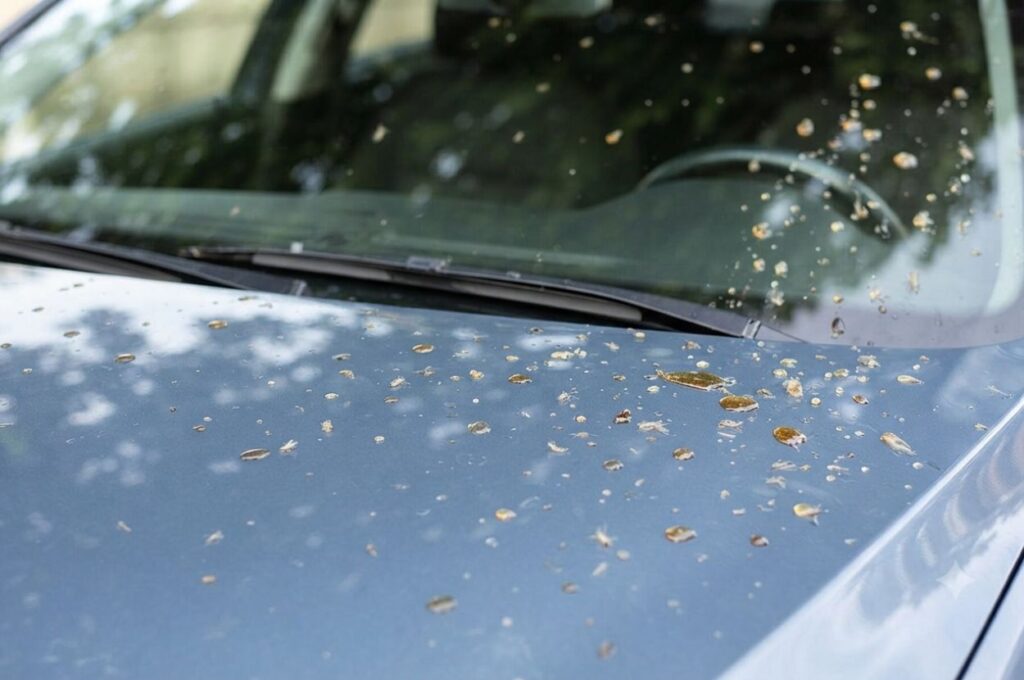
A regular car wash rinses sap and honeydew off while they’re still sitting on top of the clearcoat, before any reaction gets going. The pre-soak and detergents in a proper wash break down the sticky residue that plain water just skates over.
That’s the advantage of a professional wash over a quick hose-down at home. Water alone struggles with sugary, resinous film. The chemistry in a real wash is built to lift it, and because it’s fast and easy, it’s realistic to do it often enough to stay ahead of the trees. A five-minute detour through the wash on the way home beats a weekend spent trying to polish a ring out of the clearcoat. That’s the whole trade-off: a small, regular habit against an occasional expensive fix.
For a coated car, the same rule applies. Even ceramic won’t stop sap from etching if it sits, which is one reason running a coated car through the automatic wash regularly is worth doing.
Keeping Sap Off Your Paint with a Regular Car Wash in Clinton Township
If you park under trees anywhere around Clinton Township, and in summer, who doesn’t, the move is simple. Wash more often through the sap-and-honeydew months.
Notice fresh spots? Don’t wait for the weekend. A quick wash the same day keeps the film from ever bonding. It’s a two-minute problem if you catch it and a polish-it-out problem if you don’t. That’s the whole trade. A few extra washes in July against a paint-correction bill in September.
When you spot that sticky summer film, run it through the car wash before it has a chance to set. It’s the fastest, cheapest paint protection there is.
Frequently Asked Questions
Does tree sap actually damage car paint?
Yes, if it’s left on. Sap is often slightly acidic and bonds to the clearcoat as it hardens. In summer heat, it can etch into the finish within days, leaving a mark that a normal wash won’t remove. Caught early, it rinses off with no damage.
What’s the difference between tree sap and honeydew?
Tree sap is resin from the tree itself, usually in distinct drops. Honeydew is a sugary film excreted by aphids feeding above your car. It coats everything underneath in a fine, tacky mist. Both are sticky, and both can etch paint if left in the sun.
How fast does sap etch clearcoat in summer?
Faster than most people expect, often within days in direct summer sun, since heat speeds up the reaction. That’s why prompt washing matters far more in July than it would in cooler weather.
Can a regular car wash remove tree sap and honeydew?
Yes, when it’s fresh. A proper wash uses detergents and pre-soak that break down sticky residue that plain water can’t. Once sap has hardened or etched in, it may need a bug-and-tar remover or light polishing instead.
Visit Jax Kar Wash in Clinton Township
Don’t let sap or honeydew sit long enough to etch the paint. Stop in for a quick wash and get it off while it’s still just a sticky nuisance, not permanent damage.