
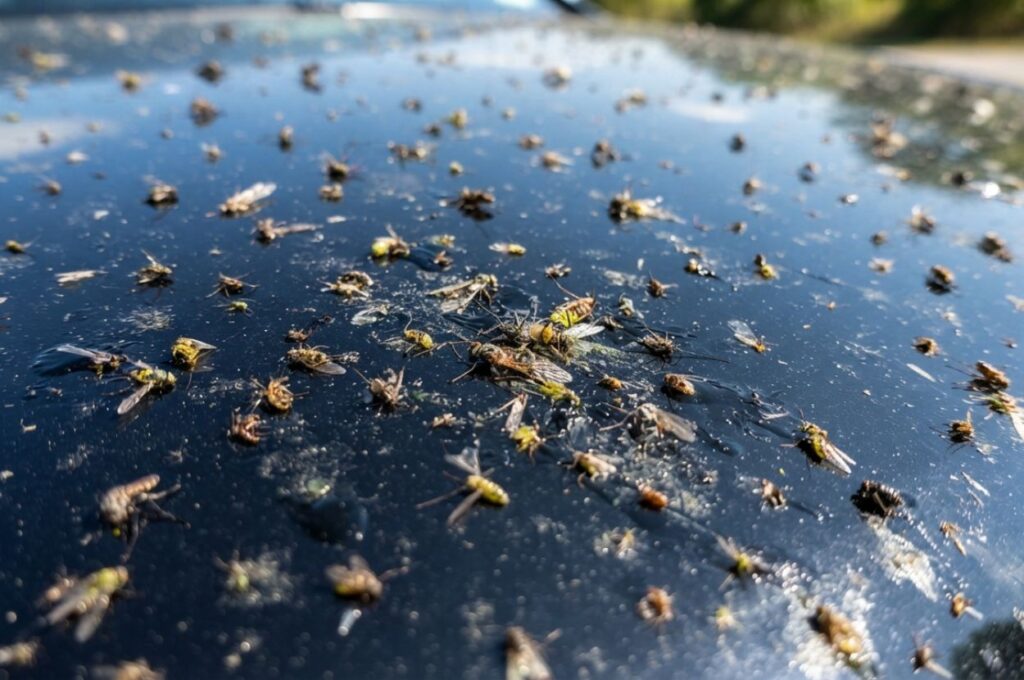
Pull off I-94 or Gratiot on a warm July evening in Eastpointe, and you’ll come back with a hood that looks like it drove through a hailstorm of bugs, because it basically did. Late summer in Eastpointe means a stretch of a few weeks where insect activity spikes hard, and every highway drive turns your front bumper, grille, and windshield into a splatter zone.
The problem isn’t just the mess. Bug splatter is acidic, and the longer it sits on your paint under a hot summer sun, the more it starts to actually eat into the clearcoat instead of just sitting on top of it. What looks like a cosmetic annoyance on day one can turn into a permanent etched spot by day five.
So how do you get bugs off your car before they cause real damage? We will discuss a direct answer here, then what Eastpointe drivers need to know specifically about this time of year.
How to Get Love Bugs Off Your Car: The Direct Answer
Soak the affected area with water first to soften dried splatter, then use a dedicated bug and tar remover or a mix of warm water and dish soap, letting it sit for a couple of minutes before wiping with a soft microfiber towel in one direction rather than scrubbing in circles.
For stubborn spots, a damp towel wrapped around the area for a few minutes helps rehydrate dried residue so it lifts instead of smearing.
Never wipe dry bug splatter directly off with a dry towel, since that can drag grit across the paint and cause fine scratches. The key is softening it before you touch it, not scrubbing harder.
Why Insect Splatter Is Worse Than It Looks on Eastpointe Roads
Bug bodies contain enzymes and acidic compounds that are actually somewhat corrosive to automotive clearcoat, especially once the sun bakes them onto a hot hood. On a highway commute through Eastpointe during peak insect season, a single drive can leave dozens of impact points across the front end.
Left alone for even a few days in July heat, those spots don’t just sit there; they start to slightly etch into the clear coat, leaving a faint outline behind even after the residue itself is scrubbed off. That’s the real risk: it’s not really about how gross it looks; it’s about permanent paint damage from something that seems minor at first.

Why Late Summer Hits Eastpointe Drivers Hardest
Warm, humid stretches in late July and August create ideal conditions for insect activity across Metro Detroit, and Eastpointe’s mix of residential streets, green space, and proximity to Lake St. Clair means bug populations spike right along with the temperature.
Evening and early morning drives tend to be the worst, since that’s peak activity time for most of the insects responsible for splatter. Anyone commuting along Nine Mile, Gratiot, or the service drives near I-94 during this stretch should expect a fresh coat of splatter every few days, not just after one long road trip.
Late summer splatter isn’t the only threat: sticky road tar from Eastpointe construction zones can set into clearcoat just as quickly. Learn how to protect your paint by checking out effective tar removal before it bonds.
The Longer You Wait, the Harder It Gets
Fresh splatter comes off with minimal effort. Splatter that’s been baking on a hood for a week under direct sun is a completely different job, since the proteins and acids have had time to bond with the clearcoat surface.
What would have taken thirty seconds with a wet towel on day one can take real scrubbing and a specialized product by day five, with a higher risk of leaving a faint mark behind even after it’s gone.
If you know you’re driving through a heavy patch, treating your car within a day or two makes a measurable difference in how much damage sets in.
Getting a Full, Even Clean Across Every Panel
Spot-treating the worst splatter helps in the moment, but insect residue tends to spread further than it looks, especially around the grille, mirrors, and lower windshield edge where impact is heaviest.
A full pass through an exterior car wash covers every panel evenly, catching the splatter you can see along with the film you can’t, using pressure and cleaning agents strong enough to lift bonded residue without you needing to scrub by hand in a parking lot.
Protecting Eastpointe Cars Through the Rest of Bug Season
A layer of wax or paint sealant makes a real difference during peak insect season, since it gives splatter less surface to bond with and makes cleanup noticeably easier the next time around.
If you’re doing a lot of highway driving through Eastpointe this time of year, washing every few days rather than waiting for a weekly cycle keeps residue from ever getting the chance to sit long enough to etch.
A clean, waxed hood is genuinely easier to keep clean than a neglected one, since bare, oxidized paint gives acidic residue more to grip onto.
Smart Bug Season Habits for Eastpointe Drivers
The biggest mistake drivers make is grabbing a dry rag to wipe splatter, which drags grit across the paint and leaves swirl marks. Using abrasive scrub pads meant for household cleaning is just as damaging, since they scratch the clearcoat under direct sunlight.
Some drivers also let a car sit in direct sun while treating splatter, which speeds up evaporation of cleaner or water before it softens residue. Working in shade or cooler hours gives the bug remover more time to do its job effectively.
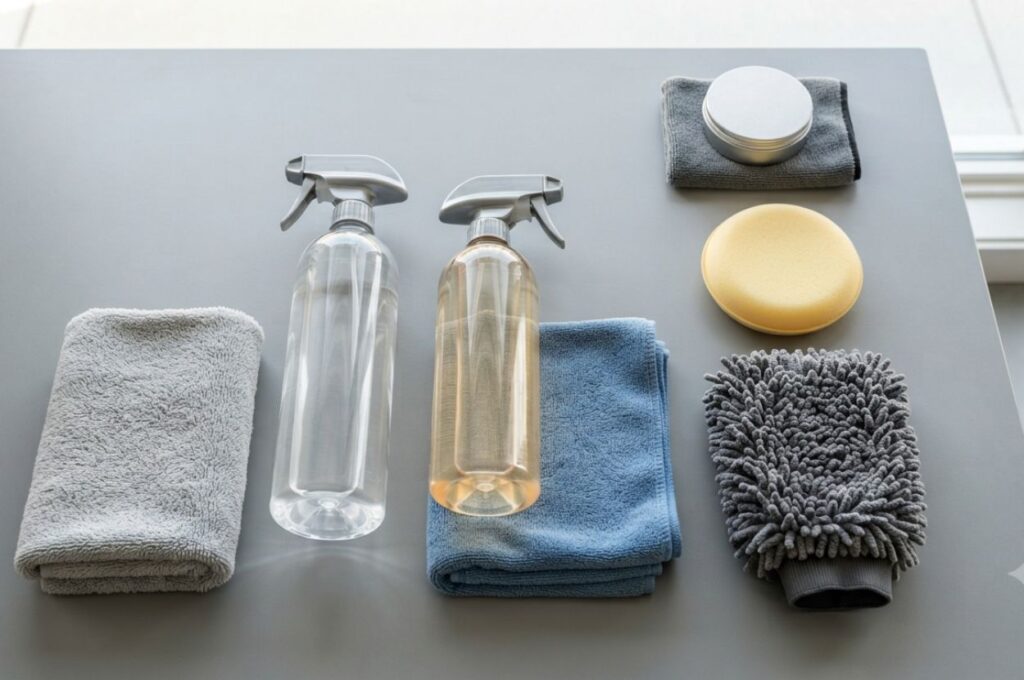
Preparation matters as much as technique, and keeping the right tools in your car makes cleanup easier. A small bottle of bug and tar remover, a spray bottle of water, and clean microfiber towels handle most splatter between washes.
Frequently Asked Questions
How do you get love bugs off your car?
Soak the area with water to soften dried splatter, apply a bug and tar remover or dish soap mix, let it sit a couple of minutes, then wipe gently with a microfiber towel. Avoid dry-wiping or scrubbing, which can scratch the paint.
Why does bug splatter damage car paint?
Insect remains contain acidic compounds that can etch into clearcoat, especially when baked on by direct sun. The longer splatter sits, the more it bonds to the surface, which is why quick treatment matters more than the amount of scrubbing you do later.
How often should I wash my car during bug season?
Every few days is a good target if you’re doing regular highway driving through peak season. Waiting a full week between washes gives splatter more time to bond with the clearcoat and become harder to remove.
Does waxing help prevent bug splatter damage?
Yes. A layer of wax or sealant gives splatter less surface to bond with, which makes it easier to wipe away and reduces the risk of etching. It won’t stop bugs from hitting your car, but it makes cleanup significantly easier.
Visit Jax Kar Wash in Eastpointe
Don’t let a few weeks of bug season leave a permanent mark on your paint. Jax Kar Wash in Eastpointe gets every panel clean, from the grille to the roof, so splatter never gets the chance to sit long enough to cause real damage.
Swing in after your next highway drive and keep your hood ahead of the season.