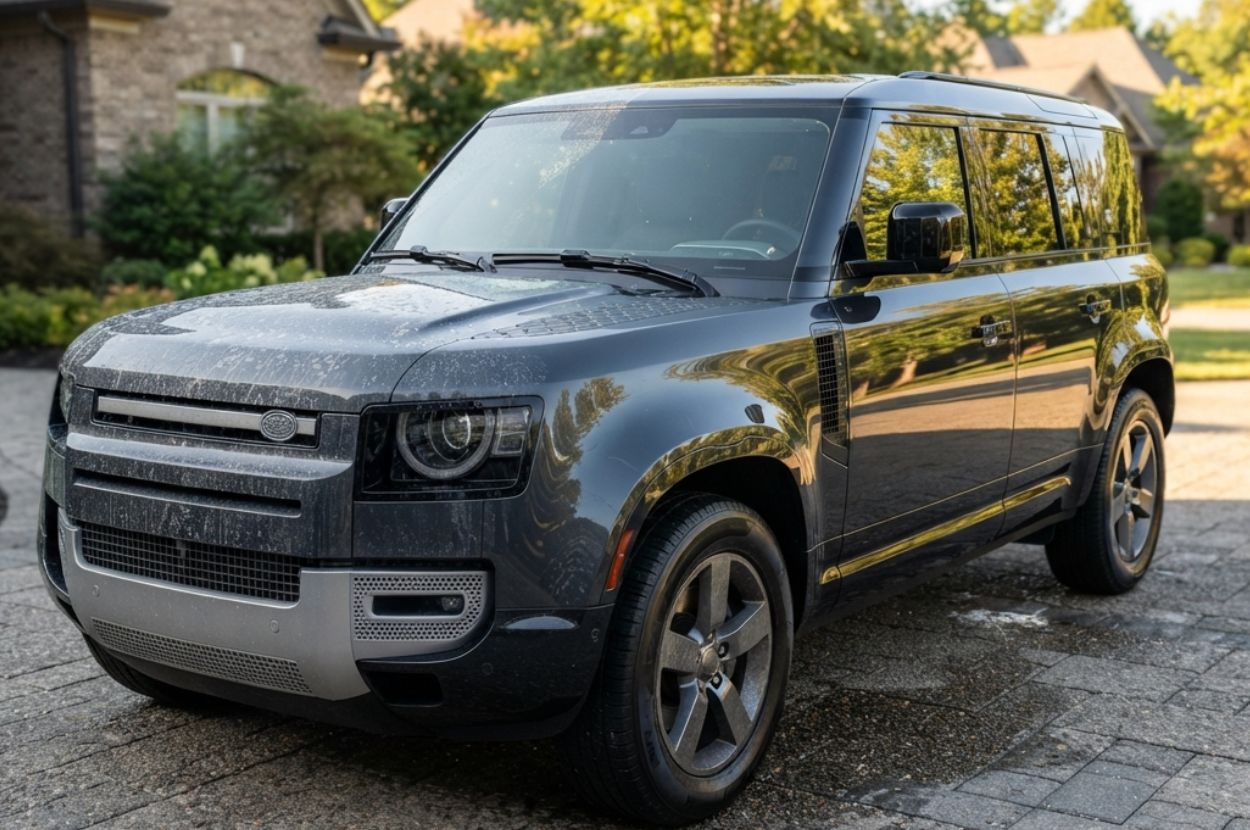
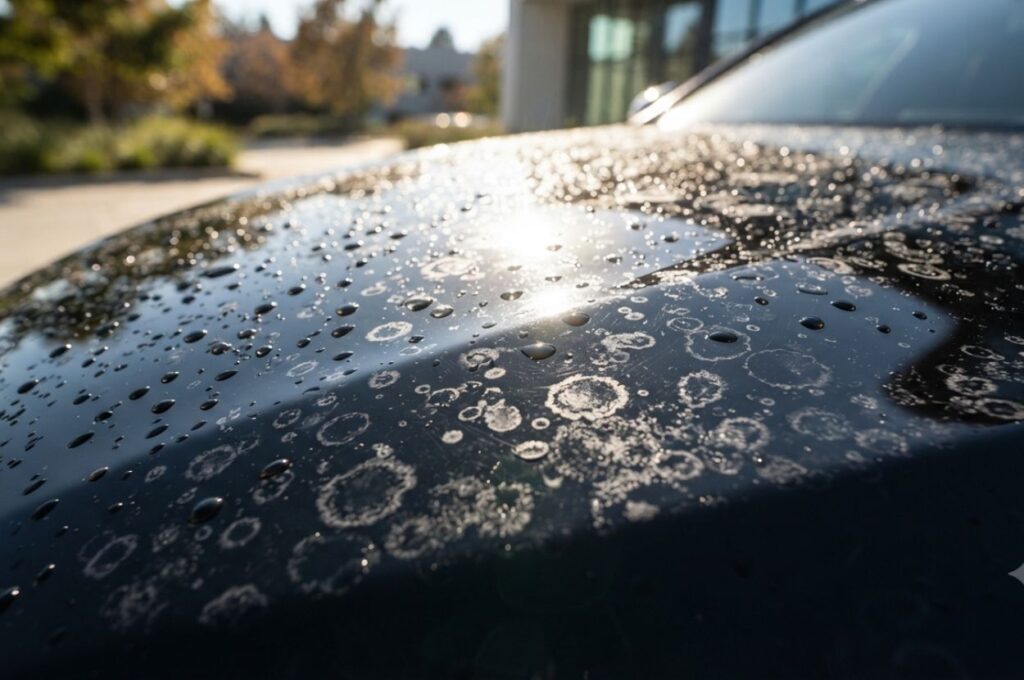
You pull into the driveway after an afternoon at the lake, and by the time you’re unloading towels, the windows and hood already have that cloudy, spotted look. Or maybe it’s simpler than that: your sprinkler kicked on overnight while the car sat in the driveway, and now there’s a constellation of white rings across the roof and trunk.
Either way, you’re looking at hard-water spots, and Brighton drivers deal with them more than most Michigan towns thanks to how much time cars spend near open water in the summer.
Water spots aren’t dirt. You can’t just wipe them off with a damp rag and expect them to disappear, and scrubbing too hard can actually make things worse. Once you know what’s actually happening to the paint, removing the spots and keeping them from coming back gets a lot more straightforward.
Here’s the short answer, then we’ll walk through why Brighton’s lake culture and lawn sprinklers make this such a common problem.
Effective Ways to Remove Water Spots in Brighton
Mix equal parts white vinegar and distilled water, spray it on the affected panel, let it sit for two to three minutes, then wipe with a clean microfiber towel and rinse. For spots that have been baking in the sun for days or weeks, you may need a dedicated water-spot remover or a light clay bar treatment to lift mineral deposits that have started etching into the clear coat.
Vinegar works because it’s mildly acidic and breaks down the calcium and mineral buildup left behind when water evaporates, but always work in the shade and rinse thoroughly afterward so the vinegar itself doesn’t sit and dry on the paint.
Why Lake Days Leave Hard-Water Spots on Brighton Cars
Lake water isn’t as clean as it looks. Water from Ore Lake, Kent Lake, or any of the spots around Island Lake State Recreation Area carries dissolved minerals, algae residue, and sometimes a film from sunscreen and boat traffic.
When that water splashes onto your hood, trunk, or windows and then sits in the sun, the water evaporates, but the minerals don’t go anywhere. They’re left behind as a hard, sometimes etched ring on the paint. Brighton’s lake season runs long, roughly Memorial Day through late September, which means a car that makes regular lake trips is fighting this cycle for months straight, not just a weekend or two.
Sprinkler Systems Are a Quiet Culprit Around Brighton
You don’t have to go anywhere near a lake to end up with the same problem. Plenty of Brighton neighborhoods run automatic irrigation, and if your car sits in the driveway during a watering cycle, especially overnight when the water has hours to sit and evaporate before morning, you’ll wake up to the same spotted hood and windshield.
Sprinkler water often carries more dissolved minerals than lake water because it’s pulled from wells or municipal supply lines that run hard here in southeast Michigan. If you notice spots appearing even when the car hasn’t left the driveway, check your sprinkler timer before assuming it’s something else.
The Right Way to Remove Spots Without Damaging Paint
Whatever you do, don’t let the spots sit and don’t scrub them dry. Dry scrubbing grinds mineral particles against the clear coat like sandpaper, which is how light spotting turns into permanent etching. Start gently: a vinegar-and-water rinse, plenty of lubrication, and a soft microfiber towel. If that doesn’t fully clear it, move up to a proper water-spot remover product before reaching for anything abrasive.
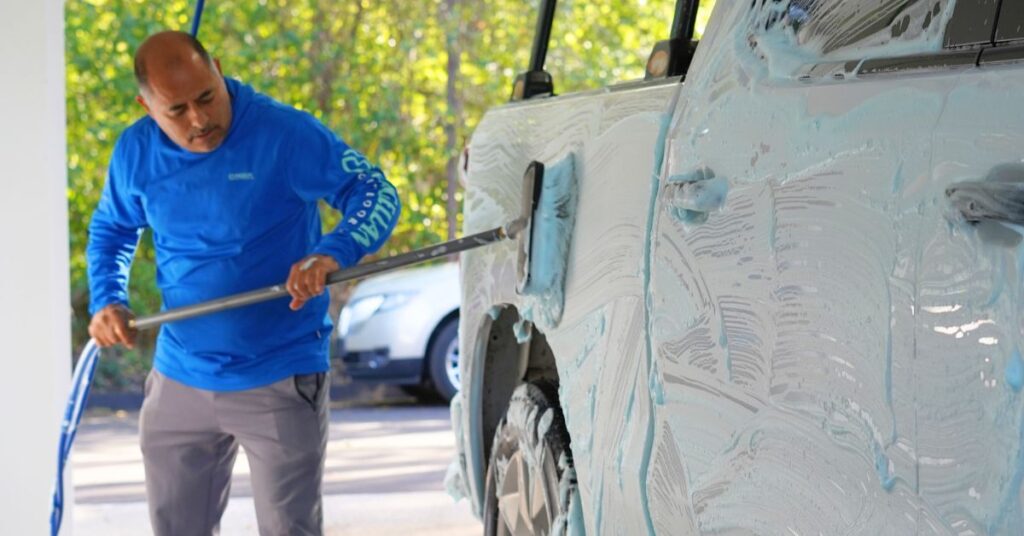
For most Brighton drivers, running the car through a proper exterior car wash soon after a lake trip or a sprinkler mishap is the easiest way to rinse away minerals before they’ve had time to bake into the paint under the sun.
Preventing Water Spots Before They Set In
Prevention beats removal every time, and drying your car with a towel or chamois right after a lake trip keeps minerals from baking into the paint. Adjusting sprinkler timers so water doesn’t hit your car overnight also helps, while a fresh coat of wax makes water bead and roll off instead of spreading flat.
None of these habits takes much effort, but together they prevent stubborn spots from forming. The difference is between a quick wipe‑down and a weekend spent trying to undo etched‑in damage.
Water spots are tough enough, but Brighton’s lake season also speeds up wax breakdown under UV and sap. Protect your finish by checking how often to wax your car during lake season.
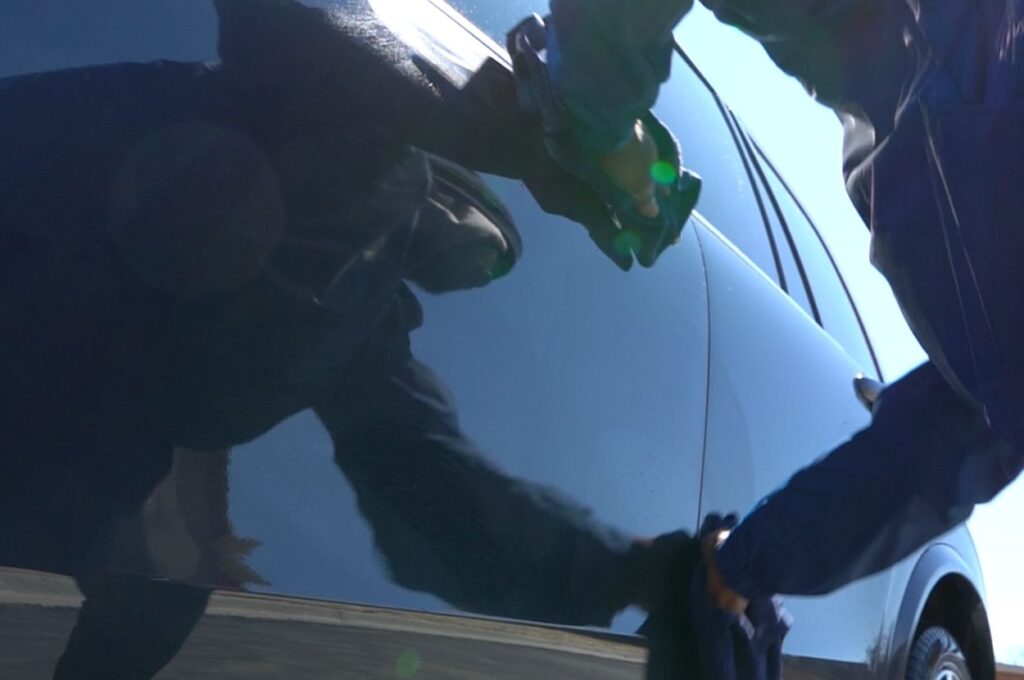
Treating Glass and Stubborn Mineral Deposits
Windshields and side windows show water spots more clearly than paint because they lack a wax layer, and glare from spots can make evening drives harder. A glass‑specific cleaner or vinegar solution works well, but avoid ammonia if your windows are tinted since it can damage the film.
If spots refuse to budge, minerals have likely etched into the clear coat itself. At that stage, only a machine polish can restore the surface, which is why catching spots early is essential.
Frequently Asked Questions
How do you remove water spots from a car?
Spray a mix of equal parts white vinegar and distilled water on the spots, let it sit for two to three minutes, then wipe with a clean microfiber towel and rinse thoroughly. Stubborn spots that have etched into the clear coat may need a dedicated water-spot remover or a light clay bar treatment.
Why do lake trips leave more water spots than a normal car wash?
Lake water carries more dissolved minerals, algae residue, and sometimes sunscreen film than tap water, and it often sits and evaporates in direct sun before you get home. That combination leaves harder, more concentrated mineral deposits than a quick rinse with a hose would.
Can water spots permanently damage car paint?
Yes, if they’re left long enough. Fresh spots sit on top of the clear coat and wipe away easily, but minerals left in direct sun for days or weeks can etch a shallow profile into the clear coat that only a machine polish can remove.
Is it safe to use vinegar on car paint?
A diluted mix of equal parts white vinegar and distilled water is generally safe for occasional spot treatment, as long as you rinse it off promptly and don’t let it sit and dry on the paint. It shouldn’t replace regular washing or waxing as your primary protection.
Visit Jax Kar Wash in Brighton Today
Don’t let a good day at the lake end with an afternoon scrubbing water spots out of your hood. Stop by Jax Kar Wash at 9345 Lee Rd in Brighton and let a proper exterior wash rinse away the minerals before the Michigan sun has a chance to bake them in for good.