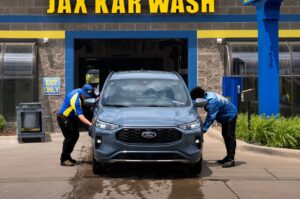
Walk down the car care aisle at any auto parts store and you’ll see labels that suggest a spray and a wipe is all you need. “Detail in minutes.” “Professional results at home.” “Replaces your detail appointment.”
Quick-detailer sprays are genuinely useful products. But those claims are significantly overstated.
Understanding what they actually do — and what they can’t — helps you use them correctly and keeps you from skipping maintenance that your vehicle actually needs.
What a Quick-Detailer Spray Actually Does
Quick-detailer sprays are lubricating products designed to safely wipe light dust and fingerprints off paint and glass between full washes.
They work by encapsulating light surface contamination in a thin lubricating film, so when you wipe with a microfiber cloth, the particles slide away instead of scratching the surface. Most formulas also add a very thin layer of protection — essentially a diluted version of a spray wax or polymer sealant.
The result is a vehicle that looks cleaner and has a little more gloss than it did five minutes earlier.
That’s useful. It’s just not a detail.

Where the “Detail in a Bottle” Claim Falls Apart
Quick-detailer sprays work on clean or lightly dusty paint.
They are not designed to handle road salt, bird drop etching, bug splatter, or any contamination that requires chemical treatment or mechanical action to remove. Using a spray detailer on a moderately dirty vehicle — say, after a week of Michigan winter commuting — doesn’t clean it. It smears the contamination around on a lubricated surface and creates a residue that actually makes the paint harder to clean later.
They also do nothing for the interior. No vacuuming. No surface decontamination. No odor removal. No conditioning of leather or vinyl.
And they won’t address swirl marks, oxidation, or paint degradation. No spray product at that price point has the abrasive chemistry or the application method to do paint correction.
The Hidden Risk of Using Them Wrong
The main risk is using a quick-detailer spray on a surface that isn’t actually clean.
If there’s grit or road contamination on the paint and you spray and wipe, you’re dragging that grit across the clear coat. The lubricant reduces the scratch risk compared to a dry wipe, but it doesn’t eliminate it. Do this repeatedly and the cumulative effect is exactly the kind of swirl and micro-scratch pattern that requires machine polishing to remove.
Always do a proper rinse before using a spray detailer. If the vehicle has any visible dirt or grime, wash it first.
How Quick-Detailers and Full Details Work as a Team
The products aren’t competing with each other. They just occupy very different roles.
A full detail — machine polish, paint decontamination, interior deep clean, sealant application — resets the vehicle to a clean, protected baseline. That’s the heavy-lift session, and it should happen a few times a year depending on the vehicle and how it’s used.
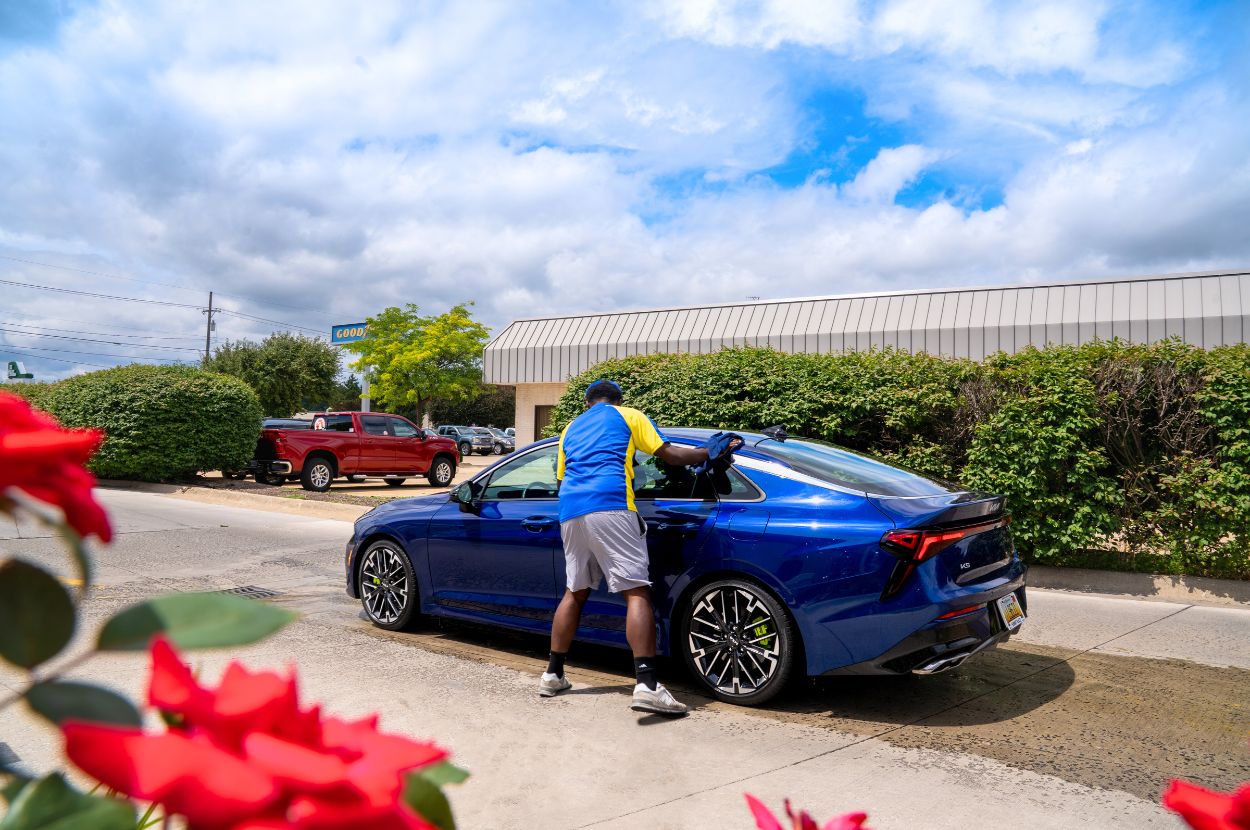
Quick-detailer spray fills the gap between those appointments. You had the car detailed last week. It’s been sitting outside and picked up some light dust and a few fingerprints from the door handles. A spray and a microfiber cloth takes two minutes and the car looks fresh again. That’s the right use case.
The detail creates the clean surface. The quick-detailer helps maintain it until the next full session.
What Southfield Drivers Actually Need Between Detail Appointments
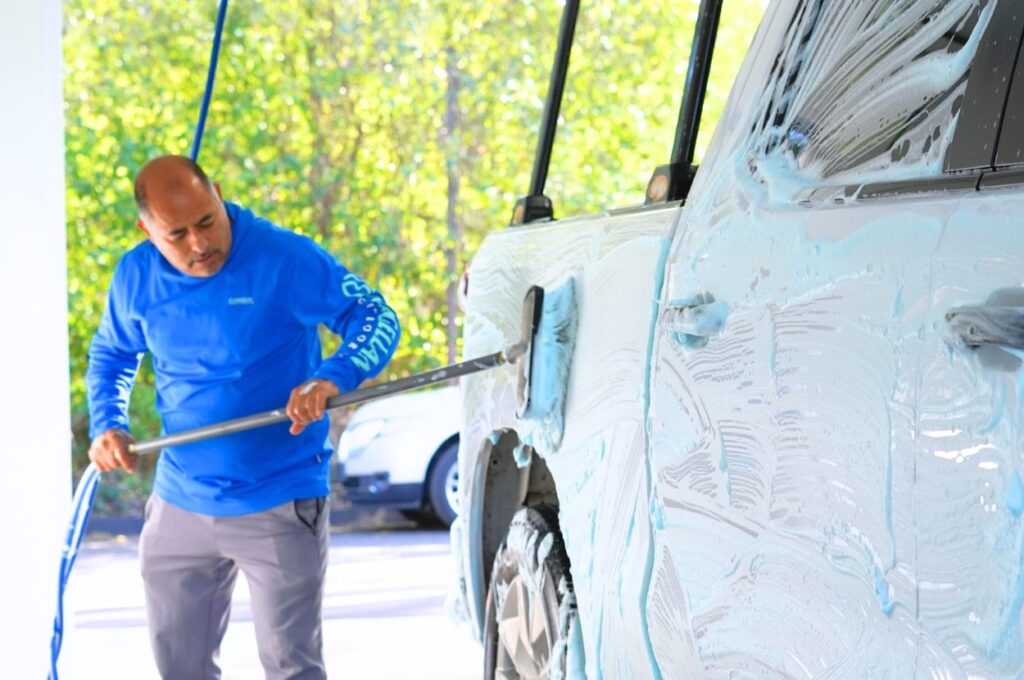
In a Michigan winter, road contamination accumulates fast. Between detail appointments, a regular exterior wash is more important than any spray product.
Washing every week or two flushes road salt off the paint before it has time to work on the surface. That does more for long-term paint health than any quick-detailer spray can accomplish, no matter how good the formula is.
Quick-detailers shine most in the warmer months — spring through fall — when the contamination between washes is lighter and a spray can genuinely maintain a freshly detailed finish between wash visits.
Useful product. Narrow use case. The label just tends to oversell it.
Frequently Asked Questions
Can you use a quick-detailer spray on a dirty car?
No — not safely. Quick-detailer sprays are formulated for lightly dusty or freshly washed surfaces. Using one on a car with visible dirt or road contamination risks dragging abrasive particles across the paint, which can cause micro-scratches. Wash first, then use the spray on a clean surface.
How often should I get a full detail vs. using a spray?
Most vehicles benefit from a full detail two to four times per year. Quick-detailer spray can be used between wash visits to maintain a freshly detailed surface — typically after a wash when the car is clean but you want to add a quick gloss boost or address light dust. The spray fills the gaps; the detail does the work.
Do quick-detailer sprays provide real paint protection?
Very light, temporary protection. Most contain a small amount of polymer or wax that leaves a thin layer after use. That’s meaningful for keeping dust from bonding to a clean surface, but it’s not a substitute for a full wax, sealant, or ceramic coating application. The protection layer left by a spray detailer is significantly thinner and wears off much faster.
When You Need a Real Car Detailing Service in Southfield
When you’re due for the real thing, our car detailing service at Jax Kar Wash on Telegraph Rd in Southfield handles the work a spray bottle never will. Stop by 28845 Telegraph Rd — no appointment needed.