Auburn Hills has a lot of vehicles that aren’t stock. Kayaks headed for the lakes, mountain bikes on the back, roof boxes packed for the trip up north, lifted trucks that see actual dirt.
All great. All slightly complicated when it comes to the automatic car wash.
The short version: some setups are totally fine to run through, some need to come off first, and a few come down to whether you’ll physically fit. Here’s how to tell which is which before you pull onto the conveyor.
The Rule of Thumb Before Any Automatic Car Wash
When in doubt, take it off.
The single best habit before an automatic car wash is to remove anything mounted, removable, and not part of the vehicle’s permanent structure. Cargo boxes, bike racks, ski and kayak carriers, even an empty roof basket. If it clips or bolts on and comes off in a minute, take it off.
Two reasons. First, these accessories aren’t designed to withstand the forces inside a wash. Second, anything sticking up or out is the thing most likely to catch. Removing it takes the risk off the table entirely, and it takes less time than you’d think once you’ve done it once.
There’s a courtesy angle too. A rack that catches and rips loose doesn’t just wreck your gear. It can damage the wash equipment and hold up everyone in line behind you. The thirty-second check keeps the whole thing moving.
Bike Racks and Cargo Boxes: Take Them Off
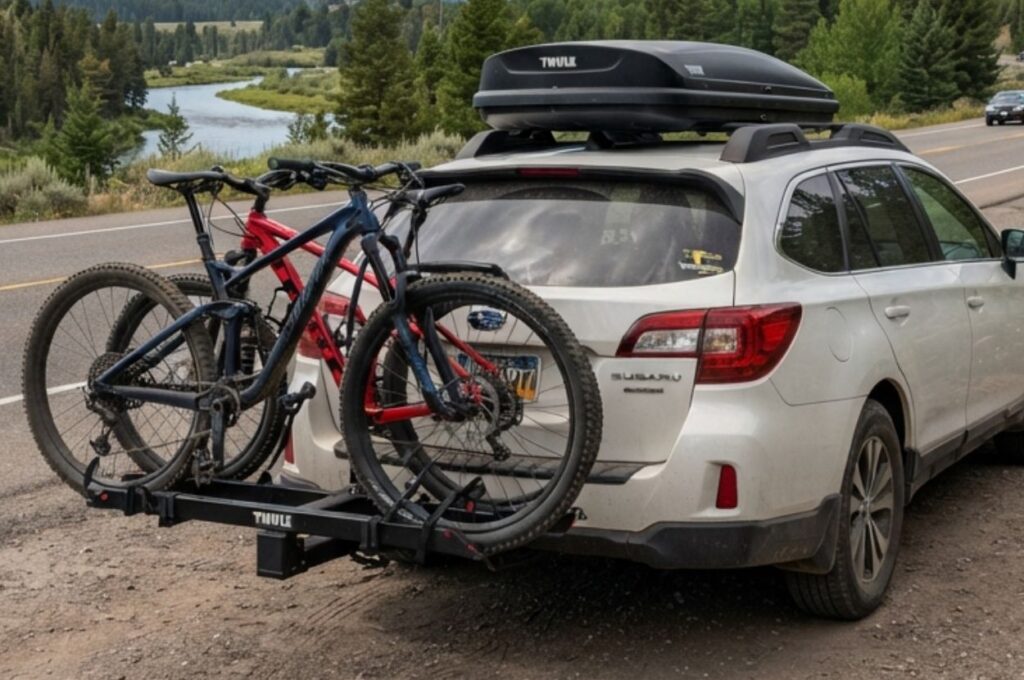
This is the clearest case. Nearly every bike rack and cargo box maker says the same thing: remove it before an automatic wash.
A hitch-mounted bike rack sticks straight out the back, right where equipment and sensors expect a normal bumper, not an extra two feet of metal and bikes. Roof boxes and roof-mounted bike trays raise your height and give brushes or high-pressure jets something to grab.
And obviously, never send actual bikes through. Even a touchless wash blasts water hard enough to rattle loose anything that isn’t bolted down. Pull the bikes and the rack, then wash. It’s a two-minute job that saves you from an expensive one.
Worth noting: a hitch rack that folds flat still sits in the danger zone behind the bumper, so folding it isn’t the same as removing it. If the hitch pin comes out in a few seconds, pull the whole thing. Trunk-strap racks are the worst offenders here, since the straps and hooks are exactly what a brush snags first.
Roof Rails and Crossbars: Usually Fine
Factory roof rails, the low rails built into the roof, are generally fine. They’re part of the vehicle and sit low enough not to be an issue in most tunnels.
Aftermarket crossbars are a maybe. Low-profile bars that sit close to the roof usually pass without trouble. Taller bars, or bars with mounts and brackets still attached, are worth removing or at least checking against the wash’s height limit. Empty mounts are sneaky, too. A bare tray with nothing on it still has clips and levers that stick up and catch.
If it’s permanently part of the roofline and sits low, leave it. If it’s tall, aftermarket, or has empty mounts poking up, think twice.
Lifted Trucks and Height Clearance
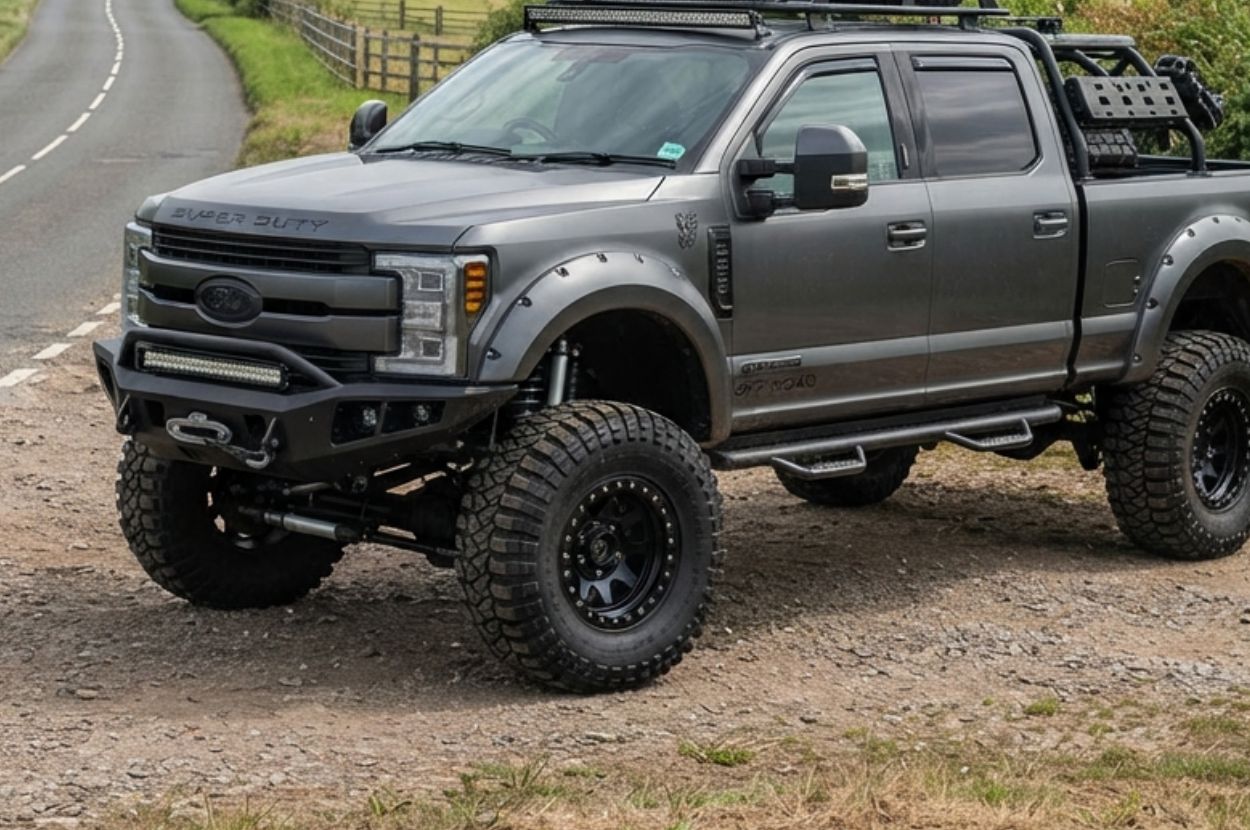
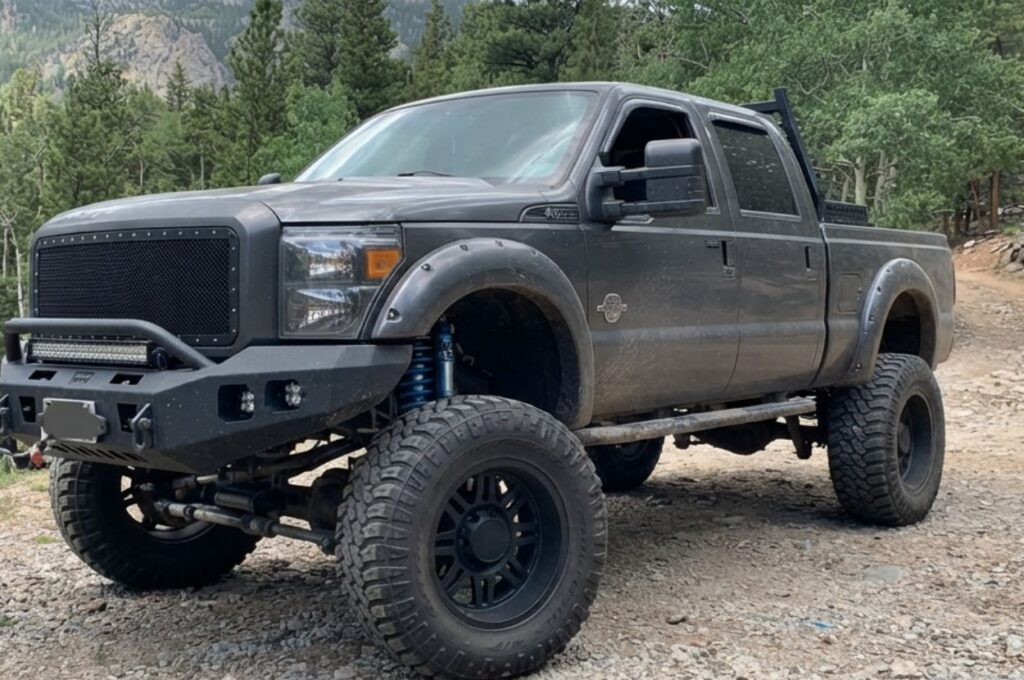
Lifted trucks have the opposite problem: not what’s on top, but how tall the whole thing is.
Automatic tunnels have a maximum height, and a lifted truck, especially with a light bar, tall antenna, or roof accessories, can exceed it. Measure your truck at its tallest point, including anything mounted up top, and compare it to the wash’s posted clearance before you commit. A three-inch lift, 35s, and a light bar add up faster than people expect.
A whip antenna is an easy one to forget. Most unscrew in a couple of turns, and doing that beats having it snap off mid-tunnel. The same goes for tall CB or ham antennas. If it’s the tallest thing on the truck, deal with it before you pull in.
The same goes for very wide setups or oversized towing mirrors. If you’re not sure you’ll clear, ask the attendant. That’s a much better conversation to have before the tunnel than in the middle of it.
Getting Your Outfitted Rig Through the Automatic Car Wash in Auburn Hills
None of this means an outfitted vehicle can’t use an automatic car wash. It just means a thirty-second check first.
Strip the removable gear, confirm your height if you’re lifted, leave the low factory stuff on, and you’re good to go. For a lot of active Auburn Hills drivers, the ones with bikes, boards, and trucks that actually get used, that quick routine is the difference between a clean rig and a damaged rack.
If you’re washing often enough that the take-it-off routine feels tedious, it’s worth knowing who gets the most out of an unlimited plan. Frequent washers usually do.
Prep your vehicle, then bring it through the automatic car wash. Gear off, height checked, and you’ll get a clean truck without the risk.
Frequently Asked Questions
Can I take my bike rack through an automatic car wash?
No, remove it first. Nearly all bike rack manufacturers advise against automatic washes. Racks stick out where equipment doesn’t expect them, and both brushes and high-pressure water can damage the rack or loosen mounts. Take the rack and any bikes off before washing.
Do I need to remove the factory roof rails?
Usually not. Low factory roof rails are part of the vehicle and sit low enough for most tunnels. Tall aftermarket crossbars, roof boxes, and mounts with brackets sticking up are the ones to remove or check against the height limit.
Can a lifted truck go through an automatic car wash?
Sometimes. It depends on height. Automatic tunnels have a maximum clearance, and a lift plus a light bar or roof gear can exceed it. Measure your truck at its tallest point and compare it to the posted limit, or ask the attendant before entering.
Is touchless safer for a vehicle with a roof rack?
Somewhat, since nothing physically contacts the vehicle. But high-pressure water can still get into gaps and loosen mounts or attachments. The safest approach for any removable gear is still to take it off before washing, touchless or not.
Visit Jax Kar Wash in Auburn Hills
Strip the removable gear, check your clearance if you’re lifted, and pull the rig through without the guesswork. Thirty seconds of prep protects your rack, your gear, and everyone else’s spot in line.