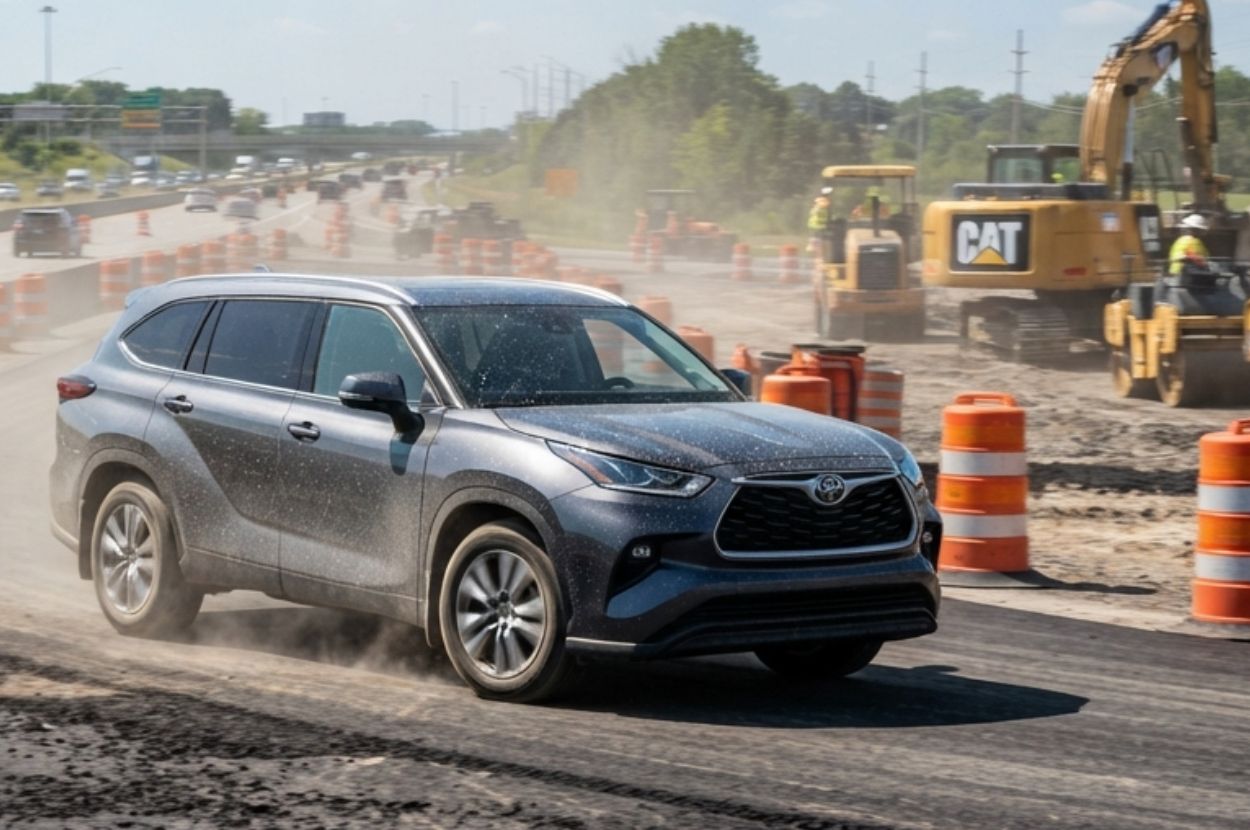
If you drive I-75 through Auburn Hills in the summer, you already know. Construction season and driving season are the same season.
Orange barrels. Lane shifts. Fresh asphalt. And a car that somehow looks dirtier after every commute, even when it doesn’t rain.
That grimy film isn’t ordinary road dust. Construction zones throw a specific kind of gunk at your paint (tar, oils, and fine gravel dust), and it’s stickier and more damaging than the stuff you deal with the rest of the year.
Why Summer Construction Is a Car Wash Problem
Regular road grime is annoying. Construction-zone grime is a different beast, and it’s why your car needs the wash more often in July than you’d expect.
Drive past fresh asphalt work, and your car picks up a mix of tar mist, oily residue, and pulverized stone dust kicked up by traffic. Tight lanes and slow, bumper-to-bumper crawls (and around the Great Lakes Crossing interchange, the crawl is real) mean you’re sitting right in it, coating the lower body, rockers, and wheels.
It doesn’t rinse off in the next rain the way normal dust does. It clings. And that’s exactly the kind of buildup a real wash is built to remove, and a hose at home usually can’t.
There’s also the loose-gravel factor. Freshly milled or chip-sealed lanes throw stones, and following too close behind a truck through a work zone is how you end up with paint chips and a windshield star on top of the film. Backing off and giving yourself room cuts down on both, but it doesn’t stop the fine dust from settling on everything.
What Tar and Gravel Film Actually Does
Break the film into its parts, and you can see why it’s a problem.
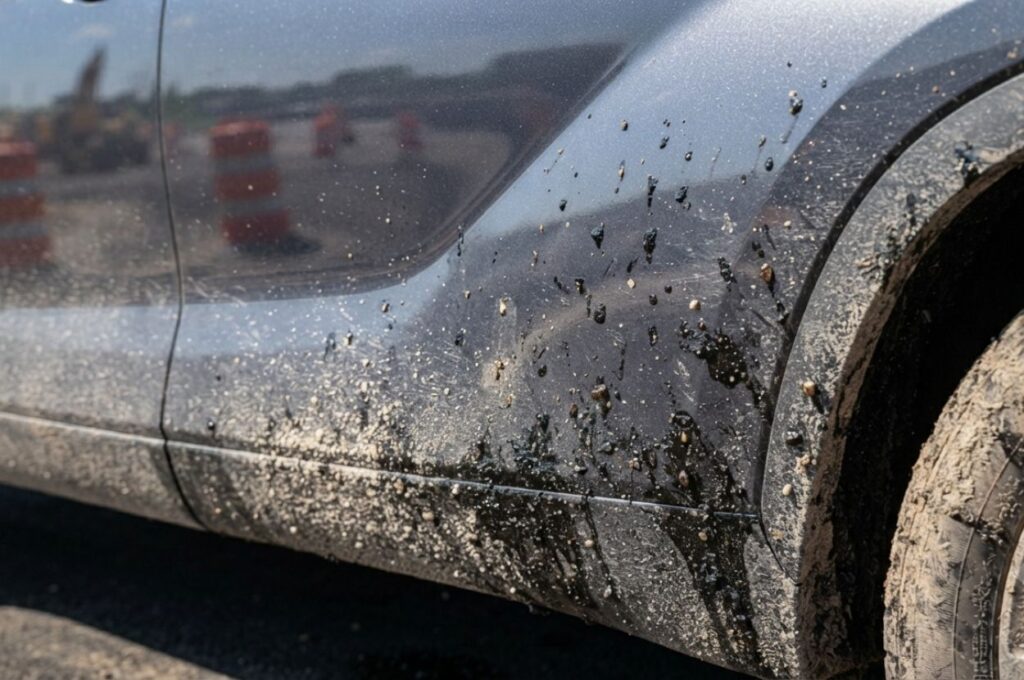
Tar and asphalt oils are sticky and petroleum-based. They bond to paint and trap other grit against the surface, building a dark, greasy haze especially low on the doors and behind the wheels. Left on, they’re stubborn. The longer they sit, the harder they are to lift.
The fine gravel and stone dust are abrasive. On its own, it dulls the finish. Combined with the tar, it gets held tight against the clearcoat, where it can scratch and grind with every wash you finally do get around to. That’s the pattern you want to avoid, because a swirl-scratched hood doesn’t buff out at a car wash.
You’ll usually see the tar spots first as little dark specks low on the doors and rockers, right where tires sling the road spray up. Left through a few hot weeks, those specks spread into a dull haze that looks like the paint has lost its shine, even after a rinse. That’s the film, not the paint, but you can’t tell by looking.
Why It’s Worse in the Heat
Summer makes all of it stickier.
Heat softens tar and asphalt residue, so it spreads and bonds more aggressively to hot paint than it would in cool weather. The same sun that makes the commute miserable is quietly baking that film onto your car while it sits in the driveway.
So the July version of this problem is genuinely worse than the spring version. More construction, more heat, more bonding. The film that would’ve brushed off in April digs in during a hot Auburn Hills August.
How a Prompt Car Wash Removes It
The answer is the same as most paint problems. Don’t let it sit.
A prompt car wash with proper detergents breaks down the oily tar film and flushes the abrasive dust away before either can bond or scratch. The pre-soak and cleaning chemistry handle the petroleum residue that plain water just beads off of.
Frequency matters more during construction season. If you’re commuting through active I-75 work, a wash every week or so keeps the film from accumulating into the baked-on layer that needs a dedicated tar remover to fix. Once it reaches that stage, you’re into elbow grease and solvent, not a quick pass through the tunnel.
The wheels take the worst of it, between the road film and the brake dust already eating at them. Another reason to keep the exterior on a regular schedule.
Surviving I-75 Construction Season in Auburn Hills
I-75 through Auburn Hills isn’t going to be barrel-free anytime soon. Construction is basically a permanent summer feature of the corridor, and the ongoing widening project only guarantees more of it.
The move is to treat washing as maintenance, not just cleanup. Wash more often while the work is active, focus on the lower body and wheels where the film collects, and you’ll keep the tar and gravel from ever settling into your finish.
If you commute the corridor daily, timing a quick wash on the way home from work turns it into a habit instead of a chore. The film is easiest to remove the same day it lands, before a hot night bakes it on. Waiting for the weekend is usually waiting too long.
After a week of crawling through the barrels, run it through the car wash and get the construction film off before it bonds. Your paint will hold up a lot better for it.
Frequently Asked Questions
Why does my car get so dirty driving through construction?
Construction zones throw tar mist, oily asphalt residue, and fine gravel dust into the air, and slow, tight traffic keeps you sitting in it. That mix coats the lower body and wheels in a sticky film heavier and stickier than ordinary road dust.
Is tar and road film bad for car paint?
Yes, if left on. Tar and asphalt oils bond to the clearcoat and trap abrasive grit against the surface, which can dull and scratch the finish over time. Removed promptly with a proper wash, it does no lasting harm.
Why is construction grime worse in summer?
Heat softens tar and asphalt residue so it spreads and bonds more aggressively to hot paint. Combined with peak construction activity, that makes the summer version of road film stickier and harder to remove than in cooler months.
Can a regular car wash remove tar and construction film?
Yes, when it’s fresh. A wash with proper detergents and a pre-soak breaks down oily tar residue and flushes away abrasive dust. Once tar has baked on, it may need a dedicated bug-and-tar remover, so washing promptly is best.
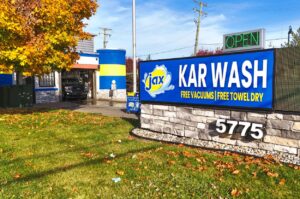
Visit Jax Kar Wash in Auburn Hills
Beat the construction film before it bakes on, no appointment needed, just pull in on your way through the barrels. A quick wash lifts the tar and gravel dust while it’s still fresh, before the summer heat bonds it to your paint.