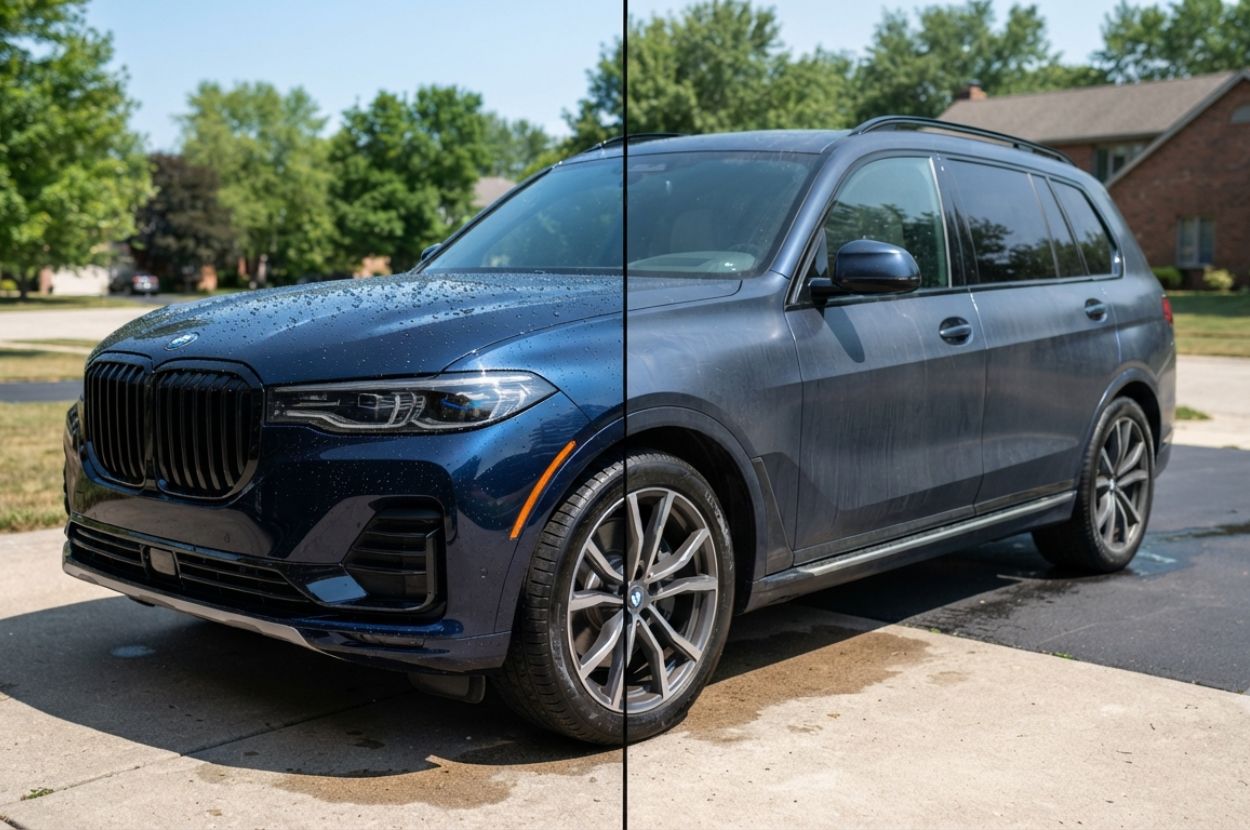
Somewhere between the salt trucks in January and the sap dripping off the maples near Island Lake in July, Brighton cars take a beating year-round. That’s usually when the ceramic coating question comes up, either from a dealer upsell at delivery or a buddy who swears his truck still beads water two years later.
The pitch sounds great. The price tag makes people pause. Ceramic coating isn’t a scam, but it’s also not magic, and whether it’s worth the money depends a lot on how you actually use your car.
A daily commuter that lives in a garage has different needs than a truck that tows a boat to the lake every weekend from May through September. Here’s the direct answer on value; then we’ll break down what you’re actually paying for.
Is Ceramic Coating Worth It for Brighton Drivers?
For most Brighton drivers who keep a car for five or more years and deal with real Michigan weather exposure, professional ceramic coating is worth it.
It runs $500 to $1,500 for a quality application, compared to $20 to $60 for a bottle of wax you’ll reapply every couple months, but it lasts two to five years instead of weeks, resists Michigan’s road salt and brine far better, and keeps sap, bird droppings, and mineral water from bonding to the paint the way they do on bare clear coat.
If you trade cars every year or two, or if the car spends most of its life in a garage, the math tips back toward wax and regular washing instead.
What Ceramic Coating Actually Protects Against in Michigan Weather
Southeast Michigan is genuinely hard on paint. Winter brings salt brine spray off Grand River Avenue and I-96 that eats away at unprotected clear coat over a few seasons, and summer swings the other direction with UV, tree sap along the wooded roads near the lakes, and pollen that turns into a sticky yellow film every spring.
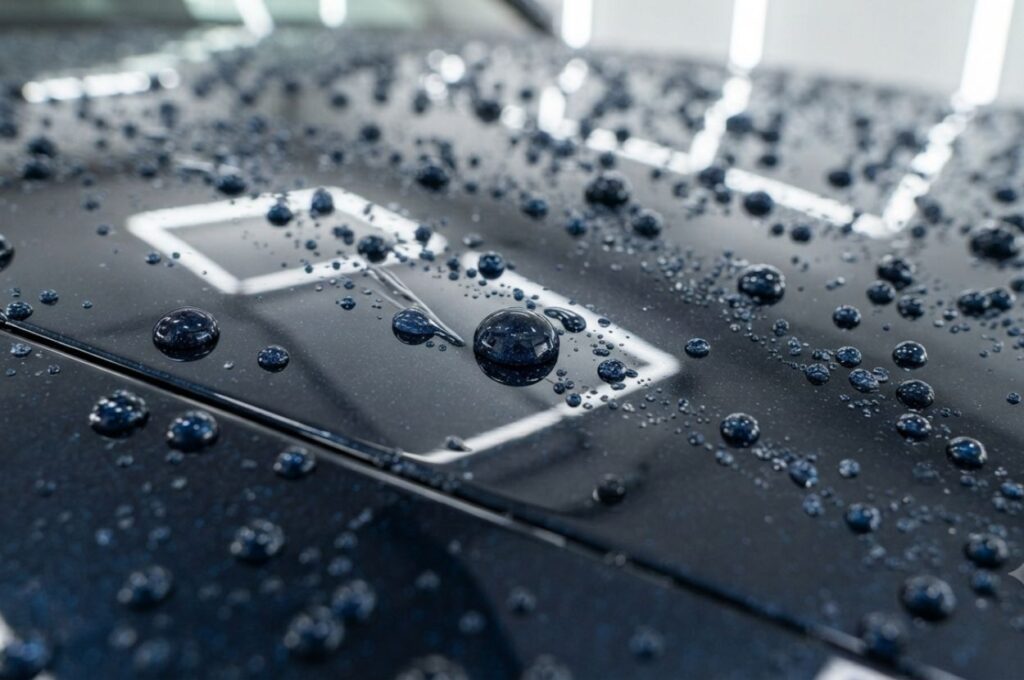
Ceramic coating forms a hard, glass-like layer that bonds to the clear coat and resists all of that chemically instead of just sitting on top the way wax does. Salt brine that would normally start etching bare paint over a winter tends to rinse off a coated surface with a lot less effort, and sap wipes away instead of baking into the finish under summer sun.
Ceramic Coating vs. Wax: Cost and Value Compared in Brighton
Wax is cheap and easy, but it breaks down in six to twelve weeks under real driving conditions, faster if you’re making regular lake trips or dealing with a full Michigan winter. Ceramic coating costs more upfront, but a professional application holds up for two to five years with minimal maintenance beyond regular washing.
Run the numbers over a five-year ownership window: wax done right costs you $150 to $300 a year in product and time if you’re doing it yourself, or more if you’re paying for it, while a one-time ceramic application spreads that same protection over years instead of months.
For a Brighton driver who keeps vehicles long-term, the coating usually wins on total cost even though the sticker price feels steeper at the counter.
How Ceramic Coating Holds Up to Regular Automatic Washing
One thing that surprises people: a car with a quality ceramic coating actually does better with regular washing, not worse. The hydrophobic surface means dirt and grime have less to grip onto, so an automatic car wash lifts contaminants more easily and with less friction against the paint than it would on bare clear coat.
Coated cars also dry faster and show fewer water spots after a wash, since water beads and rolls off instead of sitting flat and evaporating in place. Regular washing doesn’t wear down a proper ceramic coating the way people sometimes assume; if anything, skipping washes and letting grime sit is what shortens a coating’s lifespan.
Who Benefits Most from Ceramic Coating in Brighton
Drivers who tow boats to Kensington Metropark or Island Lake face constant exposure to sand, silt, and standing water. Ceramic coating helps protect against these harsh conditions and reduces long‑term paint damage.
Year‑round commuters dealing with salt and brine also benefit from the added durability. The coating creates a shield that minimizes corrosion and keeps the finish looking newer longer.
For those planning to keep their car beyond five years, ceramic coating is a smart investment. It pays off in reduced maintenance and stronger resale value when compared to cars with only wax protection.
Professional vs. Consumer Ceramic Products
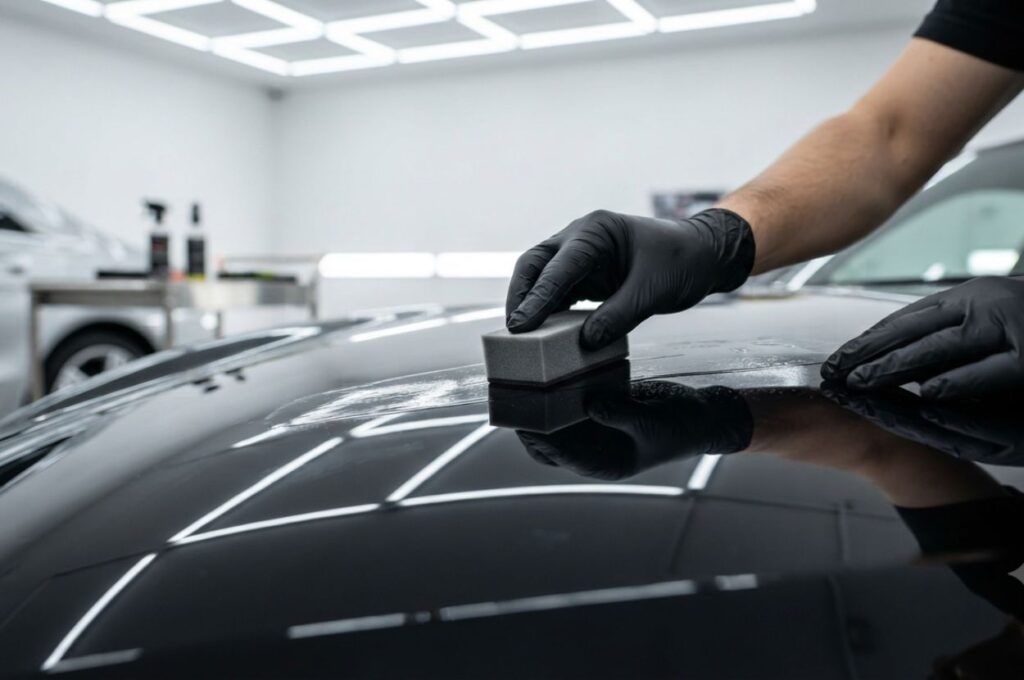
Professional coatings bond deeply into the paint after proper prep and curing, lasting several years. Consumer spray‑on products, while helpful, typically last only a few months.
Spray coatings are a step up from wax but don’t match the durability of a professional application. They provide temporary protection but require frequent reapplication to maintain results.
If a quote seems unusually low, confirm whether it’s for a spray product or a true applied coating. The difference matters for both protection level and long‑term value.
Frequently Asked Questions
Is ceramic coating worth it for a daily driver?
It depends on how long you plan to keep the car and how much weather exposure it sees. For a daily driver kept five or more years through Michigan winters and lake-season summers, most owners find it worth the upfront cost. For a car you’ll trade in a year or two, wax and regular washing usually make more financial sense.
How long does ceramic coating actually last?
A professionally applied ceramic coating typically lasts two to five years, depending on the product and how well the car is maintained. Consumer spray-on ceramic products sold at auto parts stores last closer to a few months, since they bond to the surface rather than into it like a professional coating.
Does ceramic coating mean I can wash my car less often?
No, and washing less often actually works against the coating. Regular washing removes grime before it has a chance to sit, and a coated surface makes that easier, not harder, since dirt has less to grip onto.
Is ceramic coating better than wax for protecting against Michigan road salt?
Yes, generally. Ceramic coating bonds chemically to the clear coat and resists salt brine far better than wax, which sits on top of the paint and breaks down within weeks under winter driving conditions. Wax still helps between coating applications, but it won’t match a coating’s resistance over a full Michigan winter.
Visit Jax Kar Wash in Brighton Today
Whether your car is wearing a professional ceramic coating or you’re still weighing the investment, regular washing is what keeps the paint underneath in good shape either way. Stop by Jax Kar Wash in Brighton for a wash that’s gentle on coated finishes and effective on everything else.