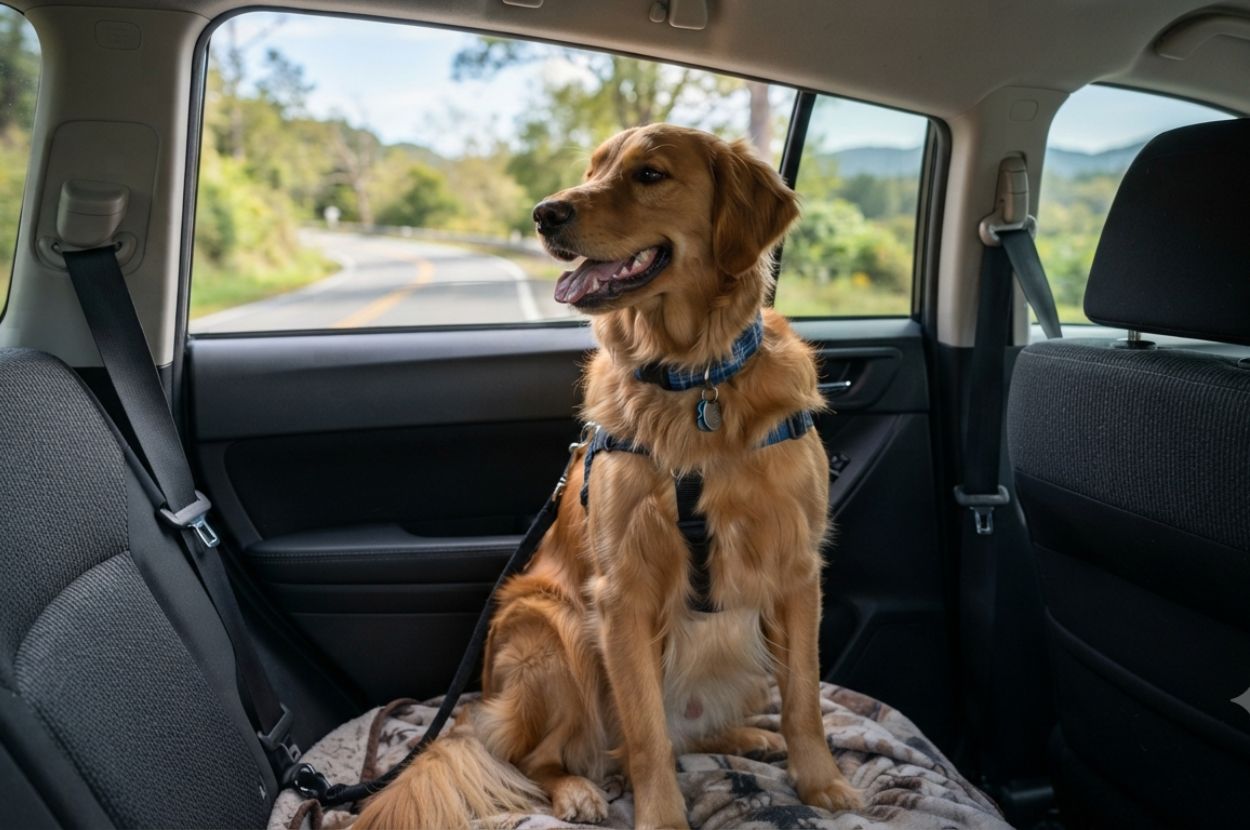
If you drive with a dog or a cat that’s decided the car is theirs now, you know the problem. Pet hair doesn’t sit on the seats. It weaves into them.
Regular vacuuming barely touches it. The hair grips the fabric, and a weak vacuum just glides over the top while the fur stays put, smug.
The fix is a little technique plus a genuinely powerful vacuum, which is exactly what the free vacuum at the car wash gives you. Here’s how to actually get it out.
Why Pet Hair Beats a Regular House Vacuum (but Not a Free Car Vacuum)
Pet hair is stubborn for a specific reason. It’s fine, slightly staticky, and it works its way down into the weave of upholstery and carpet.
A typical household vacuum, or a low-power handheld, doesn’t have enough suction power to pull it back out. It grabs the loose surface hair and leaves the embedded stuff behind. Double-coated breeds like huskies and shepherds are the worst offenders, and a Michigan spring shed makes it dramatically worse.
The free vacuum at a car wash is a different level of machine. These are high-powered commercial units built to move serious debris, and that extra suction is exactly what pet hair requires. Pair it with the right technique, and you’ll pull out fur you didn’t know was there.
The Rubber-Glove Trick Before You Vacuum
Here’s the hack that makes the biggest difference, and it costs nothing.
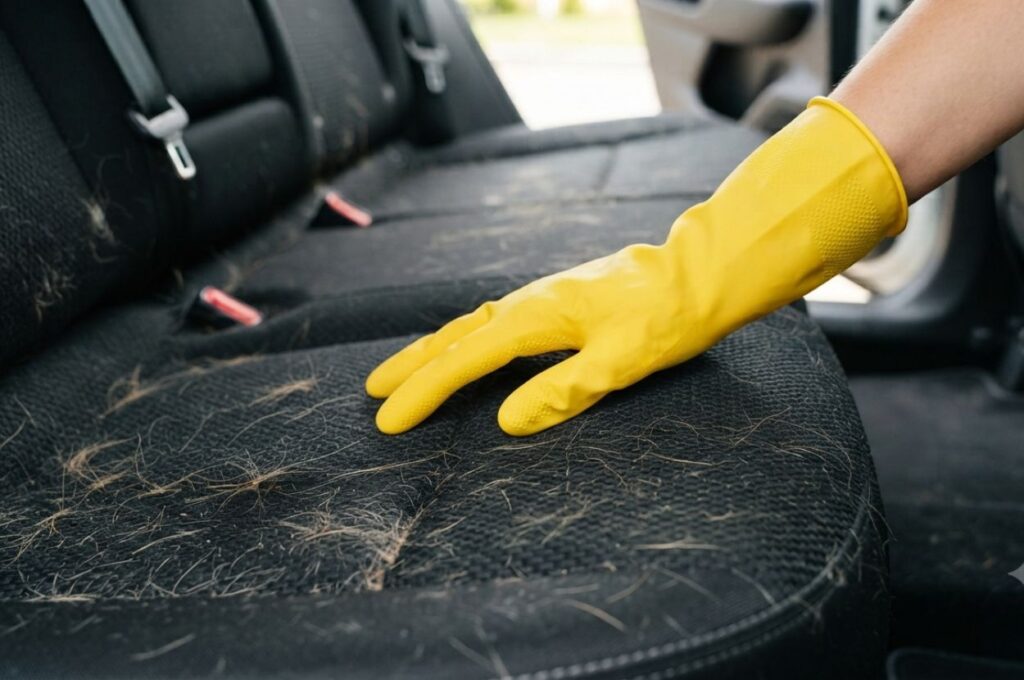
Before you vacuum, put on a rubber dishwashing glove and run your hand firmly across the seats and carpet. The rubber creates friction and static, balling up the embedded hair into little clumps you can pick up or vacuum away easily.
No glove? A slightly damp microfiber cloth or even a rubber squeegee does the same thing. Drag it across the fabric and watch the hair gather. A light mist of water helps loosen the really stuck-in stuff. The idea is to lift the hair out of the weave first, then let the vacuum finish the job.
Direction matters more than pressure. Work in one consistent direction, and the hair rolls up into a windrow you can grab in one pass. Scrub back and forth, and you just push it deeper. A cheap pumice-style pet-hair stone works the same way if you keep one in the glovebox, but the glove is free and lives in every kitchen.
Working the Free Vacuum Nozzle the Right Way
With the hair loosened, the free vacuum does the heavy lifting, as long as you use it right.
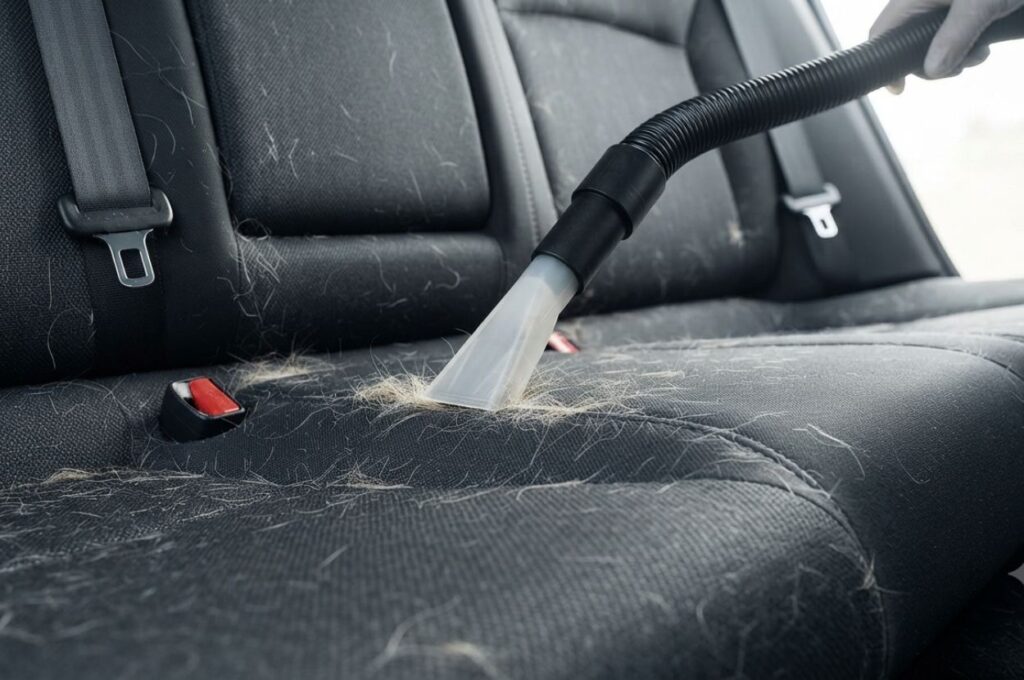
Skip the wide upholstery attachment for pet hair. The narrow crevice nozzle gives you more concentrated suction. Work in short, overlapping passes and go against the grain of the fabric to lift hair out of the fibers, not skate over them.
Press the nozzle firmly into the seat as you pull. The closer the contact, the stronger the pull. Take your time on the seams and the crease where the seat back meets the cushion. That crease is where fur collects the most and where people give up the fastest.
Don’t sleep on the floor mats either. Pull them out, shake them, and hit both sides. Rubber all-weather mats let you just knock the hair loose, but carpet mats hold it as the seats do and need the same crevice-nozzle treatment.
Don’t Forget the Trunk and Seat Backs
If your dog rides in the back of an SUV, the cargo area is ground zero.
Hit the trunk carpet, the sides, and the back of the rear seats, the vertical surfaces people always skip. Fold the seats down and get the hair that’s collected in the gap behind them.
Seat backs and headrests hold more hair than you’d think, too. Anywhere a pet leans, rests, or sheds against is worth a pass. The free vacuum’s long hose reach makes getting to all of it easy, even the far corners of a third row.
And once the inside’s handled, don’t skip the outside. A dog-hauling SUV that spends its summer on I-75 picks up plenty of paint-dulling grime, too. Learn how I-75 construction tar and gravel film builds up on your paint, and why rinsing it off regularly keeps your vehicle looking sharp.
Making Pet-Hair Cleanup a Habit with a Free Vacuum in Auburn Hills
Pet hair is a losing battle if you only fight it twice a year.
A quick five-minute pass every week or two (glove trick, crevice nozzle, seams and cargo area) keeps it from ever building into that welded-in layer that takes forever to remove. Tack it onto a wash you’re already getting, and it’s barely a chore.
For Auburn Hills drivers with a co-pilot who sheds, that bit of regular upkeep is the whole secret to a car that doesn’t look like the dog owns it. It helps with the smell and the allergens too, since trapped fur holds dander and outdoor dust right where you breathe it.
Next wash, spend a few extra minutes at the free vacuums with the glove trick and the crevice tool. Your seats, and your next passenger will notice.
Frequently Asked Questions
What’s the best way to get pet hair out of car seats?
Loosen it first, then vacuum. Run a rubber glove, damp microfiber cloth, or squeegee across the fabric to ball up embedded hair, then use a high-powered vacuum with the narrow crevice nozzle, working against the grain. The loosening step is what makes the vacuum effective.
Why won’t my vacuum pick up pet hair?
Most likely, it doesn’t have enough suction, or you’re skipping the loosening step. Pet hair grips the weave, so a weak vacuum glides over it. A commercial free vacuum at a car wash has the power, especially when paired with the rubber-glove trick.
Does dampening the fabric help remove pet hair?
Yes, lightly. A light mist of water loosens hair from the fibers and reduces static, making it clump so it lifts out more easily. Don’t soak the seats, just a light mist before you agitate and vacuum.
How often should I vacuum pet hair from my car?
Every week or two if you drive with a pet regularly. Frequent quick passes prevent the deep, welded-in buildup that takes far longer to remove. Tacking it onto a regular wash keeps it manageable.
Visit Jax Kar Wash in Auburn Hills
Pull into the free vacuums and give the seats, mats, and cargo area the full treatment your four-legged co-pilot deserves. A few extra minutes with the crevice nozzle keeps that welded-in layer from ever building up.