It’s February in Royal Oak. Your car looks a lot like every other car in the parking lot: white salt streaks running down the doors, crust building up around the mirrors, and that chalky gray film settling into every piece of black trim.
And sure, the rag in your door pocket is right there.
Don’t do it.
We get the temptation. But dried road salt isn’t just a cosmetic problem. It’s packed with abrasive grit, sand, and debris that can leave behind scratches the moment you start rubbing. The streaks disappear. The swirl marks stick around.
The good news? Getting rid of salt safely isn’t complicated. You just need the right order of operations.

Why a Dry Wipe Is the Wrong Way to Handle Exterior Car Wash Salt Buildup
Most drivers think of road salt as a stain.
It isn’t.
By the time those white streaks dry on your mirrors and trim, they’re made up of hardened salt crystals mixed with dirt, sand, and whatever else was kicked up by Michigan roads. Drag a dry towel across that surface and you’re essentially rubbing abrasive particles against your paint and plastic.
The streak might disappear.
What you’re left with are tiny scratches that become impossible to ignore once the summer sun hits them.
That’s why the first rule of winter car care is simple: water before contact. Every time.
Start Your Exterior Car Wash Routine With a Thorough Rinse
Before a mitt, towel, or brush touches the vehicle, rinse everything thoroughly.
Focus on the mirrors, trim, lower doors, and rocker panels where salt tends to accumulate. The goal isn’t speed. It’s flushing away as much loose contamination as possible before you start washing.
Warm water can help dissolve salt more quickly, but cold water works just fine too. What matters most is volume. Let the water run. Let it soften the buildup. Let gravity carry the grit away.
A few extra minutes here can save your finish from unnecessary scratching later.

Use a Soapy Microfiber Mitt and Plenty of Lubrication
Once the loose salt is gone, it’s time to wash.
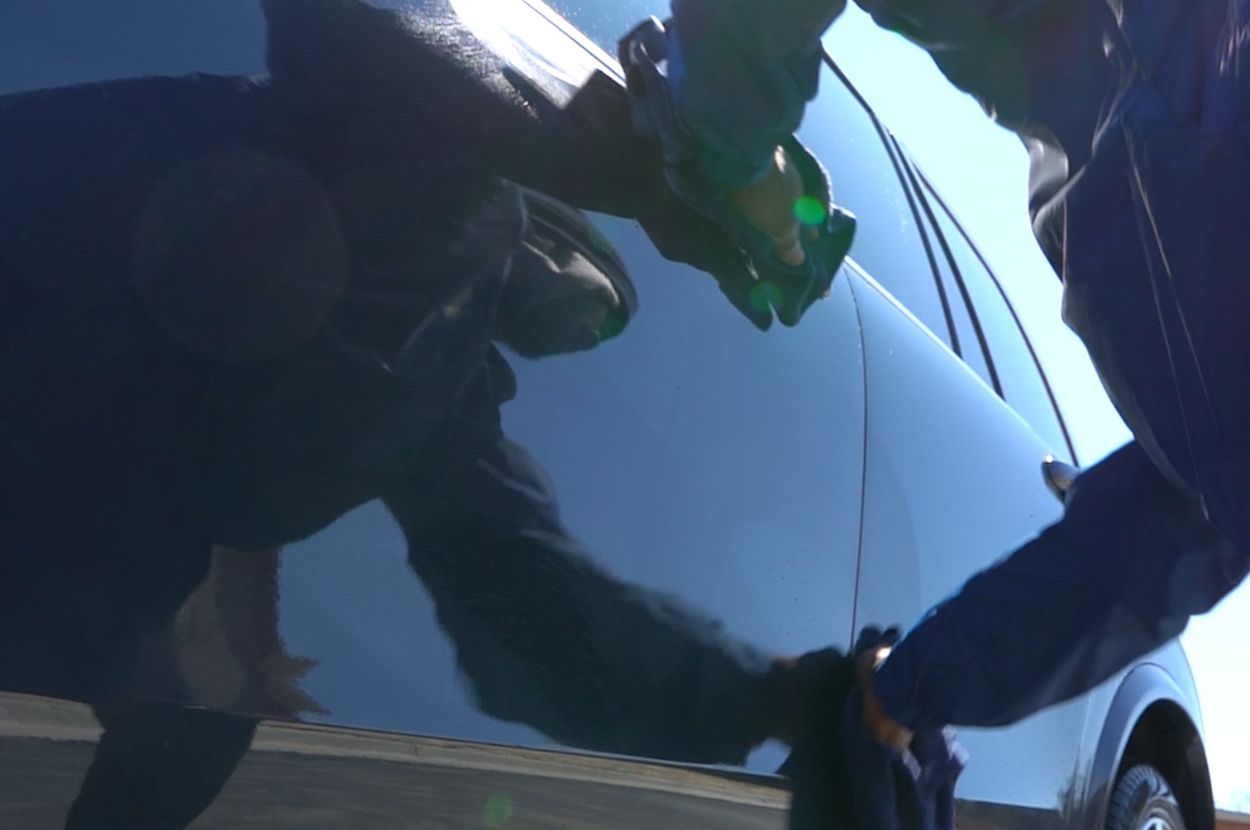
Reach for a clean microfiber wash mitt and plenty of car-wash soap. Skip the paper towels. Skip the household brushes. And definitely skip anything stiff enough to scrub.
Wash in straight-line motions rather than circles, and rinse the mitt often. That’s especially important around mirror housings, trim edges, and seams where salt likes to hide.
Think of it less as scrubbing and more as gently lifting contamination away from the surface.
The soap does most of the work.
Black Trim Needs Extra Attention
If you’ve ever noticed white salt stains lingering on black plastic long after the rest of the car looks clean, you’re not imagining things.
Textured trim loves to hold onto winter residue.
Unfortunately, it’s also one of the easiest places to create permanent cosmetic damage. Aggressive scrubbing can leave marks that don’t polish out the way paint sometimes can.
Instead, stick with a gentle process:
Rinse thoroughly. Wash with a lubricated microfiber mitt. Dry with a clean microfiber towel.
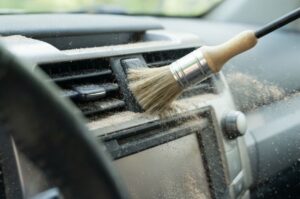
If some white residue remains deep in the texture, a dedicated trim cleaner or a soft detailing brush can help work it loose without damaging the surface.
Patience wins here. Force usually doesn’t.

Don’t Forget the Hidden Areas During an Exterior Car Wash
The visible salt streaks get all the attention.
The hidden salt is what causes bigger problems.
Check the door jambs, the underside of mirrors, lower door edges, and other tucked-away areas where moisture and salt can sit for weeks. These are exactly the spots where corrosion likes to start.
A quick wipe-down of these areas every few washes helps keep salt from lingering where you can’t easily see it.
For Michigan drivers, that small habit can make a surprisingly big difference over time.
What Happens When You Let Salt Sit Too Long
Salt on the surface is annoying. Salt that’s been sitting for a week is a different problem.
Over time, brine seeps into micro-scratches in the clear coat and starts working on the paint below. Around mirror housings, the joint between plastic and paint is a weak spot — salt gets into that seam and holds moisture against the metal underneath. Lower door panels near the rocker are the same story.
None of that is visible from the outside. You don’t see corrosion starting. You just see a white streak and assume it’s cosmetic.
By the time the damage becomes obvious, it’s already baked in. Washing regularly — not just when the car looks bad — breaks that cycle before it gets a foothold.
A Royal Oak winter is hard enough on a car. Letting salt linger doesn’t make it any easier.
The Easiest Way to Stay Ahead of Winter Salt
At some point, convenience matters.
A proper wash process is designed to flood away grit before anything touches your vehicle. Pre-soaks help loosen salt deposits, while soft-cloth systems apply soap and lubrication safely across the surface.
That’s one reason so many Michigan drivers make washing part of their regular winter routine instead of waiting until the buildup becomes impossible to ignore.
If you’re looking for the easiest way to stay ahead of salt streaks, corrosion, and winter grime, an exterior car wash at our Woodward location in Royal Oak makes it simple to keep your vehicle looking respectable all season long.
Frequently Asked Questions
Can I just wipe salt off with a dry towel?
It’s not a good idea.
Dried road salt is abrasive, and wiping it dry drags those particles across paint and trim. Even if the surface looks cleaner afterward, you may be leaving behind fine scratches.
Always rinse first so the contamination can float away before a towel touches the vehicle.
Does warm or cold water remove salt better?
Warm water dissolves salt a little faster, but cold water works well too.
The important part is using enough water to flush contaminants away before you begin washing. Either option is significantly safer than trying to wipe the surface dry.
How do I get white salt haze out of black plastic trim?
Start with a thorough rinse and a gentle wash using a microfiber mitt and car-wash soap.
If residue remains trapped in the texture, use a trim cleaner or a soft detailing brush to lift it out. Avoid aggressive scrubbing, which can permanently mark the plastic.
How often should I wash my car during Michigan salt season?
For most Michigan drivers, every week or two is a solid target during peak salt season.
You may want to wash sooner after major snowstorms, heavy salting events, or periods of thawing when roads are especially messy. Regular washing helps prevent salt from sitting on metal surfaces where corrosion can begin.
Road salt is part of life in a Michigan winter.
Scratches don’t have to be.
Rinse first. Use plenty of lubrication. Take your time. And keep dry towels away from salt-covered surfaces.
If you’re building a winter maintenance routine, our guide on how often to wash your car through a Michigan winter can help you stay ahead of salt before it becomes a bigger problem.