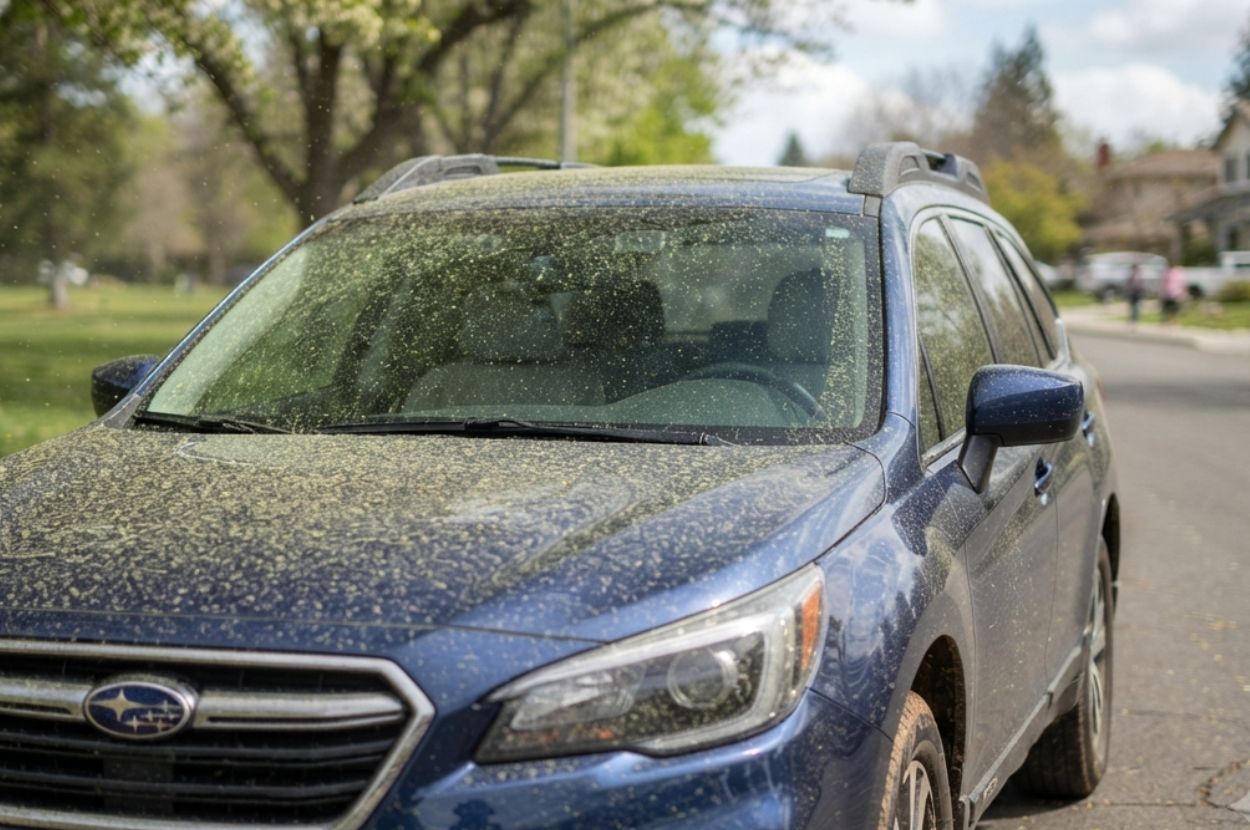
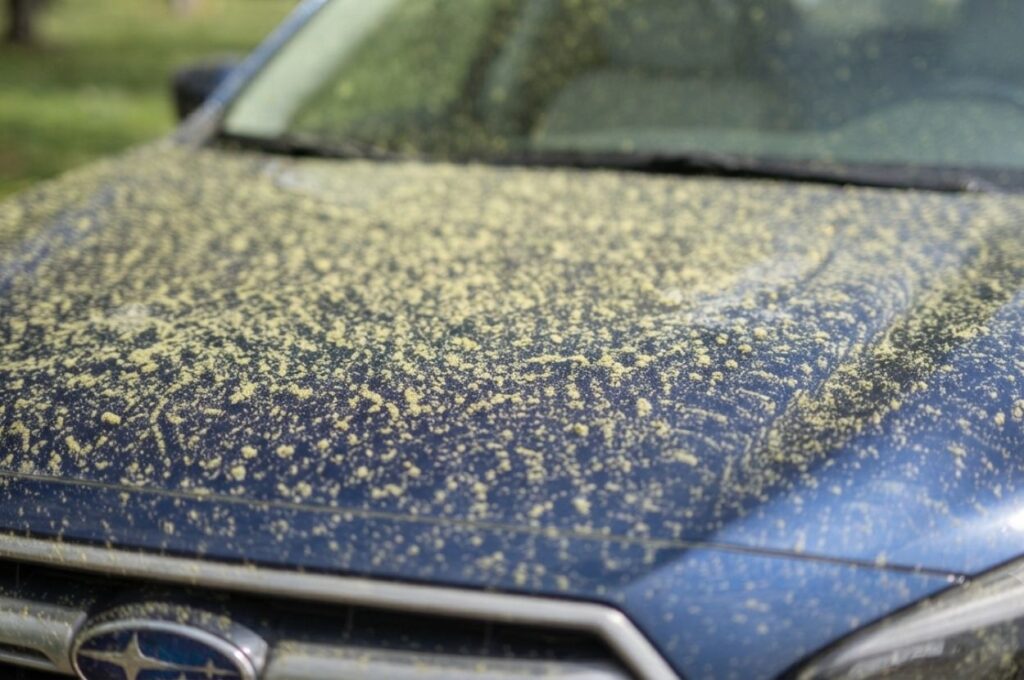
By late May, cars parked anywhere near Telegraph Road or the tree-lined streets around Southfield are wearing the same yellow-green dusting. It settles on hoods, windshields, and door handles overnight, and if you park under an oak or maple for even a few days, it turns into a sticky film that regular rain barely touches.
Most drivers try to wipe it off with a dry rag or blast it with the garden hose, and that is exactly how pollen turns from a surface nuisance into an etched stain. Pollen grains are rough and acidic, and once the sun bakes them onto warm paint, they bond to the clear coat instead of sitting on top of it.
Here is the direct answer, then the details on why it matters and how Southfield detailers actually handle it.
How Do You Get Pollen Off Your Car?
The safest way to remove pollen is a two-step rinse-then-wash process, never a dry wipe. First, rinse the car with a hose or a touchless pre-rinse to float loose grains off the surface without dragging them across the paint. Second, wash with a pH-balanced soap and a clean microfiber mitt, working section by section and rinsing the mitt often so you are not reapplying dislodged pollen back onto the panel.
Skip paper towels, old rags, and anything abrasive, since dry friction is what grinds pollen grains into the clear coat. If pollen has already dried on for more than a day or two, a dedicated pollen-cutting shampoo or a light clay bar pass will lift what a normal wash misses.
Why Southfield’s Pollen Season Hits Paint So Hard
Southfield sits in a heavy tree canopy zone, with mature oaks, maples, and pines lining neighborhoods off Nine Mile and Evergreen Road. That canopy is great for shade and terrible for anyone trying to keep a car clean from mid-April through June. Oak pollen especially is fine, sticky, and slightly acidic, and Michigan’s swing between cool nights and warm afternoons means dew forms on parked cars almost every morning during peak season. That daily moisture turns loose pollen dust into a paste that clings to paint, mirrors, and even rubber trim.
Cars that sit in Southfield driveways or open office lots along the Lodge Freeway corridor take the worst of it, since long-term outdoor parking gives pollen days to bond instead of hours. Vehicles that get washed weekly during pollen season hold up fine. Vehicles that go three or four weeks without a wash often need real correction work by July, not just a rinse, because the buildup has already had multiple heat cycles to set.
The Detailer’s Step-by-Step Pollen Removal Process for Southfield Cars
A trained detailer treats pollen removal almost like treating a mild contamination, not a routine wash. The process usually looks like this: a foam pre-soak to loosen the layer without contact, a two-bucket hand wash or touchless automatic cycle to lift what the soak loosened, a clay bar or clay mitt pass on hoods and roofs where pollen has bonded hardest, and a rinse-and-dry finish that avoids leaving mineral spots behind. Detailers also pay close attention to window seals, mirror housings, and the cowl area under the windshield wipers, since pollen collects there and washes back onto the glass every time the wipers run, leaving streaky film long after the rest of the car looks clean.
If you want that level of care without setting aside a Saturday, a professional car detailing service handles the pre-soak, clay treatment, and protective finish in one visit, which matters most during the six to eight weeks when Southfield’s tree pollen is at its heaviest and DIY washing struggles to keep up.
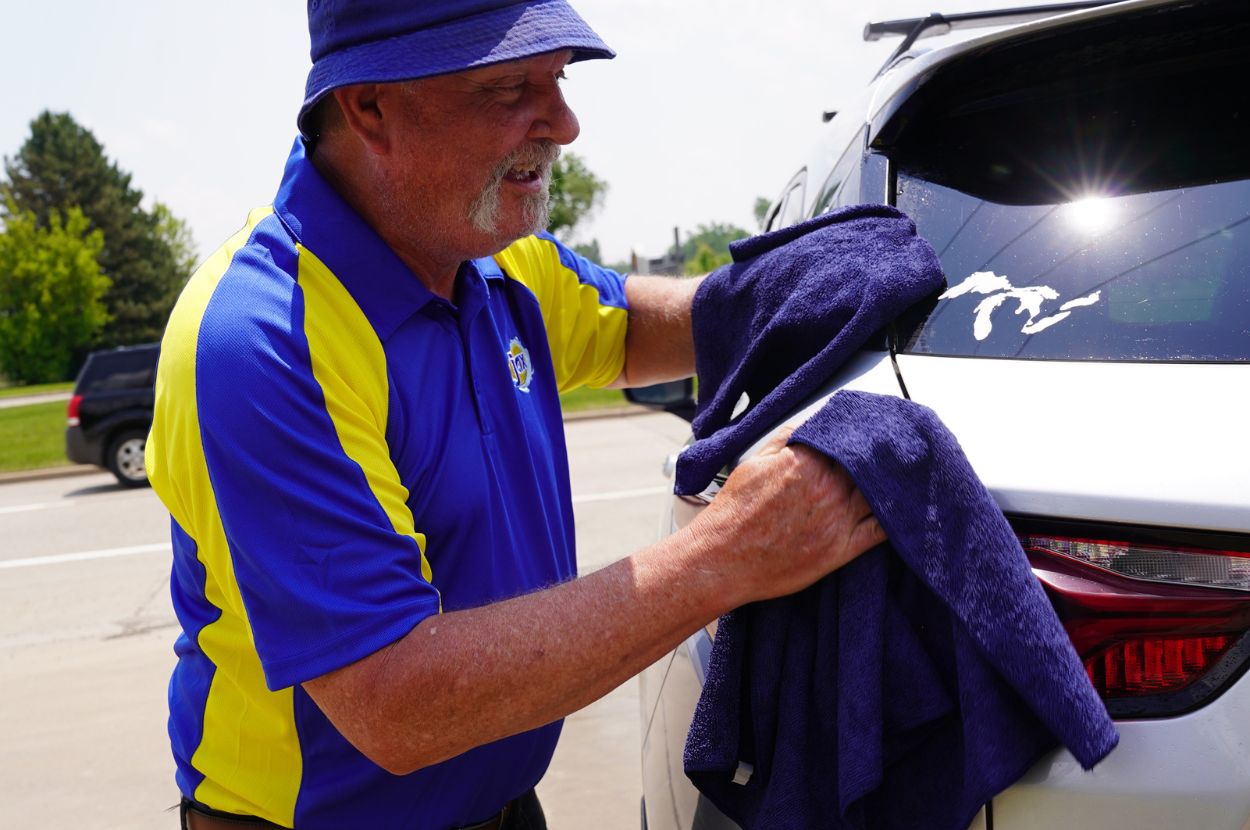
What Happens When Pollen Bakes Into Your Clear Coat
Pollen is more than dust. Each grain carries natural oils and mild acids, and once the sun heats a parked car past 90 degrees on a Southfield afternoon, those oils start to etch into the clear coat’s surface. Left long enough, this shows up as faint white or dull spots that do not buff out with a quick wax. This is the same mechanism that makes bird droppings and tree sap so damaging in summer.
The heat accelerates a chemical reaction that a cold rinse alone cannot reverse. Once etching sets in, it usually takes machine polishing to correct, which costs far more than the wash that would have prevented it, and dark-colored vehicles show the damage even faster since heat absorption is higher on darker paint.
Simple Habits That Keep Your Southfield Car Pollen-Free All Season
A few habits go a long way during Southfield’s peak pollen stretch. Park away from overhanging trees when you can, even if that means walking a little farther from the office or the store.
Rinse the car every few days if it is parked outside, since a quick rinse takes the acidic load off before it has time to bond. Keep a microfiber cloth in the glovebox for windshields and mirrors, but only use it on a wet surface, never dry, since a dry wipe just grinds grit into the glass.
Crack a window slightly less and use the garage when you have one, since indoor parking removes the daily dew cycle that reactivates dried pollen each morning. And build in a proper wash every one to two weeks through late spring rather than waiting for pollen to visibly coat the car, since prevention is always cheaper than correction once etching has already started.
Frequently Asked Questions
How do you get pollen off a car?
Rinse first to float loose grains away, then wash with a pH-balanced soap and a clean microfiber mitt, rinsing often. Never wipe dry pollen with a rag or paper towel, since that grinds the grains into the clear coat. If pollen has already dried on, a clay bar pass or pollen-cutting shampoo will lift what a regular wash leaves behind.
Does pollen actually damage car paint?
Yes. Pollen carries natural oils and mild acids that etch into clear coat once heat activates them, especially on a car sitting in direct sun. Left on for days at a time, it can leave faint white or dull spots that need machine polishing to correct.
How often should I wash my car during pollen season?
Every one to two weeks is a safe minimum in Southfield during peak pollen, mid-April through June. If your car sits outside under trees, a quick rinse every few days between full washes keeps pollen from ever getting the chance to bond.
Can I use a home pressure washer to remove pollen?
A gentle pressure washer setting can help float pollen off, but high pressure at close range can push grit into seams and trim rather than removing it. A proper pre-soak and hand or automatic wash is generally safer and more thorough than pressure alone.
Visit Jax Kar Wash in Southfield
Pollen season does not wait for a free Saturday, and neither should your car’s finish. Stop by Jax Kar Wash at 30705 Southfield Rd for a wash and detail that clears pollen the right way, before it has a chance to etch into your paint. Our team handles the pre-soak, the wash, and the finish so you can get back on the road with a clean, protected car.