
 ← BLOG | NEWS ROOM
Can You Pour Hot Water on a Frozen Windshield?
You’re running late, the car sat out all night off Maple Road, and the windshield is one solid sheet of ice. There’s a kettle right there on the stove, and honestly, we get the temptation.
Please don’t. Hot water on a frozen windshield can crack the glass, and then a quick morning problem turns into a call to the glass shop.
Pouring Hot Water on a Frozen Windshield Can Crack It
No, you really shouldn’t pour hot water on a frozen windshield. Yes, the ice melts fast, but the glass under it gets hit with a big temperature jump all at once, and glass doesn’t like that.
Sometimes it cracks right then and there. Other times nothing shows up until a tiny fracture creeps across the glass a few cold mornings later (which is how people end up saying “I did it once and it was fine”).
Why Hot Water Cracks a Cold Windshield
Glass gets a tiny bit bigger when it warms up and a tiny bit smaller when it’s cold. Pour hot water on it, and only the wet patch warms, so that patch tries to grow while the frozen glass right next to it stays put.
That tug-of-war has a name: thermal shock. Tom’s Guide breaks it down the same way, with uneven expansion building stress inside the glass until it cracks wherever the stress is worst.
And if the windshield already has a few gravel chips from driving in and out of Walled Lake? Those little chips are exactly where a crack likes to start.
Is Lukewarm Water Any Safer?
A little, sure. Lukewarm beats boiling, but glass that’s been sitting out overnight is still a lot colder than your tap, and that gap is what causes the stress in the first place.
Then there’s the runoff nobody thinks about. It slides down to the wiper blades and the bottom edge of the glass, and on a cold enough morning it freezes right back up, so now you’re scraping twice.
Safer Ways to Clear a Frozen Windshield
Here’s what actually works, and it isn’t fancy. Start the car, put the defroster on warm instead of cranking it to max, and let it go for a few minutes (Glass Doctor gives the same advice, since it’s the sudden temperature change that hurts the glass).
Then grab a scraper while the glass warms up. A plastic one, please.
We say that because metal edges can dig right past the ice and leave a scratch you’ll be looking through for years. SlashGear makes the same point: plastic is firm but dull, which is what you want against glass.
Thick ice? Spray some de-icer, wait a minute, and push the slush off instead of hacking at it.
Oh, and two free tricks for next time. Flip the wipers up when you park for the night, and keep the scraper up front with you, not buried under grocery bags in the trunk.
Frozen Wipers Need the Same Patience
The wipers are where a lot of people lose their patience. You yank on a frozen blade, the rubber tears, and now it streaks every time it rains for the rest of the winter.
So leave them alone until the defroster loosens them up. Chipping ice off the rubber does the same kind of damage, just slower.
While you’re out there, think about the washer fluid. Summer fluid can freeze in the lines and the reservoir, which is why it’s worth switching to a winter-rated one before the real cold shows up.
Hear the pump whine but nothing hits the glass? That’s usually frozen fluid, so park somewhere warmer for a bit (and no, not hot water in the reservoir either).
Check the Glass for Chips Before the Next Freeze
That little chip you’ve been ignoring since summer? Once the freezing nights start piling up, it can turn into a long crack.
Cold glass is already stressed, and then the defroster blasts warm air at it every morning. So take a minute in good light and look for tiny stars or bullseyes anywhere the wipers sweep (a fingernail run across the glass finds the ones you can barely see).
Found one? Get a glass shop to look at it while it’s still small.
Small chips can often be repaired. Once a crack spreads, though, you’re usually buying a whole new windshield, so it’s a much easier fix before the hard frosts.
Exterior Car Wash Habits That Help on Icy Mornings
To be clear, salt haze and road film don’t cause frost. They just make icy mornings worse, because once the ice is off, the wipers smear slush through that film and the low winter sun turns it into glare.
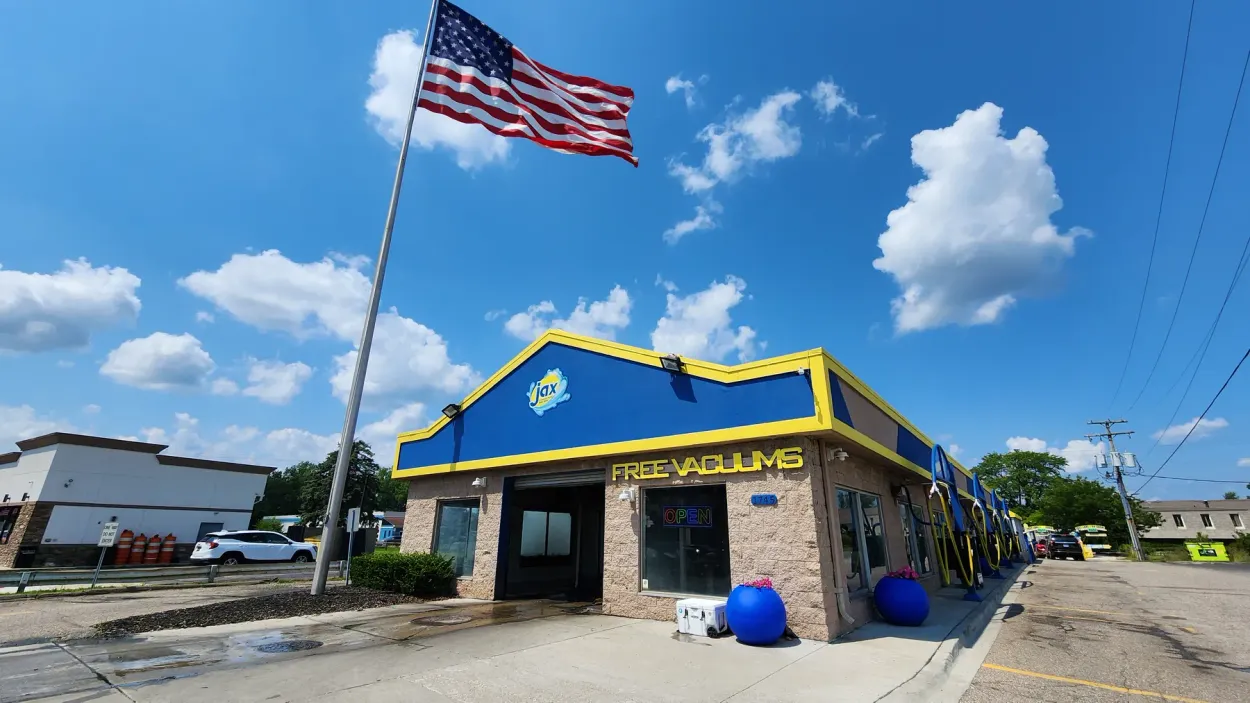
A regular exterior car wash at Jax Kar Wash in Walled Lake gets that film off the glass, along with the salt on the paint. Our Almost Everything wash adds a Rain-X windshield treatment too, and the Jax menu says it helps bugs and ice clean off easier.
Will a clean windshield replace the defroster? Nope, but you’ll scrape less and see better pulling out onto Maple Road.
Frequently Asked Questions
Will hot water always crack a frozen windshield?
No, not every time. It’s a gamble, though, and you won’t know you lost until the crack shows up, maybe that morning, maybe a few days later when the chip by the mirror suddenly has a tail.
Can you use warm water to defrost a windshield?
Warm water is less risky than boiling water, but it’s still not great. The glass is freezing and your tap isn’t, and the runoff freezes back onto the wipers anyway.
What is the fastest safe way to defrost a windshield?
Honestly, the defroster on warm plus a plastic scraper. Spray a little de-icer on the thick stuff and let the car run a few minutes before you start, and it goes faster than you’d think.
Is it bad to use a metal scraper on a windshield?
Yep, metal can scratch the glass. Stick with plastic, since it’s firm enough for ice but too dull to cut in.
Visit Jax Kar Wash in Walled Lake
Keep the glass clean, keep a plastic scraper in the cabin, and let the defroster take its time. And when the salt piles up, come see us at Jax Kar Wash, 1745 Maple Rd in Walled Lake (or call (248) 669-2190 if you’re not sure which wash to pick).