
 ← BLOG | NEWS ROOM
Leaves, Sap, and Wet Pavement: What Fall Driving Does to Paint in Sterling Heights
Fall’s rough on paint too. It’s just quieter about it than winter: wet leaves stain, tree drip sticks, and damp roads coat the lower panels in a gritty film that holds moisture right against the finish.
No single day does much. For Sterling Heights drivers, it’s the grime that sits there for a week or two that does the real damage.
What Wet Leaves Do to a Car’s Paint
Leave a wet leaf on the hood long enough, and yep, it’ll stain. As leaves rot, they give off tannins (the compounds that turn a puddle brown), and those soak into the clear coat.
The result is a leaf-shaped shadow on the hood, roof, or trunk lid. On a white car, it looks like a tea stain, and on a black one, it’s a dull patch no towel will buff out.
Leaves pile up in the cowl, too. That’s the slotted panel at the base of the windshield, and when it clogs, water sits there and can work its way into the cabin air intake.
Easy fix? Brush the leaves off before they get soaked.
Use a soft brush or just your hand, though. Dragging leaves across the paint grinds whatever grit’s underneath right into the finish.
Tree Drip and Sap on Fall Paint
Leaves aren’t the only thing coming down around Sterling Heights, either. Sap, sticky drip, and bits of debris land on pretty much any car parked in a driveway or under a maple by the curb.
Sap shows up sticky. Then the sun hardens it, and every day it sits makes it tougher to get off.
The same cars get the bird droppings, of course, and those are acidic. Again, the damage comes from leaving them there.
Park under a tree at home? Then the answer is washing more often.
Wash about once a week, and the drip and droppings come off before they bond. Wait a month, and you’re scrubbing hardened spots instead of rinsing them.
Wet Pavement and the Film It Leaves Behind
Damp fall roads throw up a fine spray on every drive. Dirt, oil, brake dust, ground-up leaves: it all ends up on the rocker panels, bumpers, and lower doors.
When it dries, you get a gray film. Next damp morning, it soaks again.
So the lower panels spend most of fall wet and dirty at the same time. For paint, that’s about the worst combo there is, since the moisture holds the grit right on the clear coat.
The film hides chips, too. A small stone chip on a lower door disappears under it, and bare metal there is exactly where rust gets started.
Where Fall Grime Collects on a Car
Some spots catch way more than others: the cowl, the gap around the hood, and the channel around a sunroof if you have one. All of them trap leaves and wet debris.
Door jambs get a mix of grit and leaf bits every time someone opens a door. The wash tunnel can’t reach in there, so give them a wipe with a damp microfiber cloth when you clean out the cabin.
Wheel wells are worse than you’d think. Wet leaves and mud pack in right against the inner fender, and a good rinse is the only thing that keeps that pile from sitting there all season.
Then there’s the rear of the car. On SUVs and wagons especially, the rear glass is gray after one rainy commute down 15 Mile.
How Fall Weather Speeds Things Up
With shorter days and cool nights, the car just stays wet longer from dew, drizzle, and fog. Damp paint hangs on to whatever lands on it.
But the sun hasn’t gone anywhere. A chilly morning followed by a bright afternoon bakes leaf stains and drip right onto the finish.
Then salt season shows up. Paint that’s already stained and filmed over going into winter is in worse shape to handle brine.
That’s why fall’s a good time to reset, because clean, protected paint just holds up better through winter.
Think of it as clearing the slate. Whatever you wash off now is one less layer the salt gets to sit on top of for the next few months.
Fall Car Care for Sterling Heights Drivers
The easiest routine is to wash regularly and keep some protection on the paint. Wax or sealant helps leaves, drip, and road film rinse off instead of bonding to bare clear coat.
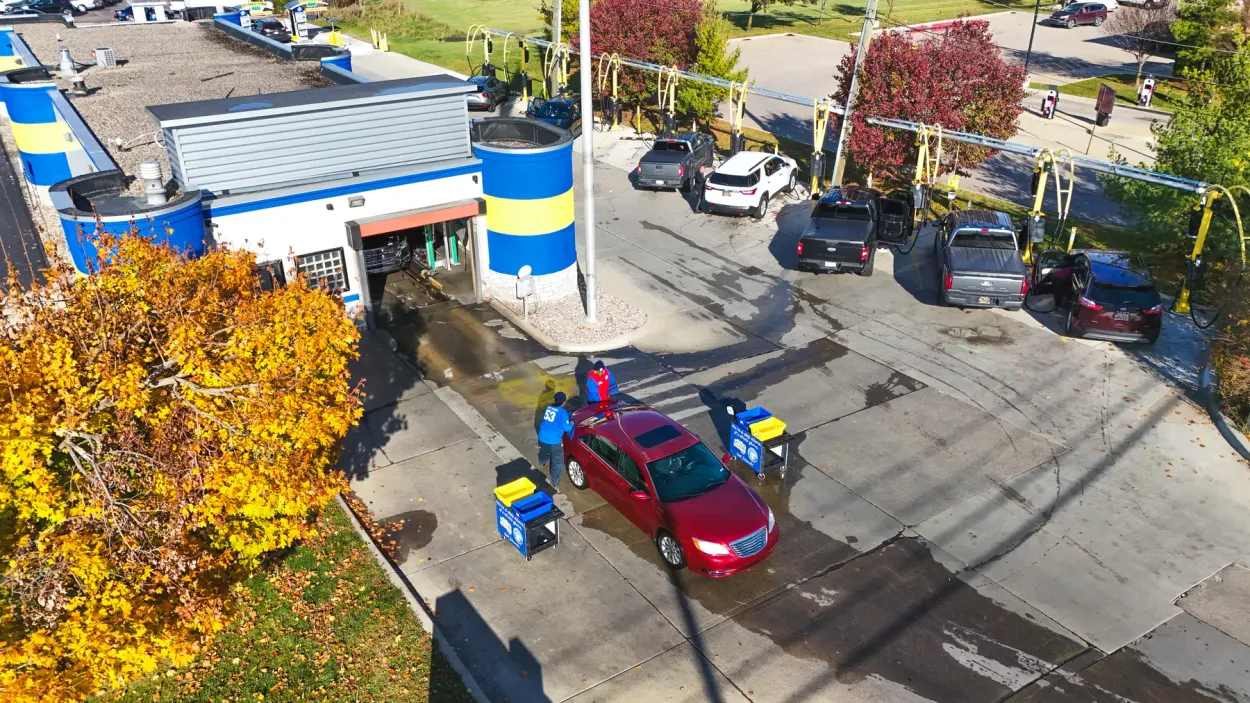
Our car wash on 15 Mile Road takes the film off the lower panels, and every wash includes the Underbody Wash. Then the free vacuums handle the leaves you dragged onto the floor mats.
Clear out the cowl while you’re at it. Pull whatever leaves you can reach so the base of the windshield drains the way it should.
If home parking means parking under trees, try a different spot for the few weeks the leaves are heaviest. Skip the car cover on a daily driver, though, since pulling one over a dirty car every day drags grit across the paint.
And before the roads get treated, walk around the car once in daylight. Look for chips, stains, and rough spots, so you know what you’re heading into winter with.
Frequently Asked Questions
Can wet leaves damage car paint?
Yes. As wet leaves break down, they release tannins that can stain the clear coat, so brush them off early and wash regularly before the stains set.
How often should I wash my car in the fall?
Every week or two works for most Michigan drivers, more if you park under trees. That’s often enough to keep leaf stains, drip, and road film from bonding to the paint.
Should I wax my car before winter?
Yes, it’s a good idea, since wax puts a protective layer down before salt and brine hit the roads. At Jax Kar Wash, wax comes built into Basic Plus and every tier above it.
Why does my car get dirty so fast on wet roads?
Blame the tires. They throw up spray full of dirt, oil, and brake dust that lands on the lower panels, and once it dries, it leaves a gray film that the next damp drive soaks all over again.
Visit Jax Kar Wash in Sterling Heights
Get the fall grime off before it sets in at Jax Kar Wash, 5775 15 Mile Rd. in Sterling Heights. If you have a question first, call (586) 826-9480.