
 ← BLOG | NEWS ROOM
Before Salt Season: How Sterling Heights Drivers Can Check the Undercarriage for Early Rust
You can check your undercarriage for early rust yourself. Grab a flashlight and some gloves, and pick a dry afternoon.
You’re not diagnosing anything. You just want to know what the metal under your car looks like before the salt trucks start rolling through Sterling Heights.
Most people never look. Then a mechanic holds up a crusty brake line during an oil change, and nobody has any idea how long it’s been like that.
So look now. A quick check in fall gives you a “before” picture, and anything new after winter jumps out.
What Early Undercarriage Rust Looks Like
Early rust is that orange-brown discoloration sitting on top of the metal. It’s a stain, basically, not a hole.
You’ll find it on bare steel, around bolt heads, and on bracket edges where the factory coating got chipped by a stone off the road.
On a Michigan car? Pretty normal.
Honestly, a bit of surface rust isn’t a big deal. Lots of cars around here carry some for years without it turning into a real problem.
The stage after that is what you’re really hunting for.
It bubbles up and flakes off in layers when you press it with a gloved thumb, and the metal underneath looks pitted instead of smooth.
And if a chunk crumbles or you can see daylight through it, stop poking. That’s a job for a shop, not a driveway.
Where to Look When You Check the Undercarriage for Rust
Wheel wells first. Point the light up behind each tire at the inner fender lip, because that little ledge holds wet grit the whole winter.
Next, the rocker panels, the long strip of body under each door. Run the light slowly along the pinch seam at the very bottom where two panels are welded together.
Moisture loves that seam. It just sits there, sometimes for days after the rest of the car has dried off.
Now get down low and check the frame rails or subframe (depends on the car). Pay extra attention wherever suspension parts bolt on, because those joints are salt traps.
Don’t skip the brake and fuel lines running under the car. They’re thin, and they’re easy to miss in a quick look.
Follow the exhaust back to the muffler and the rubber hangers too.
Last stop is the bottom edge of each door and the rear hatch or trunk lid. Open them up and check the little drain holes along the bottom seam.
A clogged drain keeps water trapped inside the panel, which is how rust starts from the inside out. A thin piece of wire or a pipe cleaner usually pops one open.
How to Do the Check Safely in Your Driveway
Park on flat pavement with the engine off and the parking brake on.
Never crawl under a car that’s held up only by a jack, ever. Use ramps or real jack stands if you need more room, though honestly most of these spots are visible from the side with a bright light.
Gloves and safety glasses, please. Rust flakes and old grit drop straight down, and guess where your face is.
One more thing: do it on a clean car. Mud and dried salt hide exactly the discoloration you’re trying to see.
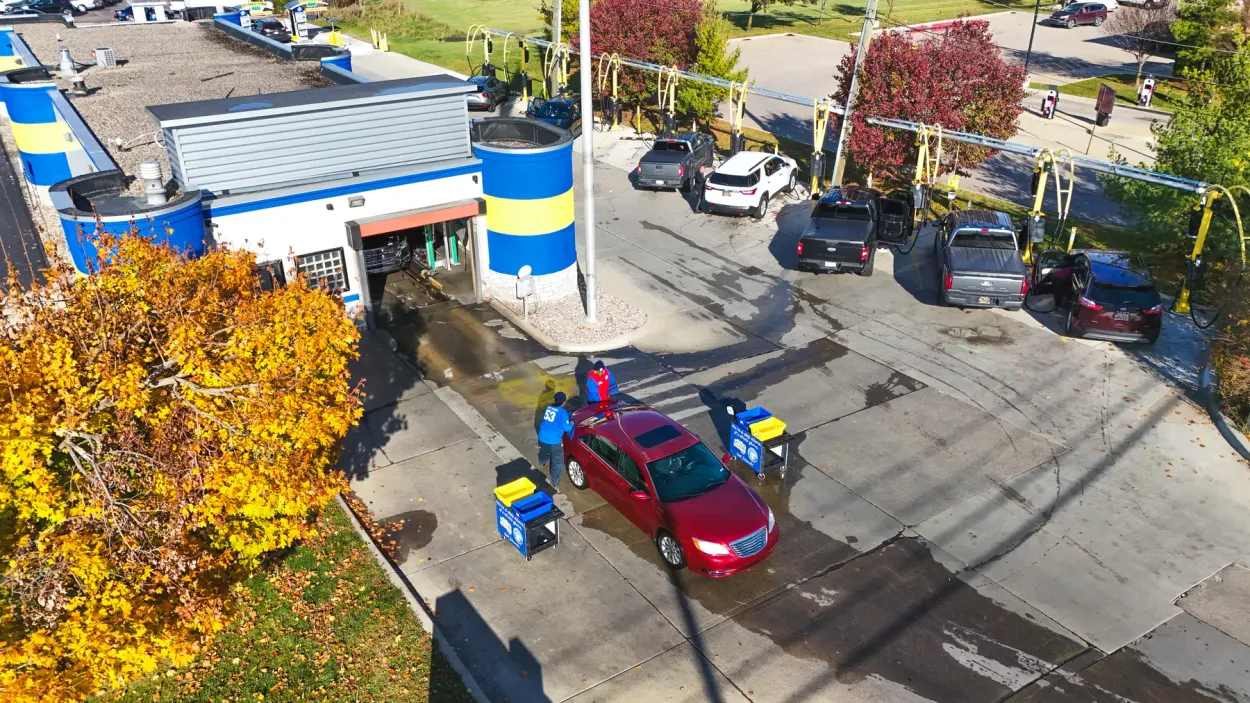
An exterior car wash at our Sterling Heights location includes the Underbody Wash, which rinses dirt and salt off the undercarriage. Swing through first, and you’ll be looking at actual metal instead of grime.
Why Fall Is the Right Time to Check
Fall is pretty much your last shot at a dry underside in Sterling Heights. After the roads get treated, every trip adds another layer of brine and slush.
Try inspecting in the middle of salt season, and you’ll see why. Everything under there is gray and wet, and new rust looks exactly like old residue.
There’s a practical reason too. Spot something sketchy on a brake line now, and you’ve still got time to get it looked at before the worst driving of the year.
Keep it simple. Jot down what you saw, snap a few photos, and you’re done until the roads clear.
It’s maybe the easiest bit of car care you’ll do all year, and it’s the one that pays off when something finally needs fixing.
When to Have a Shop Look at the Rust You Find
Flaking rust on a brake line, fuel line, the frame, or anything holding a suspension part? Take it in.
Those are the parts that hold the car up or stop it. Don’t wait on those, since a shop can tell you pretty quickly if it’s a cleanup job or a replacement.
Your photos help here. They give the shop something to look at, and they give you something to compare against after a winter of salted roads.
Light surface rust on a heat shield or a bracket is a different story. Note where it is and check the same spot again after a few months of salt.
That’s the whole idea, really. You aren’t fixing anything yourself, just making sure you’ll know whether next spring’s rust is new.
Frequently Asked Questions
How do I know if undercarriage rust is serious?
It’s serious once it flakes, bubbles, or leaves pitting and holes, especially on the frame, brake lines, or fuel lines. Light orange surface discoloration is common on Michigan cars and usually just needs watching.
How often should I check my undercarriage for rust?
Twice a year is plenty for most drivers, once before salt season and once after the roads clear. Compare the two, and you’ll see what a Sterling Heights winter actually did.
Can I check for rust without lifting the car?
Yes. Wheel wells, rocker panels, door bottoms, and most of the exhaust are visible from the side with a bright flashlight, and ramps or jack stands (never a jack alone) give you a better look at the frame.
Should the car be clean before I check for rust?
Yes, a clean underside makes early rust much easier to spot. Wash it, let it dry, then look.
Visit Jax Kar Wash in Sterling Heights
Jax Kar Wash is at 5775 15 Mile Rd. in Sterling Heights, and the Underbody Wash is included in every wash. Call (586) 826-9480 with questions, or stop in before your driveway check so you’re looking at clean metal.