 ← BLOG | NEWS ROOM
Is It Bad to Leave Snow Sitting on Your Car?
Snow lands on the car, the morning is already packed, and clearing it feels like a job for the weekend. Plenty of Walled Lake drivers leave it sitting for days and wonder if that does any harm.
Fresh snow by itself won’t hurt your paint, but the salt and grit trapped under it can, along with the melting and refreezing that follows. A regular wash at Jax Kar Wash in Walled Lake clears that layer off before it settles in.
Is Leaving Snow on Your Car Bad for the Paint?
Not if the snow is all that’s on there. Snow is frozen water, and frozen water on a clean clear coat doesn’t etch, stain, or soften it.
The trouble is what the snow lands on. Most cars on a Michigan road already wear a film of road salt, sand, and brake dust, and a layer of snow keeps that film damp and pressed against the finish.
That’s why two cars under the same storm can end up in very different shape. A freshly washed car has very little under the snow to cause trouble, while a car that spent the week on Maple Rd or Pontiac Trail has a gray crust waiting under there.
Road film that has been sitting under snow also tends to be harder to rinse off than fresh film, since it has had time to dry and bond to the finish.
Salt mostly goes after bare metal, not the paint itself. So chips, scratches, and the undercarriage are where it does the real harm.
What Happens When Snow Sits on a Car and Melts
Snow on a parked car rarely stays frozen the whole time. Afternoon sun, a warm hood after a drive, or a mild day melts the top layer, and the water runs down into the seams around the doors, hood, and trunk.
When the temperature drops again, that water freezes. Freezing water expands, so water sitting in a small chip or crack in the clear coat can widen it a little each time.
Repeat that enough times, and a chip nobody noticed can turn into a rust spot.
Snow also hides the evidence. You can’t see a small chip or scratch under a layer of snow, so the first real look at the paint only happens once you clear it.
The meltwater also carries salt down the doors and into the rocker panels, which dry slowly under a cold blanket of snow. Rubber door seals can freeze to the frame the same way, and yanking a stuck door open can tear them.
Why Snow on the Roof Is a Bigger Problem Than Snow on the Paint
Snow left on the roof is a driving hazard, whatever it does to the paint. It can slide forward over the windshield when you brake, and it can blow off behind you into the car that’s following.
Clear the roof, the hood, and every window before you pull out, even if the rest of the car can wait. The rear glass, the mirrors, and the lights matter too, since you need to see and be seen.
Push the snow off with a soft brush or a foam broom, keep the ice scraper on the glass, and leave the thin film on the paint to melt. Then check that the wipers aren’t frozen to the windshield before you turn them on.
What to Check After Snow Has Been Sitting on Your Car
Once the snow is off, take a minute to look the car over. The edges of the hood, the front bumper, and the lower doors are where chips and scratches show up first.
Rust starts where the paint is broken, so a chip that has been sitting wet under snow is worth sealing with touch-up paint soon. Small ones are easier to deal with before they spread.
Run a hand along the door seals and make sure the rubber is intact. Then check that the headlights and taillights are clear, since packed snow hides both.
How Long Is Too Long to Leave Snow on Your Car in Walled Lake?
There’s no set number of days, because it depends on what’s under the snow and how often it thaws and refreezes. A clean car under a steady cold snap can sit longer than a salty one under snow that keeps melting.
The cars to wash sooner are the ones that drove through salty slush before the snow landed, and the ones that sit through thaw-and-freeze swings. If the lower panels are wearing a crust of snow and salt, don’t wait for it to clear itself.
A regular exterior car wash at Jax Kar Wash in Walled Lake takes that layer off the paint. Every exterior wash includes an underbody wash and a towel-dry finish, so the salt that settled into the undercarriage gets rinsed out too.
Wax and sealant add a slick layer on top, so meltwater beads and runs off instead of sitting on the paint. Depending on the wash level, that’s Triple Bond Wax, Simoniz Hot Wax & Shine, or Simoniz Ceramic Sealant.
If you drive through slush most days, a steady wash schedule through the winter works better than waiting for a clear stretch, since the car picks up a fresh film on every trip.
Tie the stop to a drive you already make, like a run down Maple Rd, and the car never gets the chance to sit.
Frequently Asked Questions
Can snow damage car paint?
Not by itself. The damage comes from the salt and grit under the snow, and from water that melts and refreezes in chips and seams.
Should you clear snow off your car before driving?
Yes, at least the roof, hood, and windows. Snow left on the roof can slide onto your windshield or blow off into the car behind you.
Does snow left on a car cause rust?
Not directly. Rust needs bare metal, and snow with road salt in it speeds that up wherever the paint is chipped or scratched.
Does wax help with snow on a car?
A little. Wax and sealant leave a slick layer, so meltwater beads and runs off instead of sitting in a film on the paint, and the regular wash is what keeps that layer topped up.
Visit Jax Kar Wash in Walled Lake
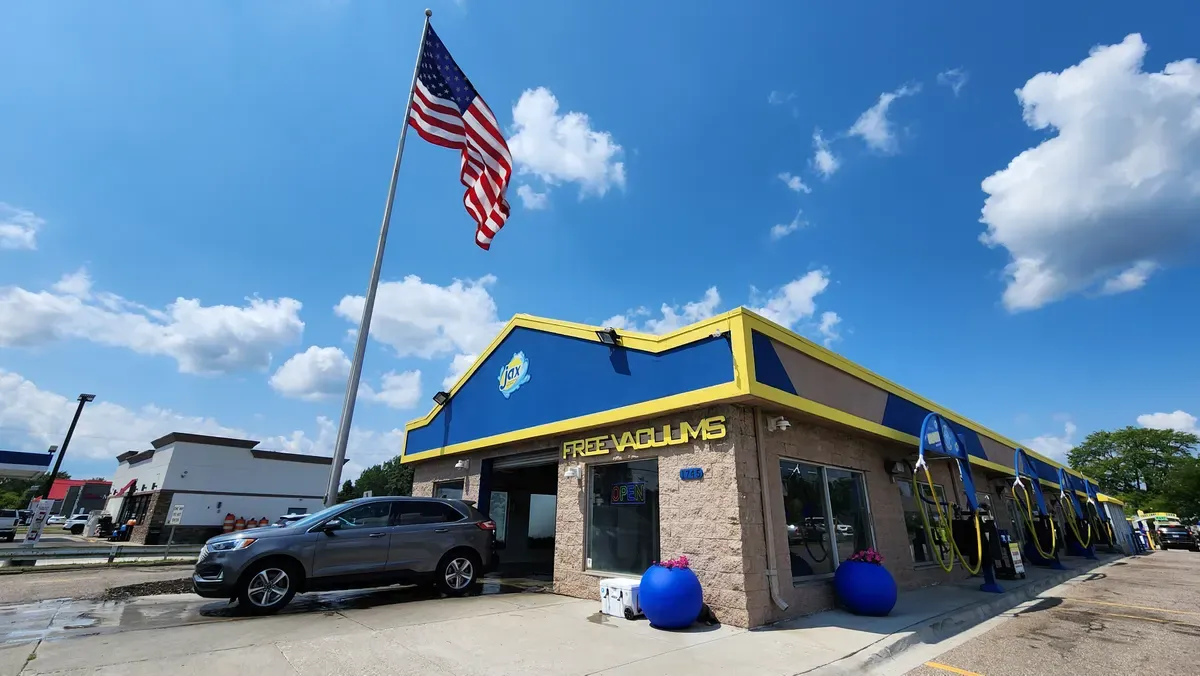
If your car has been sitting under snow and road salt, stop by Jax Kar Wash at 1745 Maple Rd in Walled Lake for an exterior wash with an underbody wash and a towel dry. Call (248) 669-2190 with any questions.