 ← BLOG | NEWS ROOM
How to Keep Road Salt From Pitting Chrome Trim, Running Boards, and Hitches in Jackson
There’s a moment every Jackson truck owner knows. You’re wiping down the rear bumper on a cold afternoon, and your thumb catches on a rough spot that used to be smooth chrome.
That’s pitting, and salt is usually behind it. The good news is that most of it can be slowed way down with some pretty unexciting habits.
How to Protect Truck Chrome From Road Salt
The short answer: get the salt off often, keep something protective on the chrome, and deal with small spots before they turn into big ones.
Salt only causes damage while it’s sitting on the metal. According to AAA, liquid de-icers stay liquid longer than rock salt and are more likely to coat parts and seep into cracks and crevices, and a chrome bumper or grille has plenty of both.
So washing is step one. Wax is step two, because a layer of protection gives salt something other than bare chrome to sit on.
Drying matters, too. A truck that sits overnight with salty water pooled in the bumper seams is giving that salt all night to work.
Step three is just paying attention. Run your hand over the bumper and the step edges after a wash, and you’ll catch rough spots while they’re still small.
What an Exterior Car Wash Does for Chrome and Running Boards
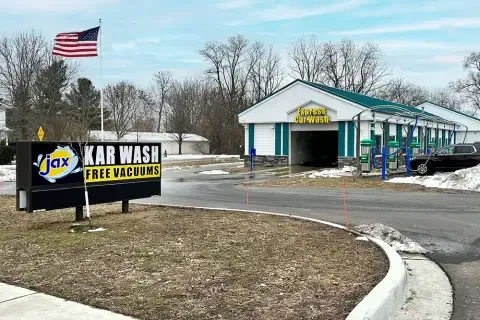
An exterior car wash at Jax Kar Wash on West Ave gets the salt off the chrome, the running boards, and the rear bumper in one pass. It uses heavily lubricated soft cloth, never brushes, so the chrome isn’t getting scrubbed with anything stiff.
Every exterior wash also includes an underbody wash. That’s a blast of water aimed underneath, which matters here because running board brackets and the hitch receiver both live down where the spray hits hardest.
Each wash finishes with a towel dry, too. Water sitting in the seams of a chrome bumper isn’t doing it any favors, and neither is the salt dissolved in it.
If you want extra protection, the higher wash levels add things like Simoniz Hot Wax & Shine and Simoniz Ceramic Sealant. Jax says the ceramic sealant gives the finish 30-day protection from the elements, which is handy when the roads stay salty for weeks at a time.
Why Chrome Pits in the First Place
Here’s something most people don’t know: chrome on a truck is a sandwich.
Per Classic Car Hub’s chrome guide, the shiny chromium on top is actually the thinnest layer. Nickel underneath does most of the shining, and copper below that holds it all onto the steel.
So once a pit chews through the chromium into the nickel, no polish is going to fill it.
And bubbling or lifting? The guide says that’s rust growing under the plating, not the chrome itself.
Want to know where yours stands? Drag a fingernail across the rough spot.
If it glides over, polish and wax can still do something for you. If it catches, you’re past polishing, and it’s replating, replacing, or just keeping it from spreading.
Tiny specks of surface rust on chrome can sometimes come off with a dampened ball of aluminum foil, which the guide says lifts it without scratching.
Heads up on newer trucks, too. Lots of grilles and trim pieces are plastic chrome, and the guide warns chrome polish dulls those right away, so keep the abrasives off.
Running Boards Take the Worst of the Spray
Running boards sit right behind the front tires. Every wet road, they eat a face full of slush, and then you step on them in salty boots and grind it in.
The grippy tread pads are where it really collects. A quick rinse and a soft brush now and then beats only washing the shiny part.
Don’t forget the brackets underneath, either. You never see them, which is exactly why they end up crusted.
Steel, aluminum, plastic, or chrome, it doesn’t really matter what yours are made of, since none of them like salt parked in the grooves for weeks. Chrome or polished boards get the bumper treatment: wash, dry, wax.
Hitches, Ball Mounts, and Receivers in Jackson Winters
Your trailer hitch? It’s a salt trap.
The receiver tube fills with slush, and the ball mount just sits there soaking in it.
Not towing this winter? Pull the ball mount, toss it in the garage, and stick a cover or plug in the receiver.
Hitch pins and clips love to seize after a few salty months. A dab of grease before the snow flies saves you a fight later, and the ball gets the same treatment if you leave it on.
Towing through the winter anyway? Rinse the receiver and the trailer’s coupler after salty drives, since the tongue rides right in the spray too.
Spend a lot of time on I-94 or US-127? The rear bumper and hitch catch a lot of freeway spray, so give the hitch a look whenever you’ve got the hose out or you’re coming through the wash.
Frequently Asked Questions
Does road salt ruin chrome?
It can, if you let it sit. Salt that gets into tiny scratches and seams is what starts the pitting, so regular washing plus a coat of wax slows it way down.
Can pitted chrome be fixed?
Sometimes, and the fingernail test tells you which camp you’re in.
If your nail glides over it, polish can help, but if it catches, you’re usually looking at replating or a new part.
Should I take my hitch ball mount off in winter?
Yep, if you’re not towing, pull it and keep it inside. Pop a cover in the receiver and put a little grease on the pin and clip so they don’t seize.
Is wax good for chrome?
Yes, wax gives chrome a layer so salt and grime aren’t sitting right on the metal. Just put it on clean, dry chrome, and plan on redoing it a few times over the winter.
Visit Jax Kar Wash in Jackson
Chrome does fine through a Michigan winter as long as salt doesn’t get to camp out on it. Wash it, dry it, wax it, and don’t forget the hitch.
Jax Kar Wash is at 1312 South West Avenue in Jackson.
Have a question about bringing your truck through? Call (517) 795-1028.