
 ← BLOG | NEWS ROOM
How Van Dyke Traffic and Road Salt Wear Down Your Car's Lower Panels in Sterling Heights
Road salt hits the lower panels of a Sterling Heights car harder than anywhere else on the body, because that’s where tires and passing traffic throw it. On Van Dyke Ave, the rocker panels, door bottoms, and rear wheel arches get sprayed with brine on just about every winter drive.
Rust down there almost never starts with anything dramatic. It’s a stone chip, a clogged drain hole, or a seam that never quite dries, and salt goes to work on all of them.
Why Road Salt Hits the Lower Panels First in Sterling Heights
Start with your own tires. They pick up slush and fling it straight back at the rockers and lower doors, mile after mile.
Then add everybody else. On a busy multilane road, the pickup in the next lane is throwing its own spray sideways, and most of it lands right around door height.
Van Dyke makes it worse with all the lights. You brake into a puddle of gray slush, sit, then pull away through it, and that splash climbs a lot higher than steady highway spray does.
It’s not just water, either. Sand and little stones ride along with the brine, so the lower panels get wet and chipped at the same time.
Ride height plays a part too. A low sedan’s rockers sit right in the spray zone, while a taller SUV pushes more of it onto the rear doors and the tailgate.
And whatever lands higher up doesn’t stay there. Melting brine runs down the doors and collects along the bottom edge, which is the last part of the car to dry out.
How Salt Turns Small Chips Into Rust on Rocker Panels
Salt can’t do much to steel it can’t reach. Paint keeps it out, right up until a stone knocks a chip loose.
Rocker panels collect more of those chips than almost anywhere else on a car. Once there’s bare metal showing, chloride speeds up the corrosion, and a chip that would sit harmlessly for years in Arizona can start bubbling the paint around it after a few Michigan winters.
By the time you see bubbles, it’s been going a while. The rust usually spreads under the paint well past the edge of the original chip.
So dab some touch-up paint on fresh chips before salt season. It doesn’t have to look pretty as long as it covers the bare metal.
Not sure what color you need? The paint code is usually on a sticker inside the driver’s door jamb, and most auto parts stores can match it.
Clean and dry the spot first. A tiny brush or even a toothpick works fine for small chips.
The Hidden Spots on Door Bottoms and Wheel Arches
Open a door and look along the very bottom edge. Those small holes are drains, and when road grit plugs them, salty water sits against the seams inside the door.
Wheel arches have their own trap, a folded lip where the outer panel wraps over the inner one. Slush packs into that fold and can stay there all week.
Then there’s the pinch weld under each rocker panel. Shops lift the car there, and a jack pad can scrape it down to bare metal without anybody noticing.
Mud flaps are a cheap fix worth thinking about. They catch some of the front tire spray before it ever reaches the rockers.
Plastic rocker covers on newer cars don’t solve it, either. They hide the steel sill behind them, and grit and brine still find their way in around the clips.
You won’t see any of this from the driver’s seat, which is the problem. A lot of people find out at a trade-in appraisal.
How Often an Exterior Car Wash Should Clear Salt on a Van Dyke Commute
If you drive Van Dyke every day in winter, aim for a wash about once a week. After a storm, wait until the roads dry out some, so the drive home doesn’t undo it.
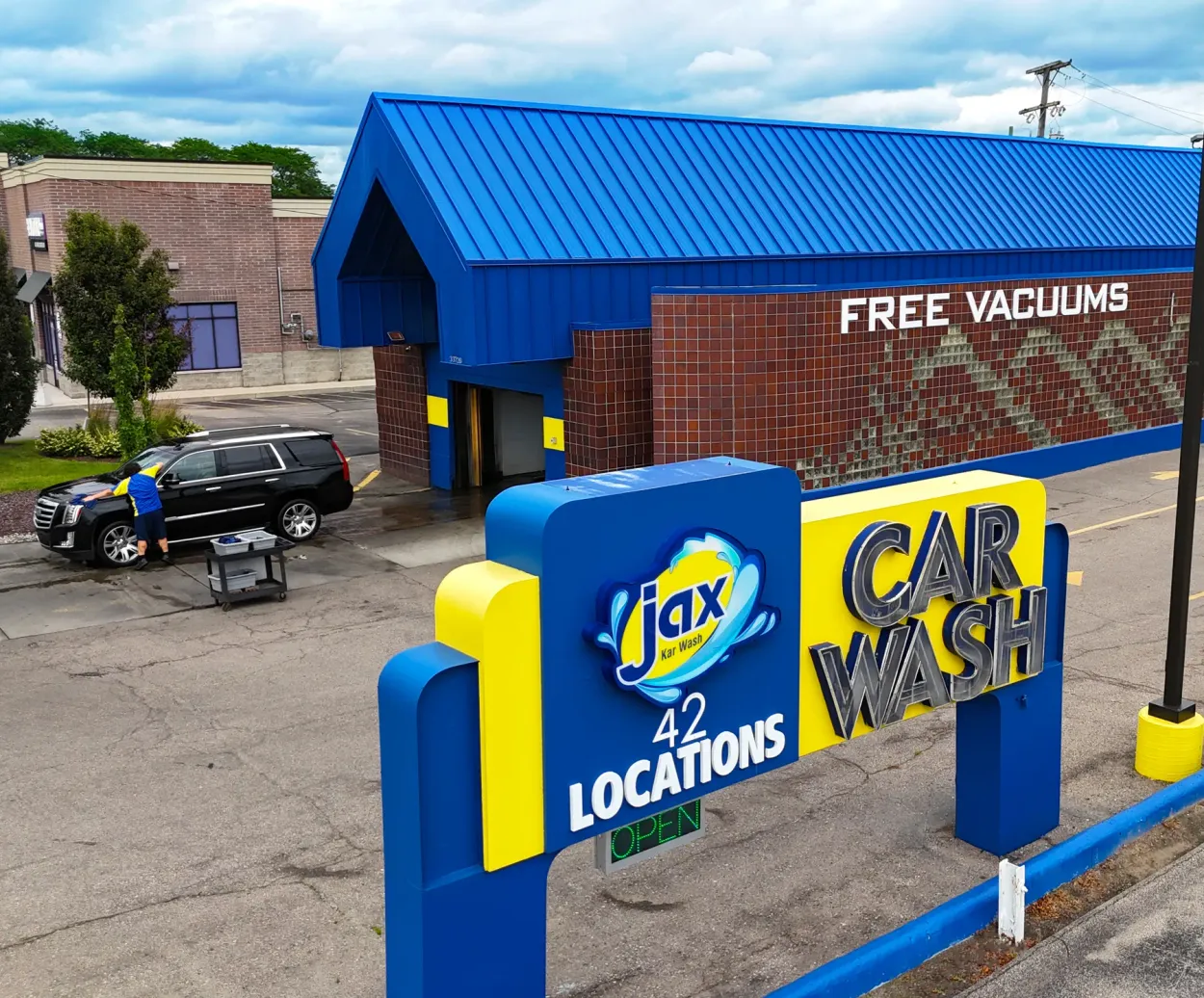
The exterior car wash at Jax Kar Wash on Van Dyke Ave comes with an underbody wash every time. That’s the blast of water that actually gets up into the rocker seams and wheel wells, which a garden hose mostly can’t.
Want a little more? Basic Plus and up add Under Sealant to help protect the undercarriage from rust, and the Everything wash puts Simoniz Ceramic Sealant on the paint.
Don’t skip washes during a long cold snap just because the car looks fine. On silver and white paint, dried salt film is a pale haze you barely notice.
Plan around the weather when you can. A wash on a day that’s above freezing lets the water run back out of the seams instead of icing up inside them.
Every few weeks, check those door drains. If they’re packed with grit, a pipe cleaner clears them in about a minute.
Frequently Asked Questions
Why do rocker panels rust first?
Rocker panels rust first because they sit lowest on the car, right where tire spray, slush, and flying stones hit. Brine also runs down onto them from the doors and stays wet longer there.
Does a car wash get salt off the lower panels?
Yes, if it has an underbody rinse. Every wash at Jax Kar Wash includes an Underbody Wash that blasts salt and dirt off the undercarriage, rocker seams included.
Can you stop rust that’s already started on a rocker panel?
Often, if you catch it early. A body shop can usually clean and seal light surface rust around a chip, but rust that’s bubbled the paint or eaten through needs real repair.
How often should you wash your car in a Sterling Heights winter?
About once a week, plus once after each storm when the roads dry. If you commute on salted roads like Van Dyke every day, try to stick close to that.
Visit Jax Kar Wash in Sterling Heights
The lower panels take the worst of every winter drive, and they’re the part of the car you’re least likely to check. Bring the car to Jax Kar Wash at 33720 Van Dyke Ave in Sterling Heights, or call (586) 554-7863, and the underbody rinse will clear out the salt before it sets in.