
 ← BLOG | NEWS ROOM
Rock Chips From US-23 and I-94: How to Keep Them From Turning Into Rust Spots
If you drive US-23 or I-94 around Ann Arbor with any regularity, you’ve heard it. That sharp little tick off the hood when a truck kicks up a stone, and then you forget about it.
The chip doesn’t forget, though. Left alone with salt and slush on it all winter, a tiny white dot on the hood can turn into a brown, bubbling spot you can’t ignore anymore.
Why Highway Rock Chips Turn Into Rust
A rock chip turns into rust when it knocks through the paint and primer down to bare steel, and then moisture gets in. Chemical Guys puts it pretty bluntly: a fresh chip down to bare metal starts oxidizing the moment water touches it.
Michigan winters speed that up. Road salt holds moisture against the metal, so a chip that would sit there harmlessly in a dry climate gets wet, stays wet, and starts to go.
Why the Hood and Front End Take Most of the Hits
At highway speed, the front of your car is basically catching whatever the vehicles ahead of you throw back. The hood’s leading edge, the front of the roof, the mirrors, and the bumper cover take the bulk of it.
Following a semi or a gravel hauler too close on US-23 is the classic way to collect a handful of chips in one trip. Backing off a few car lengths honestly does more for your paint than any product you can buy.
Here’s something a lot of people don’t realize, though. Many front bumpers are plastic covers, and a chip on plastic won’t rust, while a chip on a steel hood or fender can.
How to Tell if a Rock Chip Has Reached Bare Metal
Get the car somewhere with decent light and actually look into the chip. The color at the bottom tells you most of what you need to know (Chemical Guys sorts chips the same way, by clear coat, primer, or bare metal).
Still seeing your paint color down in there? Good news, it’s shallow.
A flat gray or white dot means it went through to the primer, which isn’t an emergency but shouldn’t sit forever either. The one to worry about is shiny silver.
That’s bare steel, and if there’s already a ring of orange or brown around it, well, the rust has beaten you to it.
Honestly, the easiest trick is your phone. Take a close-up, pinch to zoom, and you’ll see more in a few seconds than you will squinting at the hood in a freezing gas station lot.
Why a Rusty Chip Gets Bigger Than It Looks
Rust doesn’t stay inside the chip, unfortunately. It creeps under the paint around the edges, and one day there’s a little blister on the hood that makes a pinhead chip look like a dime-sized problem.
Chipex makes a point worth repeating here. Once a chip is already rusting, or bare metal is showing over a bigger area, touch-up paint is more of a temporary patch, because the rust underneath tends to push back through.
So the cheap, easy fix is early, while the chip is still clean metal. Wait too long, and it turns into a real body shop job, which nobody wants to deal with in the middle of a Michigan winter.
Rock Chip Rust Prevention Until a Body Shop Can Fix It
The real fix for a chip down to metal is getting it sealed, either with proper touch-up paint or by a body shop. Dr. Beasley’s explains why it matters, since touch-up paint fills the gap in the paint’s protection and keeps out the moisture and oxygen that cause rust.
We’d leave the touch-up work itself to a body shop if you’re not confident doing it, because a rushed job can leave metal exposed anyway. In the meantime, the goal is simple: keep salt from sitting in that chip.
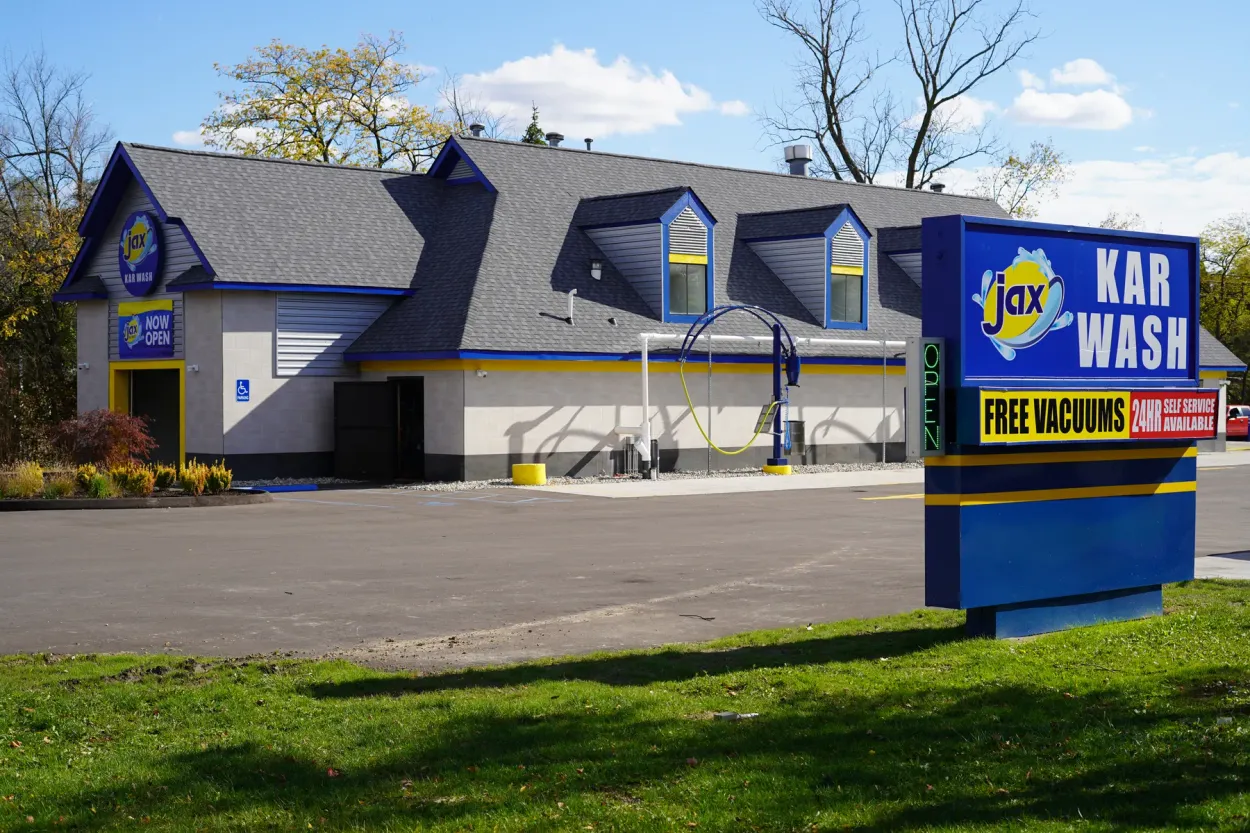
That’s where regular washing actually earns its keep in winter. A regular exterior car wash at Jax Kar Wash in Ann Arbor rinses the salt and road film off the hood and front end before it can sit in every little chip for days.
A wax or sealant layer helps the rest of the front end shed slush, too. The Jax menu lists Triple Bond Wax, Simoniz Hot Wax & Shine, and Simoniz Ceramic Sealant at different wash levels (none of them fill a chip, but they keep the paint around it in better shape).
Small Habits That Keep New Chips From Rusting
Check the hood after a long highway stretch, especially after a winter drive. A quick walk-around when you get gas is enough to spot new ones before they’ve had a whole season to sit wet.
Keep a little distance from trucks, and stay out of the lane right behind anything hauling gravel or sand. Also, if a chip shows up on the hood in the middle of winter, don’t wait for warmer weather to get it looked at.
It matters most in salt season, honestly. A chip that dries out between summer rain showers can spend a winter week wet the whole time.
Frequently Asked Questions
How fast does a rock chip start to rust?
A chip down to bare steel can start oxidizing as soon as it gets wet. How fast you actually see rust depends on the weather and the salt, which is why chips picked up in winter tend to show it sooner.
Does a rock chip on a plastic bumper rust?
No, plastic bumper covers don’t rust. Chips there are mostly a looks issue, but chips on a steel hood, fender, or roof edge are the ones to watch.
Can a car wash make a rock chip worse?
Generally no, a regular wash won’t make a rock chip worse, and it keeps salt from sitting in it. If the paint around a chip is already flaking or lifting, though, have a body shop look at it first.
When should a rock chip go to a body shop?
Once you see shiny metal or any orange at the bottom of it, get it in sooner rather than later. A body shop can tell you whether touch-up paint will do or if the spot needs more work.
Visit Jax Kar Wash in Ann Arbor
Keep the salt off the front end and get the deep chips sealed, and most of them never turn into rust spots. When the hood’s looking grimy after a week on the highway, come by Jax Kar Wash at 3300 Packard St. in Ann Arbor (or call (734) 369-3026 with questions).