 ← BLOG | NEWS ROOM
What Does 'Spot-Free Rinse' Mean, and Does It Actually Prevent Water Spots?
You’ve probably seen “spot-free rinse” on a car wash sign or a menu somewhere and wondered what it actually means. Is it special soap, or some kind of coating?
Neither, actually. It’s about the water, and once you get that, it’s way easier to figure out what it does (and doesn’t do) for your car.
What Does Spot-Free Rinse Mean?
A spot-free rinse is a final rinse with water that’s had most of its dissolved minerals filtered out, so the drops left on your car dry without those chalky white rings. That’s it, just cleaner water on the last pass.
Think about what a water spot even is. It’s the minerals in the drop that didn’t evaporate, so pull those out first, and there’s not much left to mark the paint.
How Car Washes Make Spot-Free Water
Usually it’s reverse osmosis, deionization, or a mix of the two. According to Pure Water Products, plenty of pro car washes go the reverse osmosis route, and it knocks out roughly 95 percent of the total dissolved solids.
TDS is just shorthand for all the mineral junk floating around in the water. Less of it means less to bake onto your hood.
Crystal Quest’s overview of spot-free systems says basically the same thing, with one detail people miss: the spot-free water is usually only the final, low-pressure sheeting rinse. Regular water does the real washing, and the filtered water comes in at the very end.
Soft Water Isn’t the Same Thing
Honestly, this one trips up a lot of people. Soft water sounds like it should be the same thing, and it isn’t.
A softener trades calcium and magnesium for sodium, so you’ve still got about the same amount of minerals in there. Pure Water Products points this out directly (softened water can still spot, since TDS is what matters, not hardness).
Got a softener at home and still seeing spots after a driveway wash? Yep, that’s why.
Does a Spot-Free Rinse Actually Prevent Water Spots?
Mostly, yes, for the rinse water itself. Drops of low-mineral water that dry on the paint leave very little behind.
It isn’t a force field, though. If there’s still road film or salt on the car, the rinse can’t fix that, and drips that run out of the mirrors, door handles, and trim later can carry regular water and grime with them.
Weather matters too. Drive out into rain or slushy road spray, and the car picks up new water with plenty of minerals and salt in it.
So think of spot-free as describing the last rinse, not as a promise about how the car looks two days later. Getting the water off the car still makes a real difference.
How the Jax Kar Wash Finish Handles Water
We’d rather be upfront here: the Jax menu doesn’t list a spot-free rinse, so we won’t pretend it does. What it does list is the part you’ll actually notice when you pull away.
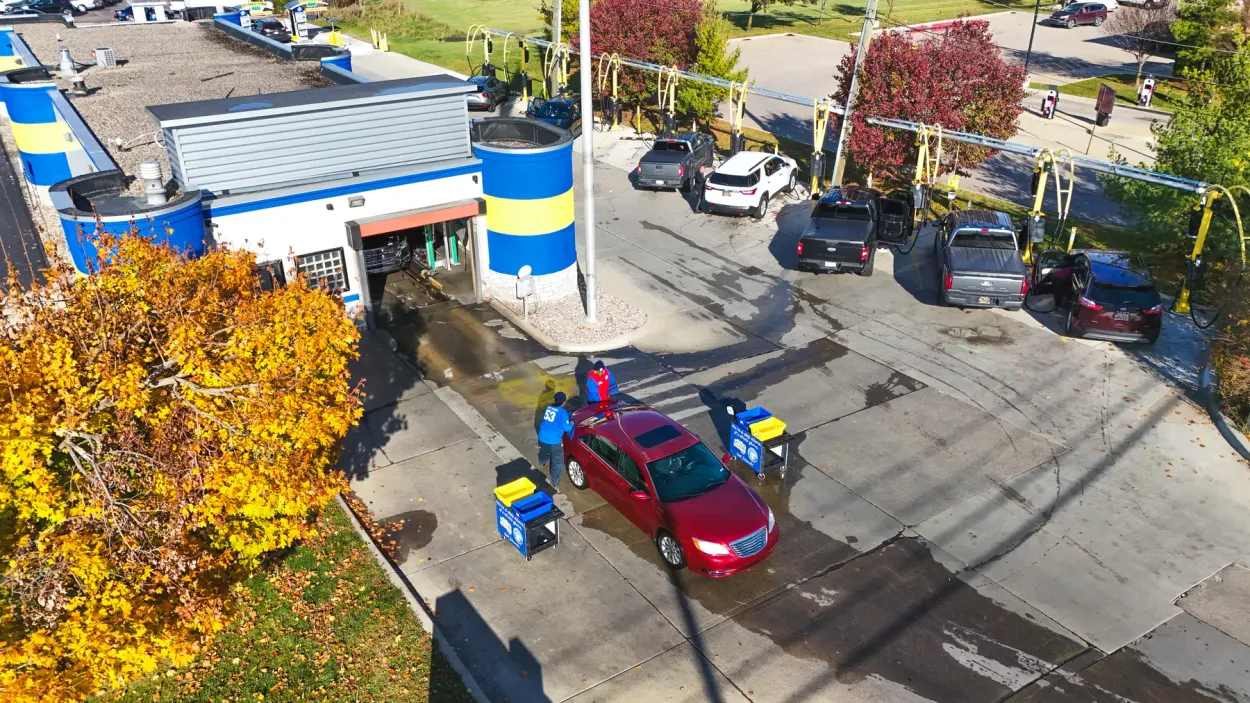
At Jax, we keep it simple and get the water off. Every exterior wash on the Jax menu includes an underbody wash and a towel-dry finish, so the car wash at Jax Kar Wash in Sterling Heights sends you back onto 15 Mile Road with the panels and glass dried off instead of dripping.
Drying works on the same logic as a spot-free rinse. If the water’s gone before it evaporates, there’s nothing left behind to mark the paint.
Higher wash levels on the Jax menu add extras like Rain-X Windshield Treatment, which the menu says helps bugs and ice clean off easier, plus Simoniz Hot Wax & Shine.
Questions to Ask About Any Spot-Free Rinse
If a wash advertises a spot-free rinse, it’s fair to ask what’s actually behind it. Whether the final rinse runs through reverse osmosis or deionization tells you a lot more than the sign does.
It’s also worth asking what happens after the rinse. A filtered final pass plus drying covers both halves of the problem, the minerals in the water and the water left sitting on the car.
And pay attention to where the car stays wet. Mirrors, the trunk lip, and the gaps around the doors and tailgate hold water that no rinse reaches, so that’s where drips usually show up later.
Salt Film Isn’t the Same as Water Spots
In a Sterling Heights winter, a lot of the white marks on a car aren’t water spots at all. They’re dried salt spray from the road, and they show up as a hazy film along the lower doors, the rear bumper, and the tailgate.
That film needs an actual wash to come off, not just a better rinse. A spot-free rinse on a salty car still leaves you with a salty car.
If the haze feels gritty and comes right back after the next drive, it’s road salt, and the answer is washing more often while the roads are treated. The underbody wash on every Jax exterior wash goes after that same salt underneath the car, where you can’t see it piling up.
Frequently Asked Questions
Is spot-free rinse just distilled water?
Not usually, though the idea is similar. Most car washes make spot-free water with reverse osmosis or deionization, which strips out most of the minerals the way distillation would, just more practically for a wash.
Is a spot-free rinse safe for car paint?
Yes, it’s just very clean water with the minerals taken out. It doesn’t add anything to the paint; it just leaves less behind when it dries.
Do you still need to dry your car after a spot-free rinse?
Drying still helps, especially around mirrors, handles, and trim where water hides and drips out later. A towel or blower gets that leftover water off before it can run and dry.
Is spot-free rinse the same as soft water?
No, soft water still has about the same amount of dissolved minerals, just different ones. Spot-free water has most of the minerals removed, which is why it dries cleaner.
Visit Jax Kar Wash in Sterling Heights
Clean water helps, but getting the car washed and dried is what really keeps it looking good between storms. Stop by Jax Kar Wash at 5775 15 Mile Rd. in Sterling Heights, or give us a call at (586) 826-9480 if you’ve got questions.