
 ← BLOG | NEWS ROOM
Does Cold Weather Crack Leather Car Seats? Winter Leather Care Basics
You know that first sit-down on a frozen morning, when the leather feels stiff and almost crunchy? By the time you’re halfway to work, the heater’s blasting, the seat warmer’s cranked, and that same leather is toasty and bone dry.
Do that every day for a whole winter, and it adds up. Cold alone rarely cracks a healthy seat, but cold plus dry heat plus all that creasing will, especially if the leather hasn’t been conditioned in a while.
How Cold Weather Cracks Leather Car Seats
Cold leather is stiffer, so it creases harder when you drop into it. A fold that would bend easily on a warm day gets pressed in sharp when it’s freezing out, and the top finish takes most of that strain.
Moisture’s the bigger piece, though. Leather stays soft because it holds onto natural oils and a little moisture, and winter pulls both out faster than you’d think.
Motor1’s look at why leather car seats crack sums it up: cold, dry air stresses leather nearly as hard as summer heat does. Then you add a heater running full blast, and the cabin air gets even drier.
Why Cabin Air Gets So Dry in a Michigan Winter
Here’s the weird part. Cold air outside barely holds any moisture, and once your heater warms it up, the relative humidity drops even further, so the cabin ends up drier than the frozen lot you just crossed.
And that dry air goes looking for moisture wherever it can find it, your leather seats included. Same reason your knuckles crack every winter, really, except the seats get it every single drive.
If the car sleeps outside, it’s a double whammy: stiff and frozen first thing in the morning, warm and dried out by the time you park. Garage cars get some of it too, just less.
Heated Seats and Dry Cabin Air in Winter
Look, nobody’s telling you to skip the seat warmer. The problem is more like an hour on the highest setting, every day, on leather that’s already thirsty.
Heat pulls moisture out of the hide, so once you’re warmed up, drop it to low. You’ll still be comfortable, and you won’t be slow-cooking the bolster.
Vents matter too. Aim them at your feet and the windshield, not straight at the seats, and the leather dodges a lot of that dry blast.
Got remote start? Use it, because a few minutes of cabin heat before you climb in takes the chill out of the leather, so it isn’t as stiff when you sit and the seat warmer can stay on low.
Where Winter Damage Shows Up First
Want to guess where it cracks first? Yep, the side bolsters, the exact spot Motor1 calls out, where your hips slide in and out a couple times a day while a puffy coat makes it worse.
Your clothes are part of it. Salty boots, a coat spattered with road spray, jeans that grazed the rocker panel getting in, and every bit of that grit rubs across the bolster like super fine sandpaper.
Keep an eye out for creases going white or gray, or a rough feel where it used to be smooth. Fine lines that don’t relax after the seat warms up mean the leather’s dried out, and that’s the time to deal with it, before they split.
Try pressing on it with your thumb. Healthy leather’s smooth and has a little give, but dry leather feels tight, and you’ll see the creases hanging around after you stand up.
Winter Leather Car Seat Care That Prevents Cracks
Conditioning is the big one. Motor1 cites AAA’s advice to clean and condition leather seats about every three months, and honestly, winter’s the worst time to let that slide, since the heater basically never shuts off.
Knock the snow and salt off your coat and boots before you get in, or toss an old towel on the driver’s seat on slushy days. Small habit, sure, but a towel is a lot cheaper than fixing a cracked bolster.
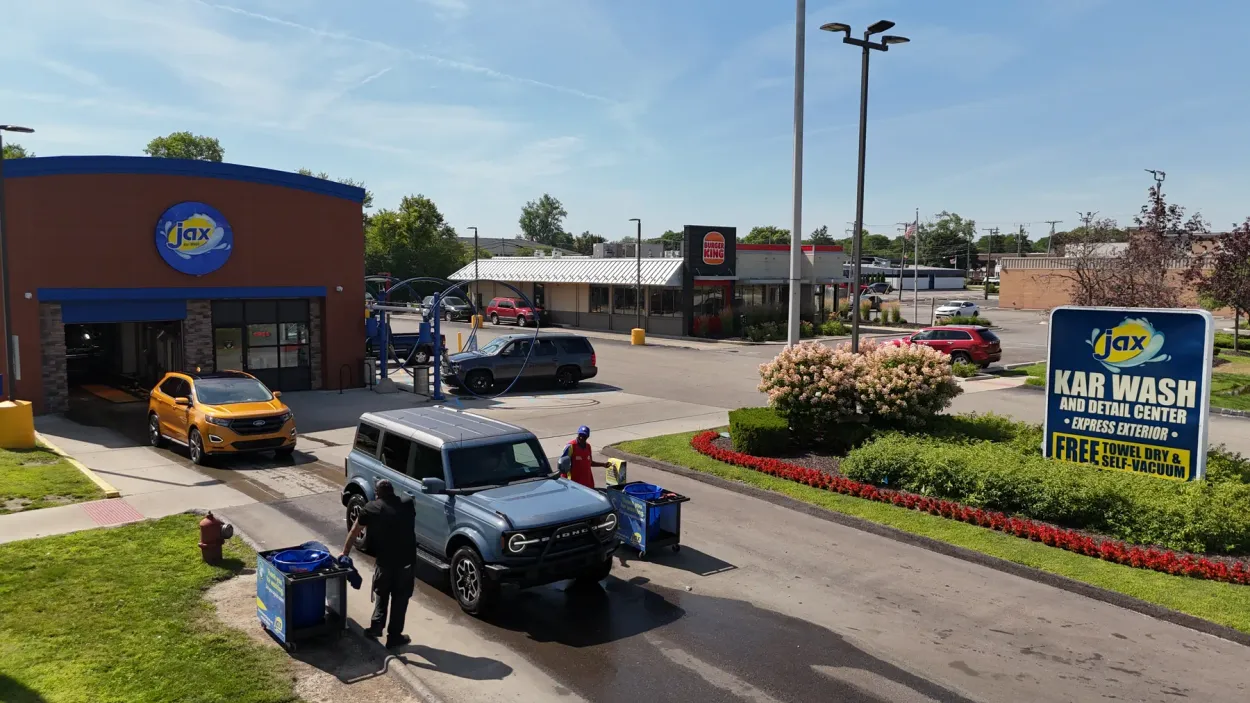
Already feeling dry spots or seeing those light creases? That’s when a pro treatment beats a wipe in the driveway, and car leather treatment at Jax Kar Wash on Southfield Rd goes after the driver’s seat wear zones, armrests, headrests, and door inserts so the leather comes back softer and more flexible.
Detailing is only offered at select Jax locations, and the Southfield Rd store happens to be one of them. Ask the team on site about leather treatment, or reach out through Contact & Support on our website to get it set up.
Leather Care Through Every Southfield Season
Winter’s not the only rough patch for leather, of course. Southfield goes from frozen mornings in the office parking lot to long, hot afternoons later in the year, and the same seats have to handle all of it.
Either way, what helps most is sticking with it. Leather that’s conditioned on a regular schedule, every season and not just after a rough winter, rides out cold mornings and hot afternoons with way less wear.
Frequently Asked Questions
Is it bad to sit on cold leather car seats?
No, sitting on cold leather car seats isn’t bad by itself, but cold leather creases sharper under your weight. Do that all winter long, and the extra strain starts to show, especially on leather that’s already dry.
Do heated seats damage leather car seats?
No, heated seats don’t damage leather when you use them normally, though hours on high can dry it out. Once you’re warm, flip it down to low, and the leather will hold up better.
How often should you condition leather car seats in winter?
Condition leather car seats about every three months, which is the AAA guideline Motor1 points to. With the heater running nonstop and the air this dry, winter’s a bad time to push that out.
Can cracked leather car seats be repaired?
Light creasing and dryness can often be improved with a professional leather treatment. Deep cracks that go clear through the finish are a different story, and those usually end up at an upholstery shop.
Visit Jax Kar Wash in Southfield
Give your leather a little attention through the cold months, and it’ll stay comfortable a lot longer. Stop by Jax Kar Wash at 30705 Southfield Rd. in Southfield and ask about car leather treatment, or reach the team at (248) 642-3858.